Office Cleaning Checklist for Businesses: Daily, Weekly, and Monthly Tasks
A clear office cleaning checklist keeps your workplace consistently clean and your team or vendor accountable. This guide breaks the work into daily, weekly, and monthly tasks, explains cleaning versus disinfecting, and shows how to use the checklist to evaluate a commercial cleaning provider.
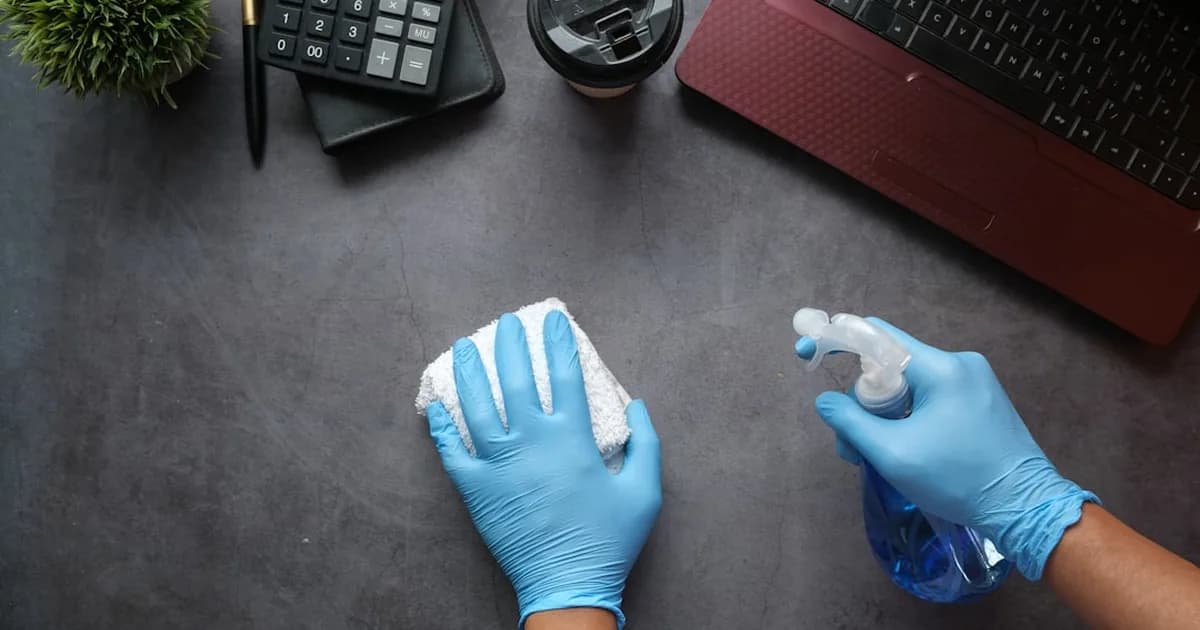
A clean office does more than look professional. It shapes the impression you make on clients, supports the health and productivity of your staff, and protects your investment in furniture, flooring, and equipment. Without a clear office cleaning checklist, though, the work tends to drift. High-touch areas get missed, tasks happen at random, and it becomes hard to hold an in-house team or an outside vendor accountable.
This guide breaks an office cleaning routine into daily, weekly, and monthly tasks. It explains the difference between cleaning and disinfecting, covers how often high-touch surfaces really need attention, and shows how to turn the checklist into a tool for evaluating a commercial cleaning provider. Manage a small professional suite or a multi-floor facility — either way, you can adapt the list below to fit your space.
Cleaning vs. Sanitizing vs. Disinfecting in an Office
These three words get used interchangeably, but they describe different jobs. According to the CDC, cleaning "removes most types of harmful germs" along with dirt and soil from a surface. Sanitizing reduces the germs that remain after cleaning, and disinfecting kills germs that are still present once a surface has been cleaned.
The sequence matters. The CDC is clear that you should "clean surfaces before sanitizing or disinfecting them, because impurities like dirt may make it harder for sanitizing or disinfecting chemicals to kill germs." Wipe a disinfectant over a visibly dirty desk and you get far less benefit than if you clean first, then disinfect.
Day to day, routine cleaning is enough for most office surfaces. Save disinfecting for high-touch surfaces and for times when someone in the building is sick. And be realistic about what cleaning achieves: a regular routine reduces germs and soil and keeps a workplace healthier, but it does not sterilize a space. Results vary with the size, type, and condition of your facility, so set expectations accordingly.
The Daily Office Cleaning Checklist
Daily tasks keep the most-used parts of your office presentable and hygienic. These are the items that, if skipped, are noticed first.
Reception, common areas, and floors
- Empty all trash and recycling bins and replace liners.
- Wipe the reception desk, shared tables, and counters.
- Spot-clean glass doors and entry windows for fingerprints.
- Vacuum entry mats and high-traffic carpet; mop hard floors.
Restrooms
- Restock soap, paper towels, and toilet paper.
- Clean and disinfect toilets, urinals, and sinks.
- Wipe high-touch fixtures: faucets, flush handles, and door handles.
- Mop and disinfect floors.
Restrooms typically need daily attention — and in busier offices, more than once a day. They are among the fastest areas to show wear and the most sensitive to neglect.
Break rooms and kitchens
- Wipe counters, tables, and the sink.
- Disinfect appliance handles, microwave touchpads, and the refrigerator door.
- Empty trash and wipe down the most-used surfaces.
High-touch disinfection pass
Finish the day with a focused pass over shared high-touch points — door handles, light switches, elevator buttons, and shared keyboards in common areas. Disinfect these high-touch surfaces at least once daily — and more often when employees are out sick or during cold and flu season.
The Weekly and Monthly Checklist
Not everything needs daily attention. Layering weekly and monthly tasks on top of the daily routine keeps the whole facility in good shape without wasting labor on surfaces that stay clean on their own.
Weekly tasks
- Dust workstations, shelves, and surfaces throughout the office.
- Detail-vacuum under and around furniture, not just the open floor.
- Clean interior glass, partitions, and glass conference-room walls.
- Disinfect personal electronics — keyboards and telephones — carefully. These usually only need weekly attention, and go easy on moisture, which can damage components.
- Damp-wipe baseboards and trim.
Monthly and periodic deep-clean tasks
- Carpet extraction or shampooing in high-traffic zones.
- Hard-floor scrubbing, buffing, or refinishing as needed.
- High dusting: vents, light fixtures, and the tops of cabinets and partitions.
- Interior window cleaning and upholstery cleaning.
- Descaling restroom fixtures.
Local conditions add a few items. In Southwest Florida, high humidity makes it worth watching entryways and damp areas for mildew. In the Minneapolis North Metro, winter drags salt and grit indoors, so entry matting and hard-floor care need extra attention from late fall through spring.
High-Touch Surfaces and How Often to Clean Them
Different zones get dirty at different rates, so they need different schedules. A practical way to think about frequency:
- High-touch public surfaces (door handles, light switches, elevator buttons): clean regularly and disinfect at least once daily.
- Restrooms: clean and disinfect daily, often multiple times in a busy office.
- Break rooms: wipe and disinfect shared surfaces daily; deeper cleaning weekly.
- Personal electronics (keyboards, phones): disinfect weekly, avoiding excess moisture.
- Private workspaces: generally need less frequent attention than shared zones.
For typical offices, an EPA-registered disinfectant used according to its label is plenty — hospital-grade products are not required. The right amount of disinfectant is simply the level stated on the product's EPA-approved label. The most common mistake is skipping the product's stated contact time — the number of minutes the surface needs to stay wet for the disinfectant to do its job.
How to Use This Checklist to Evaluate a Provider
A checklist isn't only an operational tool. It's also a way to judge whether a commercial cleaning company is worth hiring. A credible proposal should read like a checklist itself: specific tasks, the frequency of each, and the standard expected — not a vague promise to "keep your office clean." The best providers pair defined cleanliness levels with inspection procedures, so results can be measured objectively rather than judged by appearance alone — a good provider doesn't just clean, it verifies the work.
Cost is part of the picture too. General office cleaning typically runs roughly $0.09 to $0.17 per square foot, and more frequent service often lowers the per-square-foot rate because efficiency improves with a routine. So when you compare bids, compare the scope of work behind each price. A lower number that quietly drops restroom disinfection or carpet care is not the better deal.
If you'd rather hand the checklist to a professional team, Neat & Clean Co provides commercial cleaning services in your area across Southwest Florida and the Minneapolis North Metro, with a written scope of work that spells out tasks and frequencies so you know exactly what you're paying for.
Frequently Asked Questions
How often should an office be professionally cleaned?
Most offices benefit from daily or several-times-weekly service for high-traffic and high-touch areas, with weekly and monthly tasks layered on top. The right frequency depends on headcount, foot traffic, and the type of work — a busy 50-person office needs more than a quiet professional suite. The goal is to match frequency to how quickly each area actually gets dirty.
What is the difference between cleaning and disinfecting an office?
Cleaning removes dirt and most germs from a surface, while disinfecting uses an EPA-registered product to kill germs that remain afterward. The CDC notes you should always clean a surface before disinfecting it, because leftover soil can keep the disinfectant from working. Most office surfaces only need regular cleaning; disinfection is targeted at high-touch areas and times of illness.
Which surfaces in an office need the most frequent attention?
High-touch shared surfaces — door handles, light switches, elevator buttons, shared desks, conference tables, and restroom fixtures — need the most frequent cleaning and at least daily disinfection. Personal electronics like keyboards and phones generally only need weekly attention, with care taken to avoid excess moisture.
Should I use a printed checklist or hire a commercial cleaning company?
A checklist is useful whether you clean in-house or outsource. For a small office, an internal checklist may be enough. As headcount, square footage, and compliance needs grow, a professional provider with a written scope of work — listing tasks, frequencies, and standards — usually delivers more consistent results and frees staff for core work.
The Bottom Line
A written office cleaning checklist, split into daily, weekly, and monthly tasks with clear frequencies, is the difference between a workplace that's reliably clean and one that's clean only when someone happens to notice. It keeps the routine consistent, makes sure high-touch and high-traffic areas get the attention they need, and gives you a straightforward way to hold an in-house team or an outside vendor accountable.
As your facility grows, a professional provider working from a defined scope of work keeps results consistent so your staff can focus on their jobs. When you're ready, request an estimate for a cleaning plan built around your facility.
This article is for general informational purposes only. Cleaning scope, frequency, and pricing vary by facility size, type, and condition. Service availability depends on your location within Neat & Clean Co's service area. Contact us for a quote specific to your facility.
Related articles
School Facility Cleaning Standards: What Schools and Daycares Are Held To
School and daycare cleaning standards aren't one regulation — they're a framework built from CDC hygiene guidance, EPA chemical guidance, and an OSHA standard most administrators have never read. This guide breaks down the three-tier clean-sanitize-disinfect sequence, what the guidance says about frequency, which products belong in a building full of children, where custodial programs quietly fail, and how to write all of it into a janitorial scope of work you can hold a contractor to.
Commercial Kitchen Cleaning Standards: What Restaurants Are Actually Held To
A kitchen can look clean at the end of a shift and still fail an inspection, because cleanliness in food service is a documented standard rather than an impression. This guide walks through the three sets of rules a commercial kitchen answers to, what cleaning, sanitizing, and disinfecting each actually accomplish, how to build a task cadence you can defend to an inspector, and where an outside cleaning crew fits alongside your own staff.
Medical & Dental Office Cleaning Standards: A Facility Manager's Guide
A medical or dental office looks like any other workplace to a cleaning crew, but the standard it is held to is not the same. Here is how CDC surface tiers, EPA-registered disinfectants, and OSHA's rules shape what proper cleaning looks like, and how to hold a commercial partner to it.