Cleaning vs. Sanitizing vs. Disinfecting: What's Actually Different
Facility walkthroughs and janitorial bids use cleaning, sanitizing, and disinfecting as if they were synonyms. They're three different processes with three different costs, three different labor profiles, and three different regulatory footprints. Here's what each one actually does, what the product label is telling you, how to assign the right level to each zone in your building, and what OSHA expects of whoever is handling the chemicals.
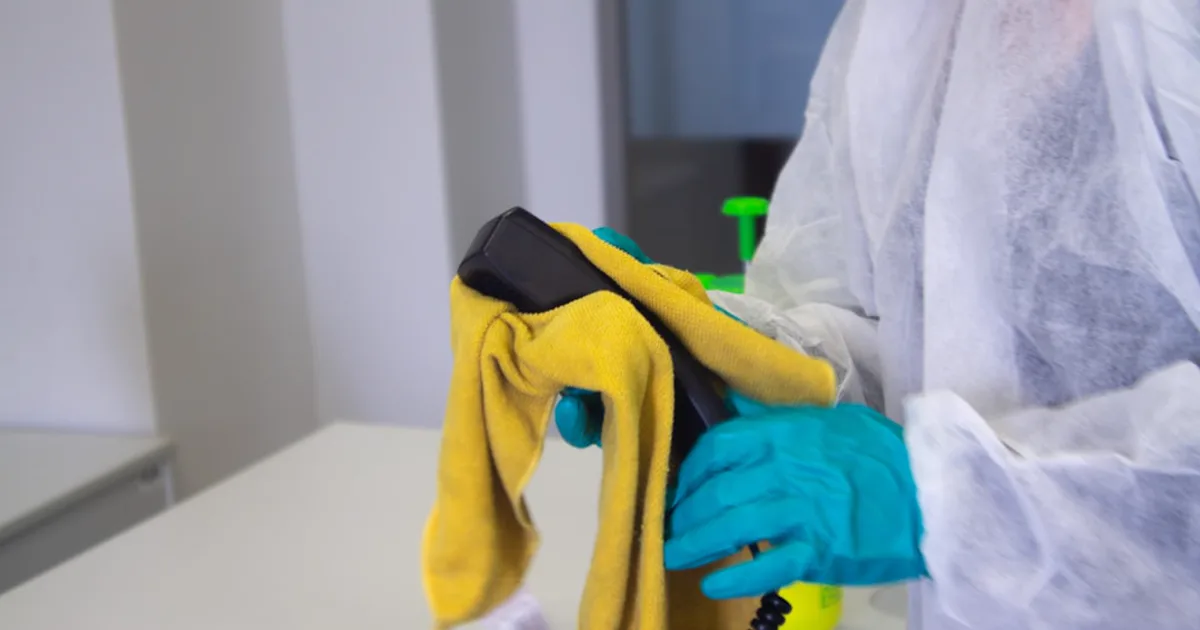
Three Words, Three Different Jobs
Walk any facility with a janitorial vendor and you'll hear all three words inside the first five minutes. The crew cleans the lobby. Sanitizes the break room. Disinfects the restrooms. It sounds like a thorough program. Most of the time, it's three words describing one activity with a mop.
The distinction matters because it ends up in writing. Cleaning, sanitizing, and disinfecting are separate processes with separate products, separate labor times, and separate regulatory expectations. When those words land in a scope of work without definitions attached, you're paying for one thing and assuming another. And in a building where a regulator or an insurer might someday ask what your protocol was, a vague answer is a liability.
Here's what separates cleaning vs sanitizing vs disinfecting in practice: what the product label is actually telling you, how to assign the right level to each zone in your building, and what OSHA expects of the people doing the work.
The Three Levels, Defined
Start with the definitions used by the agencies that set the terms, not the ones used in marketing copy.
Cleaning removes
The CDC describes cleaning as work done with water, soap, and scrubbing, which removes germs, dirt, and impurities from surfaces. The operative verb is removes. Cleaning is physical: a microfiber cloth, a detergent, and mechanical agitation lift soil off a surface and carry it away in the wastewater. Nothing is being chemically neutralized. Something is being taken somewhere else.
That isn't a lesser process. It's the one doing most of the work, and CDC facility guidance is blunt about it: in most situations, cleaning regularly is enough to prevent the spread of germs.
Sanitizing reduces
Sanitizing uses a chemical to bring the number of bacteria on a surface down to a level that public health codes or regulations consider safe. Two details in that sentence carry all the weight. It's a reduction, not an elimination. And the threshold is set by a code, not by whoever is holding the bottle.
Disinfecting handles what's left
Disinfecting products are chemicals that work by killing germs that remain on a surface after it's been cleaned. Highest effort, most aggressive chemistry, and the level most often claimed but least often performed correctly.
The useful mental model is a ladder, not a menu. You don't pick one. You clean, and then, if the situation calls for it, you sanitize or disinfect what you've already cleaned.
Sanitizing Is a Standard, Not a Feeling
The most common misuse of the word sanitize in commercial bids is as an intensifier. "We will sanitize all break room surfaces" usually means the crew will wipe them with a spray bottle. That's cleaning. Sanitizing means hitting a defined bacterial reduction with a product registered for that purpose, applied the way its label directs.
Food service and childcare settings have prescriptive sanitizing steps because someone wrote a code for them. A typical open office doesn't, because nobody did. If an inspector may one day evaluate a surface in your building against a written standard, you need a documented sanitizing step and a record that it happened. Our guide to commercial kitchen cleaning standards walks through how that plays out where food contact surfaces are involved.
For everything else, the honest answer is usually cleaning — and there's nothing wrong with that answer. A break room counter wiped daily with detergent is a well-maintained break room counter. Calling it sanitized doesn't make the surface cleaner. It just makes your documentation less accurate.
What "EPA-Registered" Means on the Label
This is where a lot of purchasing decisions go sideways. The EPA registers antimicrobial pesticides used on surfaces, and it only regulates a cleaning product if that product also sanitizes or disinfects. A plain detergent isn't registered, because it isn't making an antimicrobial claim.
Between the two registered categories, the bar isn't the same. EPA states that surface sanitizers are not intended to kill viruses, while disinfectants face more rigorous testing requirements and must clear a higher bar for effectiveness. Many manufacturers register a single formulation as both, having run it through both test methods. When they do, the label carries a different contact time for each claim — and those times are frequently nowhere near each other.
Contact time is the number most facility programs get wrong. It's how long the treated surface has to stay visibly wet for the product to do what the label says it does. A ten-minute contact time means ten minutes of a wet surface, not ten minutes of the product sitting in the caddy. If the surface dries at five minutes, more product goes on. A spray-and-wipe pass that leaves the surface dry in ninety seconds is a cleaning pass, whatever is in the bottle.
Two more label rules belong in your standard operating procedure. Never mix products unless the use directions specifically say to, because certain combinations produce highly toxic gases. And if the label calls for pre-cleaning, that step isn't optional — soil and organic matter physically shield microorganisms from the chemical, which is why the CDC tells facilities to clean the surface with soap and water first.
Matching the Level to the Zone
Once the three levels are distinct in your head, the next question is where each one belongs. CDC facility guidance frames it by risk and traffic rather than by room type. Routine cleaning is the baseline everywhere. Disinfect areas of your facility where people have obviously been ill, add disinfection as a supplement in high-traffic zones if you choose to, and follow your local health authority during an outbreak.
The high-touch surfaces the CDC names for facilities make a good starting inventory: door handles, stair rails, elevator buttons, touchpads, counters, restroom fixtures, and desks. Everything else gets attention when it's visibly dirty. Traffic volume drives frequency, so a lobby door handle in a 200-person building and one in a six-person suite aren't on the same schedule.
The practical way to translate this into a contract is zone by zone. Entries and lobbies: daily cleaning, high-touch attention scaled to foot traffic. Restrooms: daily cleaning with a disinfecting step on fixtures. Break rooms and shared kitchens: daily cleaning, plus a sanitizing step where food contact surfaces are in play. Open workstations: routine cleaning, disinfection by exception. Care-adjacent or clinical rooms: whatever the governing standard specifies, documented.
Each of those lines belongs in the agreement with a level, a frequency, and a surface list attached. If your current contract says "sanitize throughout," that isn't a specification. It's a mood. Our breakdown of what belongs in a commercial cleaning contract scope of work covers how to structure those line items so both sides are measuring the same thing.
Worker Safety Is Part of the Spec
Every step up the ladder means stronger chemistry, and stronger chemistry brings the people applying it under OSHA's Hazard Communication Standard. That standard requires container labeling, safety data sheets, and training delivered in a language the worker actually understands, for every hazardous chemical in the building. Disinfectants and concentrated cleaners qualify.
The hazards aren't theoretical. Disinfectants, detergents, and concentrated soaps can cause dermatitis and allergic reactions. Ammonia-based cleaners and chlorine solutions irritate skin, eyes, and airways. Mix them and you get toxic gas. The controls are ventilation, the personal protective equipment the label calls for, and handwashing after use.
Three questions are worth asking any vendor before you sign. Who trains the crew, and how often? Where are the safety data sheets kept for your building? How is product dilution controlled in the field? A vendor providing commercial cleaning and janitorial services should be able to answer all three without looking anything up.
Frequently Asked Questions
Is sanitizing the same as disinfecting?
No. Sanitizing reduces bacteria to a level public health codes consider safe, and EPA notes that surface sanitizers are not intended to kill viruses. Disinfecting products are tested against a higher bar and are registered to address both viruses and bacteria. A product can be registered for both uses, but the label will list a different contact time for each claim.
Do I need to clean a surface before disinfecting it?
Yes, in almost every case. CDC guidance is explicit that dirt and organic matter make it harder for a chemical to reach and kill germs, so surfaces should be cleaned with soap or detergent first. Skipping that step is the single most common reason a disinfection routine underperforms, and many product labels require pre-cleaning outright.
How often should a facility disinfect instead of just cleaning?
CDC's position is that in most situations, regular cleaning is enough to prevent the spread of germs. Disinfection is warranted where someone has obviously been ill, in very high-traffic zones as a supplement to routine cleaning, and whenever local health authorities recommend it during an outbreak. Daily blanket disinfection of every surface is rarely necessary.
What does contact time mean on a disinfectant label?
Contact time is how long the treated surface must stay visibly wet for the product to work. If the label says ten minutes, the surface needs to remain wet for the full ten minutes, and more product should be applied if it dries early. A wipe-and-walk-away application does not meet the label direction and should not be counted as disinfection.
The Bottom Line
Clean first, every time. Removal does the heavy lifting, and the chemicals that follow won't work properly on a soiled surface anyway. Sanitize where a written code says to, and keep the record that proves it. Disinfect where illness or risk justifies the cost, then follow the label to the letter, contact time included.
A useful audit takes ten minutes. Open your current janitorial agreement, search it for the word sanitize, and ask whether anyone on either side of that contract can name the standard it refers to. If nobody can, that line needs rewriting before the next renewal. When you're ready to price a scope that says what it means, request an estimate and we'll build it around your actual zones and traffic.
This article is for general informational purposes only. Cleaning scope, frequency, and pricing vary by facility size, type, and condition. Service availability depends on your location within Neat & Clean Co's service area. Contact us for a quote specific to your facility.
Related articles
Commercial Cleaning Contract Scope of Work: What to Look For Before You Sign
Two janitorial proposals can land within a hundred dollars of each other and buy very different amounts of work. The difference is almost never in the price — it is in the scope of work, the document that says which tasks get done, where, how often, and to what standard. Here is how facility and property managers in the Minneapolis North Metro read a cleaning scope before signing, and which clauses decide how easily you can leave if the service slips.
How to Choose a Commercial Cleaning Company in Maple Grove, MN
Choosing a commercial cleaning company in Maple Grove is a decision about reliability and liability, not just price. This guide covers how to verify insurance and bonding, confirm OSHA and EPA compliance, read a bid, and vet crews before you sign a janitorial contract.
Commercial Cleaning Cost in Maple Grove, MN: 2026 Price Guide
Budgeting for office or facility cleaning in Maple Grove? Here's what commercial cleaning actually costs in 2026 — per square foot, per hour, and per month — plus the factors that move your quote and how to compare bids before you sign.