Commercial Kitchen Cleaning Standards: What Restaurants Are Actually Held To
A kitchen can look clean at the end of a shift and still fail an inspection, because cleanliness in food service is a documented standard rather than an impression. This guide walks through the three sets of rules a commercial kitchen answers to, what cleaning, sanitizing, and disinfecting each actually accomplish, how to build a task cadence you can defend to an inspector, and where an outside cleaning crew fits alongside your own staff.
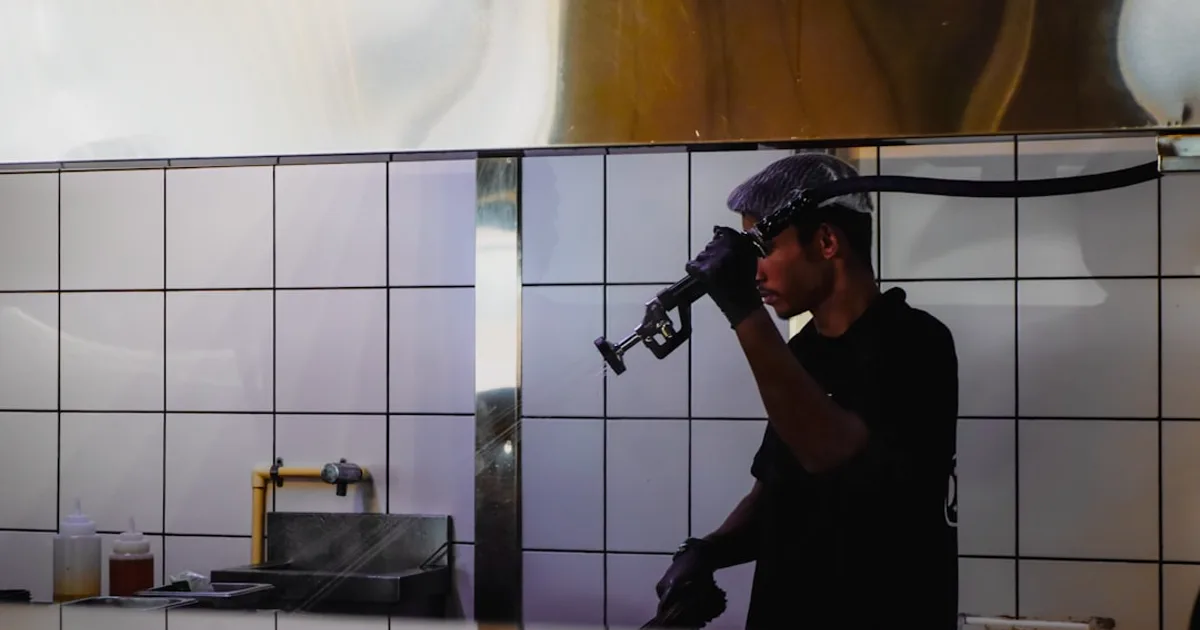
A commercial kitchen can look clean at the end of a shift and still fail an inspection. That gap exists because commercial kitchen cleaning standards are a documented system, not a visual impression. An inspector isn't judging whether the stainless looks bright. They're checking whether specific tasks happened at specific intervals, whether the right chemical was used the right way, and whether anyone wrote it down.
If you own a restaurant or run a facility with a production kitchen in it, the liability lands on you — food safety, worker safety, and the revenue you lose when a kitchen closes for corrections. Below: the rules that actually apply, what each cleaning process does, how to build a cadence you can defend, and where an outside crew fits alongside your staff.
The Three Rulebooks Your Kitchen Answers To
The FDA Food Code is a model, not the law you are inspected against
Operators go looking for "the federal restaurant cleaning rules" and come back with the FDA Food Code. Worth reading. It isn't what your inspector enforces. The Food Code is a model that gives food control jurisdictions a scientifically sound technical and legal basis for regulating food-service establishments, which state, local, and tribal agencies then adapt into their own regulations.
So the checklist a health inspector walks in with is a state or county adaptation, not the model itself. Frequency expectations and documentation requirements differ between jurisdictions. Confirm what your own health department requires before you build a program around something you found online.
OSHA covers the same room as a workplace
The second rulebook treats your kitchen as a job site. OSHA's sanitation standard requires that all places of employment be kept clean to the extent the nature of the work allows, that workroom floors be maintained dry so far as practicable, and that food service operations follow sound hygienic principles. Passing a health inspection doesn't satisfy OSHA, and vice versa.
Your own operating standard sits on top
Brand standards, franchise audits, and insurance requirements frequently exceed both. The layering isn't unique to food service, which is why cleaning standards for medical and dental offices stack a workplace-safety layer on a clinical one.
Cleaning, Sanitizing, and Disinfecting Are Three Different Jobs
These three words get used interchangeably on the line, and that's where a lot of wasted effort starts. The CDC treats them as three distinct processes. Cleaning uses detergent to remove soil and reduce germs on a surface. Sanitizing reduces what's left after cleaning. Disinfecting is the most intensive of the three, reserved for higher-risk situations such as an area where someone has obviously been ill.
Why sequence is not optional
Cleaning comes first. Dirt and grease interfere with the chemistry, so a sanitizer sprayed over a greasy prep surface isn't doing the job the label describes. It's the most common process error on a kitchen line.
Contact time is the step crews skip
The EPA is explicit that the surface should remain visibly wet for the entire contact time, and that you reapply if it dries early. A three-second wipe-on, wipe-off pass isn't the treatment the manufacturer tested. One related detail: products are identified by EPA registration number, not brand name, since identical formulations get sold under different names.
Building a Cleaning Cadence You Can Defend
Most kitchens don't need one dramatic deep clean. They need layered intervals, each task tied to a shift and an owner.
Every close
Food-contact surfaces get broken down: prep tables, cutting boards, slicers, can openers, anything that touched product. Handwashing stations get restocked, floors get swept and mopped, waste goes out. Staff work, because it happens between shifts.
Weekly
Hood filters, fryer surrounds, the backs and undersides of line equipment, reach-in gaskets, shelving. Drains get attention before they announce themselves. Weekly is where grease either gets controlled or starts compounding.
Monthly and quarterly
Walk-in shelving pulled and cleaned, wall panels behind the line, ceiling tiles and vents, deep floor scrubbing with attention to grout, and exhaust components on your jurisdiction's schedule. Nobody reaches these surfaces during service, which is exactly why an inspector checks them once the visible areas pass.
Write it down, because that is what can be verified
CDC research on restaurant food handling found that equipment and resources came up in discussion of all seven essential food handling practices: easy-access sinks, enough soap and gloves, color-coded cutting boards, multiple thermometers, adequate workspace. The same research points to organizational factors — management emphasis on safety, coworker accountability, and documented procedures such as logging handwashing and temperature checks.
Read that as a diagnosis. When sanitation slips, the cause is usually a system problem rather than one careless employee, and fixing the system is what produces the record you hand an inspector. If you're deciding who covers which window of the day, the difference between day porter and nightly janitorial coverage is worth understanding first.
Floors, Drains, and Grease: Where Sanitation Meets Slip Hazard
OSHA requires floors to be kept clean, dry, and in good repair, with aisles clear of obstruction. Where wet processes are used, the standard calls for drainage and dry standing places such as platforms or mats where practicable.
In a kitchen, those requirements collide in one place: grease. A film on quarry tile is a sanitation finding and a fall hazard at once, and the degreaser that removes it is itself a regulated chemical. A few things separate a program that works from one that just moves grease around:
- Let the degreaser dwell. A fast mop pass emulsifies nothing.
- Deck brush the tile rather than mopping, especially under the cook line.
- Pull and clean drain covers and floor sinks on a set interval, not when odor prompts it.
- Use wet-floor signage and schedule wet work outside peak traffic.
The same floor-safety logic scales up to bigger buildings, which is why warehouse and industrial cleaning standards put similar weight on surface condition and traffic control.
Waste, Receptacles, and Pest Prevention
Waste handling sits in the OSHA sanitation standard in more detail than most operators expect. Receptacles must be smooth, corrosion-resistant, and easily cleanable or disposable, sized and placed so they get used without overfilling. Putrescible waste needs a tight-fitting cover unless the container can be kept sanitary without one, and receptacles must be emptied at least once each working day.
Pest control lives in the same standard: every enclosed workplace must be maintained, so far as reasonably practicable, to prevent the entrance or harborage of rodents, insects, and other vermin, with a continuing extermination program where they're detected. Practically, that puts the dumpster pad and the back-door threshold inside your cleaning scope. Most pest findings trace back to that stretch of the property, not the kitchen itself.
Chemical Safety Is Part of the Standard
Every degreaser, oven cleaner, sanitizer concentrate, and floor chemical in the building falls under OSHA's Hazard Communication Standard: a written program, an inventory of hazardous chemicals on site, a warning label on every container, accessible Safety Data Sheets, and employee training at initial assignment and whenever a new chemical hazard shows up.
Labeling includes secondary containers. The unlabeled spray bottle of decanted degreaser under the prep sink is the most common finding here, and it's a five-minute fix.
The standard also sets an order of controls: engineering controls such as ventilation first, administrative controls where feasible, then protective equipment — goggles, gloves, and splash aprons for the chemicals that call for them. Never mix products, and follow label dilution directions exactly. A stronger mix isn't a better clean.
In-House Crew vs. Contracted Cleaning
Most operations split the work rather than picking one model. Kitchen staff own the close-out routine, because food-contact cleaning can't wait for a vendor's schedule. Contracted crews take the periodic and specialized scope: machine floor scrubbing and grout, restroom and dining-room detail, high and hard-to-reach surfaces, post-remodel cleanup.
The failure mode is the seam. Anything in neither the staff checklist nor the vendor's written scope goes undone for a year, which is why what a cleaning contract scope of work should spell out deserves attention before you sign. Neat & Clean Co handles that periodic and specialized scope as part of commercial cleaning across the Minneapolis North Metro.
Frequently Asked Questions
How often does a commercial kitchen need a deep clean?
Most kitchens run a layered schedule rather than one deep clean. Food-contact surfaces get broken down at every close, and floors and drains get daily attention. Equipment that traps grease — hood filters, fryer surrounds, the backs of line equipment — moves to a weekly or monthly cycle. Quarterly work covers what nobody reaches during service: ceiling tiles, wall panels, walk-in shelving, and exhaust components.
What is the difference between cleaning, sanitizing, and disinfecting in a kitchen?
The CDC treats them as three separate processes. Cleaning uses soap or detergent to remove soil and reduce the number of germs on a surface. Sanitizing further reduces germs on a surface that has already been cleaned. Disinfecting is the most intensive step and is reserved for higher-risk situations. Sequence matters, because soil and grease make it harder for those chemicals to work.
Do OSHA rules apply to restaurant kitchens, or just the health department?
Both apply, and they cover different ground. Your health inspector works from your state or county adaptation of the FDA Food Code, which governs food safety. OSHA covers the kitchen as a workplace: floors kept clean and dry so far as practicable, cleanable waste receptacles emptied daily, vermin prevention, and a hazard communication program for every chemical on site.
Should a restaurant hire an outside cleaning company or handle it in-house?
Most operations split it. Kitchen staff own the close-out routine, because food-contact cleaning happens between shifts and can't wait for a vendor. Contracted crews typically take the periodic and specialized work: machine floor scrubbing and grout, dining-room and restroom detail, hard-to-reach surfaces, and post-remodel cleanup. Write the split down, because anything in neither the staff checklist nor the vendor scope is what gets missed.
Your Kitchen Sanitation Game Plan
Standards come down to a system: defined tasks, defined intervals, defined owners, and a record someone else can read. Audit your routine against the three rulebooks, close the gaps, and decide deliberately which work belongs to staff and which to a contracted crew. If the periodic scope is the part that keeps slipping, request an estimate and put it on a schedule.
This article is for general informational purposes only. Cleaning scope, frequency, and pricing vary by facility size, type, and condition. Service availability depends on your location within Neat & Clean Co's service area. Contact us for a quote specific to your facility.
Related articles

School Facility Cleaning Standards: What Schools and Daycares Are Held To
School and daycare cleaning standards aren't one regulation — they're a framework built from CDC hygiene guidance, EPA chemical guidance, and an OSHA standard most administrators have never read. This guide breaks down the three-tier clean-sanitize-disinfect sequence, what the guidance says about frequency, which products belong in a building full of children, where custodial programs quietly fail, and how to write all of it into a janitorial scope of work you can hold a contractor to.
Medical & Dental Office Cleaning Standards: A Facility Manager's Guide
A medical or dental office looks like any other workplace to a cleaning crew, but the standard it is held to is not the same. Here is how CDC surface tiers, EPA-registered disinfectants, and OSHA's rules shape what proper cleaning looks like, and how to hold a commercial partner to it.
Green Commercial Cleaning, Explained: What It Means and How to Vet a Provider
"Green cleaning" appears on nearly every janitorial proposal, but the term is unregulated and often means very little. Here's what green commercial cleaning actually involves, which certifications carry real weight, how to spot greenwashing, and the questions that separate a substantiated program from marketing language.