Commercial Cleaning Hourly Rate: 2026 National Averages
Ask three contractors for an hourly rate and you'll get three different numbers, none of which mean much on their own. This guide starts with the federal wage data underneath commercial cleaning labor in 2026, walks through everything stacked on top of a cleaner's wage to produce a billable hour, lays out working rate ranges by type of work, and explains what's usually missing when one bid comes in far below the rest.
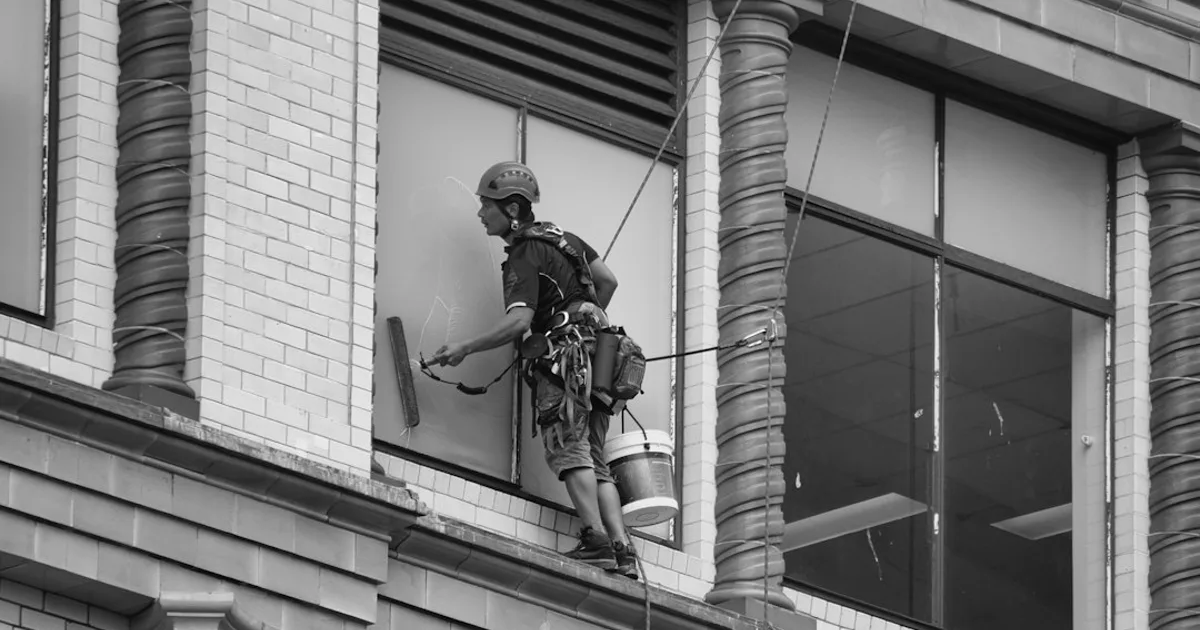
"What's your hourly rate?" is usually the first question a facility manager asks a cleaning contractor. It's also the question that tells you the least. Two companies can quote the same number and deliver work that isn't remotely comparable — different crew sizes, supervision, supplies, and insurance behind the people in your building at 9 p.m.
A commercial cleaning hourly rate in 2026 lands in a range rather than at a figure. Where you fall depends on facility type, service frequency, scope density, and geography. This guide starts with the federal wage data underneath the industry, works up through everything added to a cleaner's wage before it becomes a billable hour, then covers rate ranges by type of work and what a low bid is usually missing.
What National Wage Data Says About Cleaning Labor in 2026
Start with the floor. The median hourly wage for janitors and building cleaners was $17.71 in May 2025, which works out to roughly $36,840 a year. About 2.43 million people hold those jobs nationally.
The midpoint is less useful than the spread. The lowest-paid tenth of the occupation earned under $13.77 an hour; the highest-paid tenth earned more than $24.17. That's a wide band for a single job title, and it's the first clue that any "national average" for cleaning is a starting point for a conversation rather than an answer.
Why the labor market keeps the floor firm
Employment is projected to grow only about 2 percent through 2035 — but roughly 321,800 openings are expected every year, nearly all of them from workers leaving rather than new positions being created. That's a turnover problem, not a growth story. Persistent turnover keeps steady upward pressure on wages.
Scheduling adds to it. Most commercial cleaning happens on evening, night, and weekend shifts, because offices get cleaned after the people leave. Off-hours staffing is harder to fill, and harder to fill means more expensive.
So wage is the foundation of any commercial cleaning hourly rate. It's also only the foundation.
Why the Hourly Rate You're Quoted Is Higher Than the Cleaner's Wage
The gap between $17.71 an hour and what a contractor bills isn't a markup story. It's a list of costs, and every one of them is real.
Labor burden is the biggest layer
Benefits alone are substantial. As of June 2026, benefit costs accounted for 30.0 percent of total compensation for private-industry workers and 31.5 percent across civilian workers overall. That covers payroll taxes, paid leave, and any health or retirement contribution — and for this occupation it also means workers' compensation premiums, which run high in a trade built around ladders, wet floors, and chemical handling.
Everything else stacked on the hour
- Consumables — liners, paper, soap, chemicals, microfiber, gloves and other PPE.
- Equipment — vacuums, autoscrubbers, burnishers, extractors: purchase plus maintenance, amortized across billable hours.
- Insurance and bonding — general liability, a janitorial bond, commercial auto.
- Supervision — route supervisors, inspections, scheduling, and somebody to cover a call-out at 6 p.m. on a Friday.
- Non-billable drive time between accounts, which someone has to pay for.
- Overhead and margin — a contractor with no margin can't replace a dead autoscrubber mid-shift.
Put it together and a billed hour typically runs two to three times the wage paid inside it. That multiple is what it costs to field a trained, insured, supervised, equipped crew — not what it costs to send a person with a mop.
2026 Commercial Cleaning Rates Per Hour by Type of Work
The ranges below are national working figures for comparing bids. They aren't quotes, and a serious contractor won't hand you one without seeing the building.
Routine janitorial and office cleaning
Roughly $30 to $45 per labor hour for recurring nightly or multi-night office and retail janitorial. Most recurring accounts aren't actually billed by the hour — they're quoted as a flat monthly figure built from an hourly cost estimate. If that's where you're headed, look at what a monthly office cleaning budget looks like and at cost per square foot, the easier basis for comparing buildings of different sizes.
Deep cleaning and one-time resets
Roughly $40 to $60 per hour. One-time work prices higher because nobody has been through the building yet, the soil load is unknown, and the labor runs denser than a routine nightly route.
Hard-floor care
Roughly $45 to $75 per hour, though floor work is often priced per square foot instead. Strip-and-wax, burnishing, and carpet extraction all depend on expensive machines — and on technicians who can run them without wrecking the substrate.
Post-construction and turnover work
Roughly $45 to $75 per hour. Construction dust takes multiple passes, debris handling is heavy, deadlines are tight, and the risk of a damage claim on brand-new finishes is real.
Specialized facility work
Senior living, medical office, food service, and warehouse scopes price above routine janitorial. The reason is rarely the cleaning itself; it's the training, documentation, and compliance attached to it.
What Moves a Commercial Cleaning Hourly Rate Up or Down
Geography
Labor cost travels straight into the rate. State mean wages for the occupation ranged from roughly $20 to $21 an hour in the highest-paying states — New York at $20.87, Washington at $20.86 — down toward $15 in the lowest-cost states. Metro areas consistently pay above nonmetro ones. Minnesota and the Twin Cities sit in the upper-middle of that spread.
Facility type
Different buildings draw from different labor markets. Median wages in May 2025 ran $20.76 in government facilities, $18.63 in educational services, and $18.35 in healthcare, against $17.21 for contract services to buildings. A hospital corridor and a strip-mall suite are not the same hour of work.
Frequency and scope density
Five nights a week spreads fixed costs — drive time, supervision, equipment staging — across more billable hours. Once-weekly service does the opposite: it concentrates a week of soil into one visit and leaves fewer hours to absorb the same overhead, which often produces a higher effective rate for less total service.
Scope density matters more than square footage on its own. Restroom count, breakroom load, the mix of hard floor versus carpet, and daily occupancy drive minutes per visit far more than the number on the lease does.
Access, timing, and security
Badge escorts, elevator restrictions, daytime-only access windows, union buildings, background-check requirements — all of it adds hours or cost. None of them change what gets cleaned. All of them change what it takes to clean it.
How the contract is structured
The same scope converts between billing methods, and that conversion is worth understanding before you compare bids — see hourly, flat-rate, and per-square-foot pricing models.
What a Lowball Hourly Quote Is Actually Missing
When one bid lands far under the rest of the field, the gap is rarely efficiency. It's usually a line item nobody funded.
Compliance has a real cost. OSHA requires employers to maintain a written hazard communication program, keep safety data sheets, supply appropriate PPE, and train employees on every hazardous chemical in use — plus a written exposure control plan wherever bloodborne pathogen exposure exists. A contractor doing that properly is paying for training hours that never show up on your invoice.
Insurance is the other common gap. Collect at least three written estimates, get the agreed price in writing, and verify that the contractor is bonded, carries general liability coverage, and holds its own workers' compensation policy. That last one isn't paperwork trivia: if a contractor carries no workers' comp and a cleaner is injured in your building, the claim can end up pointed at you.
Other things that quietly go missing in an underpriced bid: no supervision or inspections, no backfill when someone calls out, supplies billed separately after the fact, and crew turnover high enough that you're escorting new faces through a secured building every month. For a structured way to surface these in a sales conversation, start with the questions worth asking before you sign.
Frequently Asked Questions
What is the average hourly rate for commercial cleaning in 2026?
Most commercial cleaning work in the United States bills somewhere between $30 and $55 per labor hour in 2026, with routine janitorial toward the lower end and specialized work above it. That is a billed rate, not a wage — the national median wage for janitors and building cleaners was $17.71 an hour in May 2025, and the rest of the gap covers payroll burden, supplies, equipment, insurance, supervision, and margin.
Why is the hourly rate so much higher than what cleaners are paid?
Benefits alone added about 30 percent on top of wages for private-industry workers as of June 2026, before a contractor has paid for a single chemical, machine, or insurance premium. Add payroll taxes, workers' compensation, liability and bonding coverage, supplies, equipment amortization, supervision, and drive time, and the arithmetic lands where it lands. A rate sitting close to the wage itself usually means one of those lines is not being funded.
Is hourly billing better than a flat monthly price?
They answer different questions. Hourly billing fits variable, unpredictable scopes — post-construction punch-outs, one-time deep cleans, emergency call-backs — where nobody can say up front how long the work will take. Recurring janitorial usually works better on a flat monthly price, because you get a predictable budget line and the contractor absorbs the risk of an occasional long night.
Does the hourly rate change if we only need cleaning once a week?
Usually yes, and upward. Low-frequency service means more soil load per visit, more drive time per billable hour, and a route that is harder to staff consistently. Facilities on a once-weekly schedule often see a higher effective hourly rate than comparable buildings cleaned four or five nights a week.
The Bottom Line
The useful question isn't "what's your hourly rate" — it's "what's inside the hour." A $32 rate with no supervision, no supplies, and no workers' comp behind it is more expensive than a $44 rate that includes all three, and you'll find that out at the worst possible moment.
Compare bids on scope, frequency, supervision, supplies, and coverage first. Compare the rate last. Neat & Clean Co provides commercial cleaning across the Minneapolis North Metro, and we would rather price your actual building than hand you a national average — request an estimate.
This article is for general informational purposes only. Cleaning scope, frequency, and pricing vary by facility size, type, and condition. Service availability depends on your location within Neat & Clean Co's service area. Contact us for a quote specific to your facility.
Related articles

Commercial Cleaning Contract Length: Month-to-Month vs Annual
Most facility managers treat cleaning contract length as a question of how long they're locked in. It's really a question of price and leverage. Here's what a month-to-month term actually buys you, what an annual agreement actually buys you, and why the renewal, notice, escalation, and termination clauses deserve more of your review time than the number of months on the signature page.
One-Time Commercial Cleaning Cost: Deep Clean Pricing Guide
A one-time deep clean rarely matches the per-square-foot numbers you find online, because project work is priced on condition rather than area. This guide breaks down what a one-time commercial cleaning scope actually covers, the three structures providers use to price it, the five factors that move your quote the most, which add-ons sit outside the base bid, and how to put competing proposals on equal footing before you sign anything.

How to Write a Commercial Cleaning RFP: Template and Tips
Four cleaning bids on the same building can land anywhere from $1,400 to $4,900 a month — usually because each bidder priced a different job. A written RFP is what makes those numbers comparable. Here is the document section by section: facility profile, a task-and-frequency scope of work, insurance and OSHA submission requirements, product specifications you can actually verify, and an evaluation structure that scores more than price.