20 Questions to Ask a Commercial Cleaning Company Before Hiring
Most facility managers pick a cleaning vendor on price and a handshake, then find the gaps in month three. These twenty questions are organized by what they protect you from: financial exposure, crew churn, compliance risk, chemical misuse, and scope disputes. Each one has an answer you can verify — a certificate you can call about, a training program you can read, a contact time you can check against the crew's actual route.
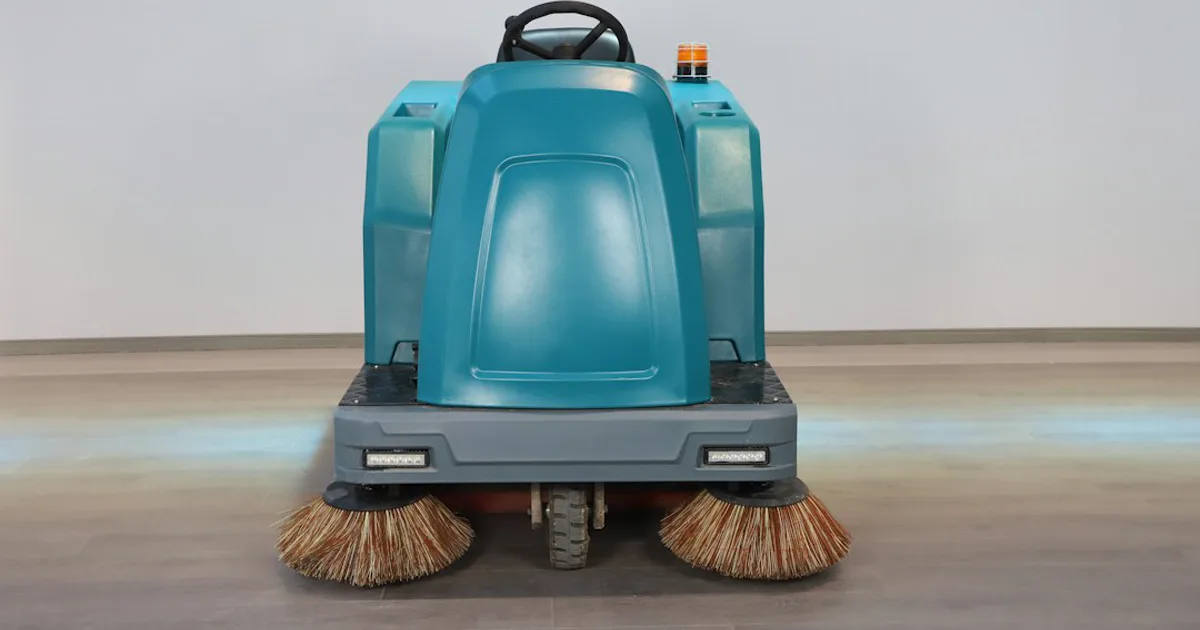
Most commercial cleaning decisions come down to a walkthrough, a number, and a handshake. Then month three arrives. The bid said "restrooms nightly," but nobody wrote down what nightly includes, and the crew from week one has already turned over twice. So the questions to ask a commercial cleaning company aren't really about cleaning — they're about whether the company behind the crew has built an operation or is selling you a route.
The stakes run higher here than with most vendors. Your cleaning contractor holds keys, works unsupervised after hours, handles regulated chemicals around your staff, and touches every surface your people touch. That's a lot of access for a line item that usually gets less scrutiny than a copier lease. The twenty questions below are grouped by what each one protects you from.
Insurance, Bonding, and Liability: Questions 1–4
1. Can I see your certificate of insurance, and will you name my company as an additional insured? A certificate captures one moment, not a standing promise. Ask for current effective dates, and ask whether additional-insured status is something they handle routinely — on commercial accounts, it should be.
2. Are you bonded, and what does the bond actually cover? These two get conflated constantly, and they cover different things. The Better Business Bureau's guidance draws the line clearly: a bond covers dishonest or criminal acts by people who come into your facility, while liability insurance covers accidents the crew causes — a faucet left running overnight, a lost master key. Carrying one without the other leaves a real gap.
3. Do you carry your own workers' compensation policy for everyone who will be in my building? This is the question with the most dollars behind it. BBB puts the exposure plainly: if the cleaning company has no workers' comp and a worker is injured while working at your facility, they could sue you and your insurance policy. You aren't asking for paperwork. You're asking whether an injury in your building becomes your claim.
4. Are your limits high enough for my facility, and can I verify them with your agent? BBB recommends getting a copy of the bond, obtaining the agent's name, calling to confirm the policies are in effect, and checking that the limits actually cover your property. A contractor who hesitates at a verification call has already answered you. Ask too whether subcontractors ever work your account, and whether their coverage gets verified independently.
Who Actually Shows Up: Questions 5–9
5. Who specifically will clean my building, and how long have they worked for you? Tenure is the scarce commodity in this trade. Federal projections show janitorial employment growing just 2 percent through 2035, yet roughly 321,800 openings are expected each year — almost entirely churn and retirement rather than new positions. A contractor who can name your crew lead and their tenure has solved the industry's hardest problem.
6. Are your cleaners your W-2 employees, or subcontractors? The answer determines who insures, who trains, and who is accountable. It also determines who keeps the injury records: under OSHA's recordkeeping rule, the employer providing day-to-day supervision records a worker's injuries, and that turns on the actual facts of supervision, regardless of the wording of the parties' contractual agreements.
7. What background screening do you run, and how often? BBB advises requesting background checks on employees and verifying each credential separately instead of accepting one blanket assurance. Ask what the screen covers, and whether it's ever repeated.
8. Who supervises the crew, and does a supervisor physically inspect my building? After-hours work is unsupervised by default — the structural quality problem in commercial cleaning. The only real answer is someone whose job is to walk the building and check.
9. What happens when my regular cleaner is sick or quits? Offices get cleaned after hours, so schedules commonly include evenings, nights, or weekends and part-time work is widespread — which makes a thin bench obvious fast. Consider what the job asks of people, too. NIOSH identifies heavy lifting, prolonged standing, regular bending, and handling cleaning agents as core hazards of custodial work, with the employer responsible for protective practices. Companies that take that seriously tend to keep their people.
Training and Safety Compliance: Questions 10–13
10. Can I see your written hazard communication program and chemical inventory? Your building's safety program does not cover their crew. OSHA's interpretation for the janitorial service industry establishes that the hazard communication obligation attaches to the employer of the worker doing the cleaning — so the contractor maintains safety data sheets for the products its people bring on site, labels the containers, and trains its own staff.
11. How do you train new hires on the chemicals they'll use here, and when? Under OSHA's Hazard Communication Standard, training has to happen at the time of initial assignment and before a worker touches a hazardous cleaner — not at the end of a probationary period. It has to cover each product's health and physical hazards, handling and storage including dilution, spill response, required PPE, and how to read labels and safety data sheets.
12. Is that training delivered in a language your crew actually understands? The standard requires training at a level and in a language and vocabulary workers can understand. Ask it directly. It's one of the more common gaps between a program on paper and a program in practice.
13. Will you share your injury records for the last three years? A contractor supervising its own crew keeps its own OSHA 300 Log, so asking to see it is reasonable — and reluctance is itself an answer. One smaller detail reveals as much: ask whether secondary containers, the spray bottles filled from concentrate, are labeled. OSHA's safe-work practices call for every container to be labeled and for no mixing of bleach-based with ammonia-based products. Whether a crew lead can answer that without checking tells you if the program is real.
Chemicals, Equipment, and Disinfection: Questions 14–17
14. What products will you use here, and are any certified under EPA's safer-product programs? You can check this yourself. EPA's Safer Choice label certifies cleaning products, and the Design for the Environment label covers antimicrobial products like disinfectants and sanitizers; both have searchable databases, so a product name either appears or it doesn't. If the product categories blur together, read up on the difference between cleaning, sanitizing, and disinfecting before the walkthrough.
15. Which surfaces do you disinfect versus just clean — and why those? More disinfectant is not more thorough. EPA advises institutional purchasers to use disinfectants only where people are likely to contact contaminated surfaces, such as doorknobs. A scope that claims to disinfect every surface in the building is describing chemical overuse, and your staff breathes the difference.
16. What's the labeled contact time on your disinfectant, and does the route allow for it? This question separates operators from invoices. EPA's labeling guidance is specific: the surface must stay visibly wet for the entire contact time, reapplying if it dries early, and using a registered product for less than its labeled contact time violates the label under FIFRA § 12(a)(2)(G). Hard-surface dwell times generally top out around 10 minutes, so they land in a range you can check against a real cleaning route. Spray-and-immediately-wipe isn't disinfection, whatever the service report says.
17. Who supplies the equipment and consumables? Ask about vacuum filtration, how mop heads and microfiber get laundered and rotated, and whether restroom paper, liners, and soap sit inside the rate or get billed separately. Consumables are a quiet line item that can shift a bid comparison by a real margin.
Scope, Pricing, and the Written Agreement: Questions 18–20
18. Will you walk my building before quoting, and what's in the written scope? BBB's guidance is that the representative should walk the space before providing an estimate, and that the agreement should spell out clearly what the cleaners will do and the timeframe for it. A number built from square footage alone can't account for restroom count, floor types, entry traffic, or deferred deep cleaning. Before you sign, know what a scope of work should actually spell out.
19. What's in the base rate versus billed as an extra, and how do increases work? Periodic work is where "included" quietly becomes "quoted separately" — floor refinishing, carpet extraction, high dusting, interior windows. Ask for frequencies in writing rather than adjectives, then ask what triggers a rate increase and how much notice you get. For a baseline to compare bids against, see what commercial cleaning costs per square foot.
20. How do I report a problem, who owns it, and what's the cancellation term? You want a named contact, a response window, an escalation path, an inspection cadence, and a notice period. A 30-day out is normal; a long lock-in with no performance clause is not in your favor. Then make the reference calls — BBB recommends interviewing at least three companies and looking for repeat satisfied customers. References are where scope promises get stress-tested.
Red Flags Worth Walking Away From
- A price quoted without a walkthrough.
- No proof of workers' compensation, or a certificate they won't let you verify with the carrier.
- No written hazard communication program, and no safety data sheets for the products they plan to bring.
- A verbal scope — or a written one built from adjectives like "thorough" and "detailed," with no frequencies attached.
- A bid dramatically under every other bid with no explanation of where the savings come from.
- Pressure to sign a multi-year term before any trial period.
None of these proves a bad operator on its own. Two or three together usually means the gaps surface in month three.
Frequently Asked Questions
How many commercial cleaning companies should I get quotes from?
Three is the working minimum, and the reason goes past comparison shopping. A single bid gives you no way to judge whether a number is reasonable or a scope unusually thin. With three walkthroughs, you start seeing which tasks every bidder includes by default and which ones only one company thought to mention — and that gap is where the real differences live.
Should the cleaning company walk my building before giving me a price?
Yes, and a refusal is a signal. A quote built from square footage alone can't account for restroom count, floor types, entry traffic, or deferred deep cleaning. A representative who walks the space is building a labor estimate; one who quotes over the phone is guessing — and that gap resurfaces as either a change order or hours quietly trimmed from the route.
What insurance should a commercial cleaning company carry?
At minimum: general liability for damage the crew causes, a bond covering theft or dishonest acts by people with access to your facility, and the company's own workers' compensation policy. The workers' comp piece matters most, because an injured cleaner at an uninsured contractor can become a claim against your coverage. Ask for a certificate, then verify limits and dates with the agent rather than taking the document at face value.
Is the lowest bid ever the right choice for commercial cleaning?
Sometimes — but only when you can explain why it's low. Labor dominates this work, and the federal median wage for janitors and building cleaners was $17.71 an hour as of May 2025, or $17.21 in the services-to-buildings sector most contractors operate in. A bid well under market is usually buying fewer labor hours than the scope requires. A credible explanation — a route already running next door — can mean real value. "We want the work" means the hours come out of your building.
What's the single most revealing question on this list?
Ask who will actually be in your building, and how long that person has worked for the company. With 2 percent projected employment growth but hundreds of thousands of openings a year, this industry runs on churn. A contractor who can name your crew lead and their tenure has built something. One who answers with a staffing-pool abstraction is telling you your building gets whoever is available that night.
Your Vendor Vetting Game Plan
None of this is a hostile audit. It's how you tell a contractor who has built a real program — insured, trained, supervised, documented — from one who has built a route. The sequencing that works: confirm insurance and workers' comp before you spend time on a walkthrough, ask the training and chemical questions while you're walking the building together, then get scope, frequencies, and pricing in writing afterward.
Neat & Clean Co handles commercial cleaning and janitorial work across the Minneapolis North Metro, and we'd rather be asked these questions than not. See where we work on our commercial cleaning service areas page, or request an estimate and we'll walk your facility first.
This article is for general informational purposes only. Cleaning scope, frequency, and pricing vary by facility size, type, and condition. Service availability depends on your location within Neat & Clean Co's service area. Contact us for a quote specific to your facility.
Related articles
Commercial Cleaning Contract Length: Month-to-Month vs Annual
Most facility managers treat cleaning contract length as a question of how long they're locked in. It's really a question of price and leverage. Here's what a month-to-month term actually buys you, what an annual agreement actually buys you, and why the renewal, notice, escalation, and termination clauses deserve more of your review time than the number of months on the signature page.
One-Time Commercial Cleaning Cost: Deep Clean Pricing Guide
A one-time deep clean rarely matches the per-square-foot numbers you find online, because project work is priced on condition rather than area. This guide breaks down what a one-time commercial cleaning scope actually covers, the three structures providers use to price it, the five factors that move your quote the most, which add-ons sit outside the base bid, and how to put competing proposals on equal footing before you sign anything.
How to Write a Commercial Cleaning RFP: Template and Tips
Four cleaning bids on the same building can land anywhere from $1,400 to $4,900 a month — usually because each bidder priced a different job. A written RFP is what makes those numbers comparable. Here is the document section by section: facility profile, a task-and-frequency scope of work, insurance and OSHA submission requirements, product specifications you can actually verify, and an evaluation structure that scores more than price.