Green Commercial Cleaning, Explained: What It Means and How to Vet a Provider
"Green cleaning" appears on nearly every janitorial proposal, but the term is unregulated and often means very little. Here's what green commercial cleaning actually involves, which certifications carry real weight, how to spot greenwashing, and the questions that separate a substantiated program from marketing language.
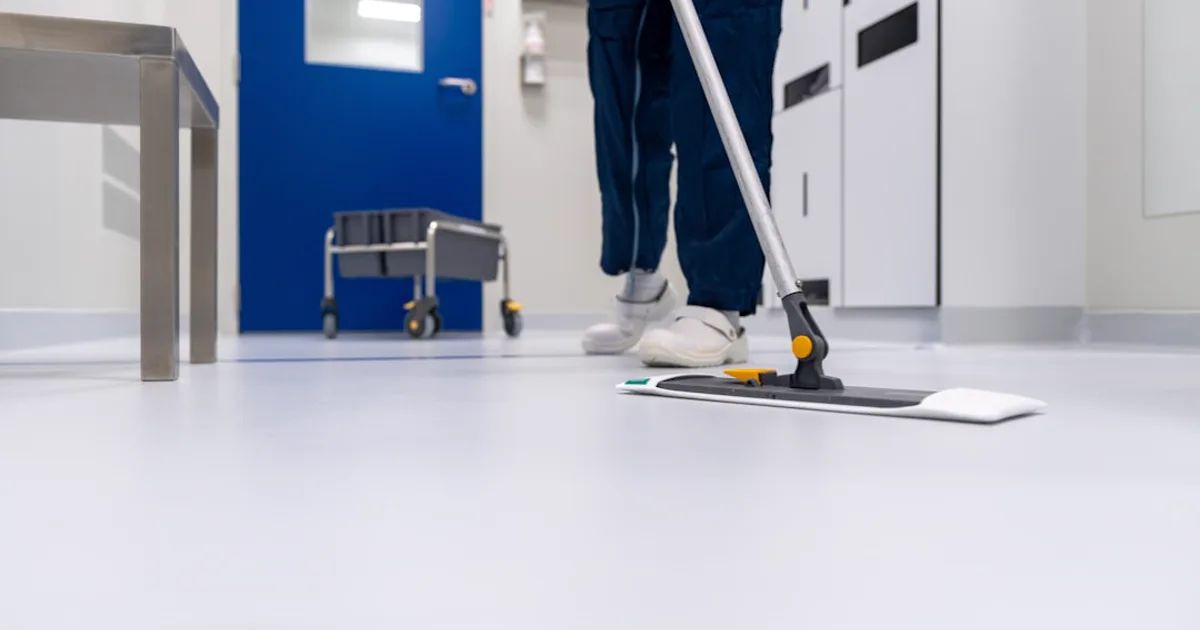
What Green Commercial Cleaning Actually Means
Open almost any janitorial proposal and you'll spot "green" or "eco-friendly" somewhere on the page. Neither term is regulated on its own, though. So it can describe a rigorous, certified program — or nothing more than a swapped-out spray bottle. For a facility or property manager on the hook for occupant comfort, indoor air quality, and vendor credibility, that gap matters. This guide breaks down what green commercial cleaning genuinely involves, and how to tell a substantiated program from marketing language.
Think of it as a whole program, not a single product. Green commercial cleaning combines safer chemical ingredients, lower volatile organic compound (VOC) content, and reduced environmental impact across a product's life cycle with the processes, dilution practices, and equipment that surround them. Conventional products can go the other way. Many contain chemicals associated with eye, skin, or respiratory irritation, and their concentrated forms are sometimes classified as hazardous, which creates handling, storage, and disposal concerns. Those products also reach the environment during normal use, through evaporation and drainage.
Because green cleaning is a service model rather than a product swap, it shows up in how a crew works — not just what it sprays. If you're still mapping out the categories of service, our explainer on the difference between janitorial and commercial cleaning is a useful companion. At Neat & Clean Co, a green approach means matching certified products to the right task at the right dilution, so the eco-friendly cleaning products on the cart actually get used the way they were designed to be.
The Certifications That Actually Mean Something
The most reliable way to cut through green marketing is to look for third-party certification. A mark that an independent body controls is worth far more than a claim a company hands itself.
EPA Safer Choice
The EPA's Safer Choice program reviews every chemical ingredient in a product, no matter how small its share of the formula. Each one has to clear strict criteria for carcinogenic potential, reproductive or developmental toxicity, aquatic toxicity, and environmental persistence. Nearly 2,000 products currently qualify to carry the label, and the program offers an alternate label built specifically for business and institutional buyers — the kind cleaning schools, hotels, offices, and sports venues. Ingredients aren't the whole test, either. Products also have to pass category-specific performance standards, meet pH criteria that limit skin and eye irritation, and restrict VOC content to cut indoor air pollution.
DfE, Green Seal, and Ecologo
For antimicrobial products such as disinfectants and sanitizers, the EPA's Design for the Environment (DfE) label applies that same stringent standard. Independent certifiers like Green Seal and Ecologo run their own third-party review programs as well. For a commercial buyer, the takeaway is simple: a certification you can look up beats a "green" sticker every time. When a provider names a specific certified product, you can verify it. When it just says "eco-friendly," you can't.
How to Spot Greenwashing
Greenwashing — vague environmental claims that don't survive scrutiny — is common enough that the EPA specifically cautions buyers against generic assertions like "environmentally friendly" or "eco safe" that carry no substantiation. The Federal Trade Commission holds the same line: companies making specific claims such as "non-toxic" or "VOC-free" are expected to back them up with evidence.
So look for concrete signals instead of broad language. Genuinely sustainable products avoid harsh ingredients such as ammonia, chlorine, and phthalates; lean on renewable, plant-based solvents; carry low VOC content and a neutral pH; and biodegrade to recognized standards. Ask whether a provider can name the certified products it uses and show you the Safety Data Sheet for each one. A crew that produces that paperwork is telling you something a slogan never will.
Packaging counts too. Concentrated formulas that dilute on-site cut shipping weight and per-use cost, recyclable or recycled-content containers reduce waste, and refillable bottles beat single-use aerosols. None of that shows up in the word "green" — you have to ask.
The Worker and Occupant Safety Case for Green Cleaning
The strongest practical argument for a green program is exposure reduction. Joint OSHA and NIOSH guidance notes that workers who use cleaning chemicals can face irritation and other health effects, that concentrated products can be hazardous to handle, and that incompatible products — bleach and ammonia, for instance — should never be mixed. Good practice pairs safer products with adequate ventilation, the right gloves and eye protection, correct dilution, and training on Safety Data Sheets. Certified safer products lower the exposure your crew carries every shift, and surfaces still get clean.
Occupants gain here as well. Lower-VOC products support better indoor air quality, which matters most in settings with sensitive populations — a point we cover in our guide to cleaning standards for health-sensitive facilities. One more thing worth flagging: the EPA advises limiting disinfectants to surfaces people are likely to touch. General cleaning usually doesn't call for disinfection, so a thoughtful program doesn't reach for the strongest chemistry by default.
What to Ask a Commercial Cleaning Provider
You don't need to be a chemist to vet a green program. A handful of direct questions tells you almost everything:
- Which certified products do you use, and can you show the Safety Data Sheet for each?
- How do you dilute concentrates on-site, and who is trained to do it?
- What's your policy on disinfection versus routine cleaning?
- How do you handle packaging, refills, and waste?
- How are crew members trained on safe handling and chemical storage?
A provider running a real program answers these without hesitation. As you line up scope and frequency alongside them, our overview of how often your office should be professionally cleaned pairs well with the vetting conversation. And if you'd like to see how a certified green approach maps to your building, explore our commercial cleaning service areas or contact us for a walkthrough.
Frequently Asked Questions
Is green commercial cleaning as effective as traditional cleaning?
Yes. EPA Safer Choice–certified products must pass category-specific performance standards and perform comparably to conventional cleaners before they can carry the label, so a certified green program cleans to the same standard without the harsh-chemical trade-offs.
What certifications should I look for in a green cleaning provider?
The most credible marks are the EPA's Safer Choice label and its Design for the Environment (DfE) label for disinfectants, plus independent certifiers like Green Seal and Ecologo. These involve third-party ingredient review, unlike vague "eco-friendly" or "all-natural" claims a company applies to itself.
Does green cleaning cost more for a commercial facility?
Not necessarily. Many green products come as concentrates that dilute on-site, which lowers per-use cost and shipping impact. Any modest price difference is often offset by reduced worker exposure, better indoor air quality, and fewer hazardous-material handling and disposal requirements.
How can I tell if a cleaning company is greenwashing?
Ask for specific, verifiable certifications rather than accepting broad terms like "green" or "natural." A legitimate provider can name the certified products it uses, show Safety Data Sheets, and explain its dilution and disinfection practices. The FTC requires companies to substantiate specific claims like "non-toxic" or "VOC-free."
The Bottom Line
"Green commercial cleaning" carries real value only when it's backed by third-party certification and sound handling practices — the label alone isn't enough. Managers who ask which products are certified, how they're diluted, and how crews are trained end up with lower occupant and worker exposure and a credible sustainability story, without giving up cleaning quality. Treat the questions above as your checklist, and you'll tell a substantiated program from a green-tinted sales pitch in a single conversation.
This article is for general informational purposes only. Cleaning scope, frequency, and pricing vary by facility size, type, and condition. Service availability depends on your location within Neat & Clean Co's service area. Contact us for a quote specific to your facility.
Related articles

School Facility Cleaning Standards: What Schools and Daycares Are Held To
School and daycare cleaning standards aren't one regulation — they're a framework built from CDC hygiene guidance, EPA chemical guidance, and an OSHA standard most administrators have never read. This guide breaks down the three-tier clean-sanitize-disinfect sequence, what the guidance says about frequency, which products belong in a building full of children, where custodial programs quietly fail, and how to write all of it into a janitorial scope of work you can hold a contractor to.

Commercial Kitchen Cleaning Standards: What Restaurants Are Actually Held To
A kitchen can look clean at the end of a shift and still fail an inspection, because cleanliness in food service is a documented standard rather than an impression. This guide walks through the three sets of rules a commercial kitchen answers to, what cleaning, sanitizing, and disinfecting each actually accomplish, how to build a task cadence you can defend to an inspector, and where an outside cleaning crew fits alongside your own staff.
Medical & Dental Office Cleaning Standards: A Facility Manager's Guide
A medical or dental office looks like any other workplace to a cleaning crew, but the standard it is held to is not the same. Here is how CDC surface tiers, EPA-registered disinfectants, and OSHA's rules shape what proper cleaning looks like, and how to hold a commercial partner to it.