How to Choose a Commercial Cleaning Company in Bonita Springs, FL
Choosing a commercial cleaning company for your Bonita Springs facility is a purchasing decision with real consequences for budget, compliance, and reliability. Here's a practical framework — the credentials to verify, the questions to ask, how pricing actually works, and how to match the scope of service to what your building really needs.
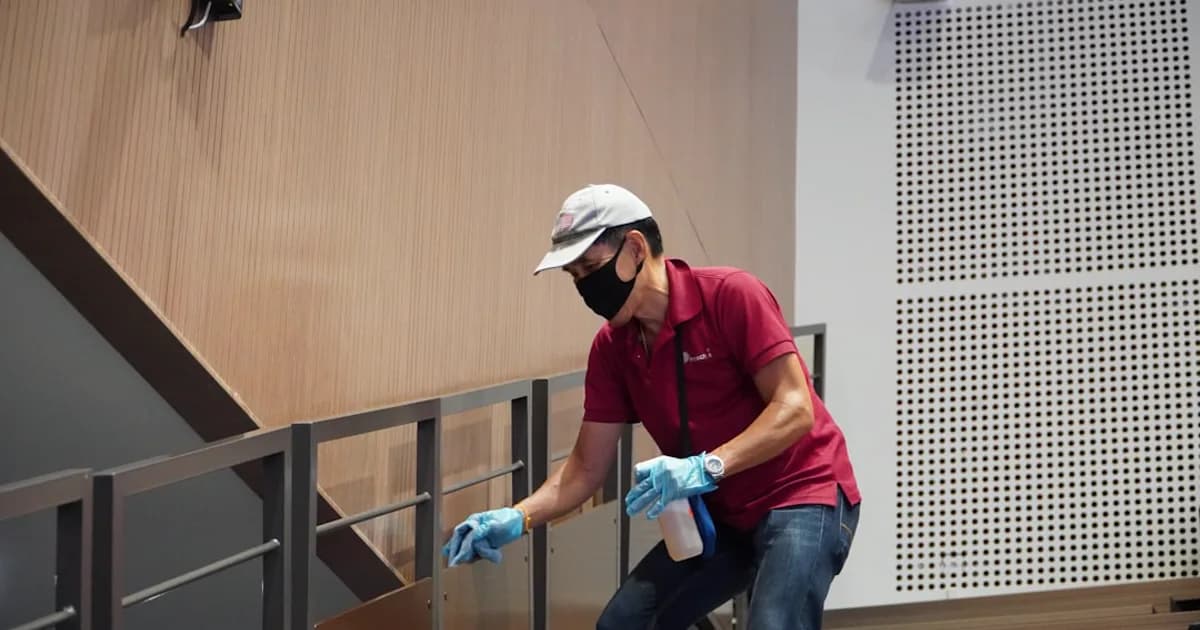
Hiring a commercial cleaning company for a Bonita Springs facility is a purchasing decision, not a chore — and a bad pick tends to announce itself in the worst ways: missed restrooms right before a client visit, a liability gap nobody thought about until an incident, or a revolving door of unfamiliar crews. Knowing how to choose a commercial cleaning company in Bonita Springs really just means treating the search the way you'd treat any other vendor evaluation. Define what you need. Verify the company can deliver it safely. Then compare bids on equal footing.
This guide walks facility, office, and property managers across Southwest Florida through that framework — the credentials to verify, the questions to ask, how pricing actually works, and how to right-size the scope of service to your building.
Start With What Your Facility Actually Needs
Before you call a single provider, get specific about the work. A clear scope is what lets you compare quotes later, and it keeps you from paying for services your building doesn't need.
Define the scope before you call anyone
Write down the basics: square footage, facility type (office, medical suite, warehouse, multifamily, retail), daily foot traffic, and hours of operation. Then list the spaces that drive most of the labor — restrooms, break rooms, entryways, and floor types like carpet, tile, or polished concrete. Note the specialty needs too: post-construction cleanup, tenant turnovers, or periodic floor stripping and waxing. The more precise this list, the more accurate — and comparable — your quotes will be.
Match the scope to your facility: cleaning vs. disinfecting
Not every surface needs the same treatment, and paying for blanket disinfection you don't need is a common way to overspend. The CDC draws a clear line between cleaning and disinfecting: cleaning removes germs and dirt with soap or detergent, while disinfecting uses chemicals to kill the pathogens left behind. For most offices, regular cleaning of high-touch surfaces — door handles, elevator buttons, restroom fixtures, shared desks — is what keeps a space healthy, with disinfection reserved for specific situations like an area where someone has been ill. A provider who understands that distinction will scope your service to your actual risk instead of upselling disinfection across the board.
Credentials and Compliance to Verify
This is the part that separates a professional operation from a person with a van and a bucket. A reputable company hands over this documentation without hesitation.
Insurance, bonding, and workers' comp
Ask for proof of general liability insurance and workers' compensation, and ask whether crews are bonded. Liability coverage protects you if property is damaged. Workers' comp protects you if a cleaner is injured on your site. Bonding covers you against theft. It's worth understanding what being insured and bonded actually means before you accept a certificate at face value — the coverage limits and the named insured matter as much as the paperwork itself.
OSHA and chemical safety
Cleaning crews handle chemicals all day, and there's a regulatory framework around that. OSHA requires employers to keep Safety Data Sheets available for every product used and to comply with the Hazard Communication and personal protective equipment standards. A credible contractor trains its staff on chemical hazards and can describe — or better, document — a written safety program with real supervisor oversight. If a company can't produce Safety Data Sheets or explain how it trains crews, treat that as a red flag, not a minor gap.
Reputation and track record
Third-party signals help you separate marketing from performance. A Better Business Bureau accreditation and an A+ or A rating reflect a company's complaint history and how it responds to customers. Ratings aside, ask for references from facilities like yours — a similar-sized office or property in the region — and actually call them.
Questions to Ask Before You Sign
The sales conversation is your best preview of the working relationship. Vague answers now usually mean vague accountability later.
Scope, scheduling, and communication
Ask who your single point of contact will be and how the company handles callbacks when something gets missed. Ask about crew turnover — high turnover is one of the most reliable predictors of inconsistent quality — and whether the same crew will service your building each visit. Scheduling matters too: many offices are cleaned after hours, so confirm the company can work your building's evening or overnight window without security or access headaches.
The walkthrough and the written quote
Insist on an on-site walkthrough and a written quote that itemizes scope and frequency, rather than a number quoted over the phone. A provider who quotes blind either doesn't understand your building or is guessing — and guesses get corrected later, usually upward. Ask how they handle quality assurance, too. Inspections, task checklists, and supervisor spot-checks are what keep standards from drifting after month one.
How Commercial Cleaning Is Priced
Understanding what drives the number helps you read a bid like an operator instead of a shopper.
Labor is the main driver
Commercial cleaning is fundamentally a labor service. According to the U.S. Bureau of Labor Statistics, this is labor-based work, so your square footage, cleaning frequency, and scope translate directly into crew hours — and crew hours are most of the cost. Providers usually price by the square foot, per visit, or as a flat monthly rate. Any of those can be fair, as long as the scope behind the number is spelled out.
Read bids like an operator
Line the bids up against identical scope and frequency before you compare prices. When one comes in dramatically lower than the rest, it usually isn't a bargain — it's a signal of fewer crew hours, understaffing, or underpaying, which surfaces later as turnover, missed tasks, and callbacks. For a sense of the local range, see our guide to what commercial cleaning costs in Bonita Springs, then judge each bid against the scope it actually covers.
Products, Safety, and Green Cleaning
What a crew brings in the cart affects your occupants as much as your floors, which is why product choices increasingly show up in vendor evaluations.
EPA Safer Choice and green cleaning
The EPA's Safer Choice program certifies cleaning products made with safer chemical ingredients, and a 2024 update added a certification for service providers that use those products — a signal of lower chemical risk to the crew and to the people who work in the space. If sustainability or occupant health is a priority for your organization, it helps to know what green commercial cleaning genuinely involves, so you can tell a substantive program from a label on a bottle.
Honest expectations
Finally, be a little wary of absolute promises. A reputable provider sets realistic expectations about what a cleaning program can and can't do, and backs it with a clear scope and a responsive callback policy rather than sweeping claims. Consistency and accountability are what you're actually buying.
Local Factors for Bonita Springs Facilities
Southwest Florida adds a few wrinkles worth raising during the walkthrough. Humidity and summer rains put extra load on entry mats, hard floors, and any moisture-prone areas, so ask how a provider handles floor care during the wet season. Seasonal occupancy swings matter too — a building that's quiet in August may need more frequent service once snowbird season fills it back up, so confirm the company can flex frequency up and down. And a local provider who already knows Bonita Springs can respond quickly when something comes up, which is hard to put a price on.
Frequently Asked Questions
What should a commercial cleaning company be able to show me before I hire them?
Ask for proof of general liability insurance and workers' compensation, and ask whether crews are bonded. A credible provider can also produce Safety Data Sheets for the chemicals they use and describe how staff are trained on chemical hazards and personal protective equipment, which OSHA requires. If a contractor can't produce this documentation, treat it as a red flag.
Is the lowest commercial cleaning bid usually the best value?
Not usually. Commercial cleaning is a labor-driven service, so an unusually low bid often means fewer crew hours, understaffing, or underpaying — which shows up later as high turnover, missed tasks, and inconsistent quality. Compare bids on the same scope and frequency, not on price alone.
Do I need daily cleaning, or is a few times a week enough for my Bonita Springs office?
It depends on foot traffic, the type of facility, and how visible cleanliness is to your clients. Many small offices do well with two to three visits a week plus a day porter for restrooms and common areas, while medical, food-service, and high-traffic buildings often need daily service. A good provider will recommend a frequency after an on-site walkthrough rather than quoting blind.
What's the difference between cleaning and disinfecting, and does my facility need both?
The CDC treats them as different steps: cleaning removes germs and dirt with soap or detergent, while disinfecting uses chemicals to kill remaining pathogens. For most offices, regular cleaning of high-touch surfaces is enough, with disinfection reserved for specific situations such as areas where someone has been ill. Matching scope to your actual risk keeps costs reasonable.
The Bottom Line
Choosing well comes down to a repeatable framework: define your scope, verify credentials and safety practices, ask the questions that reveal how a company actually operates, compare bids on equal footing, and confirm the products match your building and your people. Do that, and you're not just hiring a cleaner — you're gaining a partner who adjusts as your facility changes. Neat & Clean Co provides commercial cleaning across Southwest Florida; when you're ready, contact us for a quote specific to your Bonita Springs facility.
This article is for general informational purposes only. Cleaning scope, frequency, and pricing vary by facility size, type, and condition. Service availability depends on your location within Neat & Clean Co's service area. Contact us for a quote specific to your facility.
Related articles
How to Choose a Commercial Cleaning Company in Maple Grove, MN
Choosing a commercial cleaning company in Maple Grove is a decision about reliability and liability, not just price. This guide covers how to verify insurance and bonding, confirm OSHA and EPA compliance, read a bid, and vet crews before you sign a janitorial contract.
Commercial Cleaning Cost in Maple Grove, MN: 2026 Price Guide
Budgeting for office or facility cleaning in Maple Grove? Here's what commercial cleaning actually costs in 2026 — per square foot, per hour, and per month — plus the factors that move your quote and how to compare bids before you sign.
How to Choose a Commercial Cleaning Company in St. Paul, MN
Hiring the wrong commercial cleaner costs a St. Paul facility in downtime, liability, and re-bidding. This guide walks through what to verify — insurance and bonding, OSHA-aligned safety, product safety, and how to read a quote — so you can compare providers on value, not just price.