How to Choose a Commercial Cleaning Company in Naples, FL
Choosing a commercial cleaning company in Naples is a facility-risk decision, not just price shopping. This guide walks facility managers through verifying insurance and bonding, vetting a contractor's track record, reading the scope of work, comparing bids on value, and spotting a safety-trained crew before you sign.
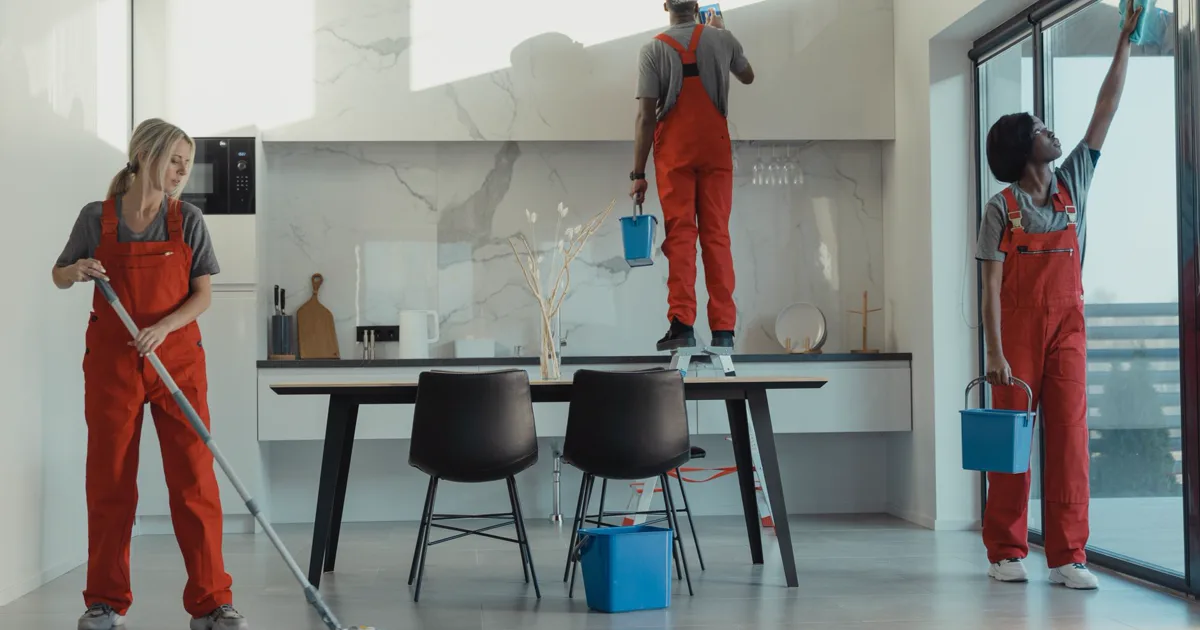
Hiring a commercial cleaning company in Naples looks simple until the first thing goes wrong — a crew that no-shows on a Friday, a mystery scratch on the reception desk, an invoice that doesn't match what you thought you bought. For an office, a medical suite, or a property manager, this is really a facility-risk decision. You're handing a stranger keys, after-hours access, and responsibility for how your space looks to every client who walks in. So it pays to choose the way a careful facility manager should: verify coverage, check the track record, pin down the scope of work, compare bids on value instead of headline price, and read the safety signals that separate a professional operation from a gamble.
Verify Insurance, Bonding, and Workers' Comp
Before you talk square footage or schedules, confirm the company is properly covered. The Better Business Bureau's guidance is blunt: any business you consider should be registered, bonded, and insured. Those three protections aren't interchangeable, and the difference matters most on the day something goes sideways.
A bond protects you against dishonest or criminal acts by the people who come into your building — theft, vandalism, that category. General liability insurance covers accidents, like a crew member cracking a glass door or flooding a break room. Workers' compensation covers the cleaner's own injuries. That last one is easy to overlook and expensive to ignore: if a contractor carries no workers' comp and someone gets hurt on your premises, that injured worker can come back against your policy.
Don't take coverage on faith
A confident "yes, we're fully insured" over the phone is not proof. Ask for a certificate of insurance and the bond details, then call the listed agent or carrier to confirm the policies are active and the limits are high enough for your facility. It takes ten minutes, and it's the single most protective step in the whole process. If you want the plain-English version of what these terms actually cover, our explainer on what an insured and bonded cleaning company really means breaks it down.
Vet the Company's Track Record
Coverage tells you a company can absorb a mistake. Reputation tells you how often they make one. Do this homework before you invite anyone in for a walkthrough.
Check reputation across more than one source
Start with the BBB profile for the rating and any complaint history, then widen the net. The BBB's own advice on researching a business before you hire is to read reviews across several platforms rather than trusting a single star rating, and to check whether formal complaints have been filed. Patterns beat any one review. A company that keeps losing accounts over missed cleanings or surprise billing will show it if you look.
Ask for local references — and actually call them
Request references from commercial clients with facilities like yours: an office manager should ask to speak with other offices, a property manager with other properties. Reluctance to share references is a warning sign in itself. When you do call, ask the questions that predict your own experience. Do crews show up consistently? Is the same team assigned, or does it churn every few weeks? How are problems handled when they come up? Then confirm the company has a real, local Naples or Southwest Florida address and a person who answers — accountability is a lot easier when there's a physical office behind the account.
Read the Scope of Work Before You Sign
Most sour cleaning relationships trace back to a vague agreement. You pictured the glass doors wiped nightly; they priced it monthly. A clear, written scope of work is what keeps expectations and invoices pointed in the same direction.
Get it in writing, task by task
The BBB recommends a written agreement that spells out exactly what the crew will do and on what timeline. For a commercial account, that means naming the tasks — restrooms, floors, trash, glass, kitchen — the frequency of each, and what counts as "done." Keep the nightly work separate from periodic services like floor stripping, carpet extraction, or window cleaning, so nothing lives in a gray zone.
Match the scope to your facility
Settle the practical details too. Does the company supply its own equipment and chemicals? Who supervises the crew and checks their work? How do you report a miss, and how fast is it fixed? A serious provider surveys your building before quoting, so the scope reflects reality — here's what a walkthrough and quote should cover so you know what a thorough one looks like.
Understand How Commercial Cleaning Is Priced
Bids for the same building can vary more than new buyers expect. Understanding what drives the number helps you compare offers honestly instead of just reaching for the lowest one.
Why bids vary so much
Labor is the biggest cost in commercial cleaning. Nationally, the median wage for janitors and building cleaners was about $17.27 per hour in May 2024, and offices are usually cleaned after hours when the building is empty — which shapes both scheduling and rate. Square footage, facility type, foot traffic, and how detailed the scope is all move the price. That's why a flat number quoted sight-unseen over the phone should make you cautious. For local ranges, see our breakdown of commercial cleaning costs in Naples.
The lowest bid usually isn't the best value
The BBB puts it plainly: the least expensive service may not be the best deal for your money. A rock-bottom bid often signals a thinner scope, greener crews, or missing insurance — costs that resurface later as re-cleans, crew turnover, or liability. Compare bids line by line against the same scope of work. When one number comes in dramatically lower, find out what got left out.
Look for Signs of a Safety-Trained Crew
The crews you hire handle chemicals, equipment, and nightly access to your building. A professional operation treats that seriously, and OSHA sets the baseline. Under its cleaning-industry standards, employers are expected to follow Hazard Communication rules — keeping Safety Data Sheets, labeling products, and training workers on the chemicals they use — alongside written safety programs and proper protective equipment.
You don't need to audit their safety manual. You should, though, be able to ask a few questions and get real answers. Are crews trained on the products they use? Are Safety Data Sheets available on request? Do they follow correct dilution and handling? A contractor who can speak comfortably to this is protecting your facility from chemical damage and liability. One who can't is a risk you'd be quietly absorbing.
Frequently Asked Questions
What should I ask a commercial cleaning company before hiring them in Naples?
Ask for proof they're insured, bonded, and carry their own workers' compensation; a written scope of work and schedule; local references you can call; who supplies equipment and chemicals; and how they supervise crews and handle quality checks. Confirm they actually service your part of the Naples and Southwest Florida area.
How much does commercial cleaning cost in Naples, FL?
It depends on square footage, facility type, frequency, and how detailed the scope is, so bids vary widely. Labor is the biggest driver — the national median janitorial wage was about $17.27 per hour in 2024 — and after-hours office cleaning affects the rate. The most reliable way to compare is to get itemized walkthrough quotes rather than a flat phone estimate.
Should I always choose the lowest commercial cleaning bid?
No. The lowest bid often means a thinner scope, less experienced crews, or missing insurance — costs that surface later as re-cleans, turnover, or liability. Compare bids line by line against the same scope of work, and weigh reliability and coverage alongside price.
How do I verify a cleaning company is actually insured and bonded?
Don't take it on faith. Request a certificate of insurance and the bond details, then call the insurance agent or carrier to confirm the policies are active and the coverage limits are high enough for your facility. Also confirm they carry their own workers' compensation.
The Bottom Line — A Naples Facility Manager's Shortlist
Choosing well comes down to five moves: verify the coverage in writing and by phone, vet the track record across sources and references, pin down a task-by-task scope of work, compare bids on value rather than the lowest number, and confirm the crew is safety-trained. Run every candidate through that filter and the risky ones tend to eliminate themselves. Neat & Clean Co provides commercial cleaning and janitorial services across Southwest Florida, including Naples — and if you're ready to hold a real, itemized proposal up against your current provider, you can request an estimate for your facility.
This article is for general informational purposes only. Cleaning scope, frequency, and pricing vary by facility size, type, and condition. Service availability depends on your location within Neat & Clean Co's service area. Contact us for a quote specific to your facility.
Related articles
How to Choose a Commercial Cleaning Company in Maple Grove, MN
Choosing a commercial cleaning company in Maple Grove is a decision about reliability and liability, not just price. This guide covers how to verify insurance and bonding, confirm OSHA and EPA compliance, read a bid, and vet crews before you sign a janitorial contract.
Commercial Cleaning Cost in Maple Grove, MN: 2026 Price Guide
Budgeting for office or facility cleaning in Maple Grove? Here's what commercial cleaning actually costs in 2026 — per square foot, per hour, and per month — plus the factors that move your quote and how to compare bids before you sign.
How to Choose a Commercial Cleaning Company in St. Paul, MN
Hiring the wrong commercial cleaner costs a St. Paul facility in downtime, liability, and re-bidding. This guide walks through what to verify — insurance and bonding, OSHA-aligned safety, product safety, and how to read a quote — so you can compare providers on value, not just price.