How to Compare Commercial Cleaning Bids Side by Side
Three commercial cleaning bids arrive and the monthly prices range from $1,400 to $3,900 — but none of the proposals are organized the same way. The spread almost never means one company is three times better. It means three contractors priced three different jobs. This guide walks facility managers through fixing the scope first, converting every bid to a common unit, building a comparison matrix, checking the labor math against federal wage data, and verifying OSHA and insurance obligations before a contract gets signed.

Three Bids, Three Formats, One Confusing Spread
You asked three commercial cleaning companies to price the same building. They came back at $1,400 a month, $2,600, and $3,900. One sent a single-page letter with a flat number. One sent nine pages with a per-square-foot rate and six periodic line items. One sent an hourly rate and left you to do the multiplication.
A 2.8x spread on one building doesn't mean the expensive company is 2.8 times better. It usually means three contractors priced three different jobs. So learning how to compare commercial cleaning bids starts with a reframe: you aren't comparing prices at all. You're comparing assumptions. Make the assumptions identical and the prices finally start to mean something.
Here's the sequence that does that work — pin down the scope before any bid goes out, convert every proposal to one unit, build a matrix that exposes real differences, back the labor math out of the number, verify the compliance obligations, then break ties with questions instead of another bidding round.
Fix the Scope Before You Request a Single Bid
The largest source of unexplained price spread is bidders pricing different work. Standard procurement guidance on any service contract is to gather at least three written quotes and make sure every bid rests on the same set of criteria, so a side-by-side comparison shows real variance rather than differing guesses. That only happens if every bidder gets the same document.
If you haven't done this before, start by learning to write the scope of work first. A scope specific enough to produce comparable bids pins down:
- Measured cleanable square footage — not lease square footage, broken out by floor type. Carpet, VCT, polished concrete, and tile carry very different labor loads.
- Service frequency per area, not per building. Nightly restrooms with weekly private offices is a different job from nightly everything.
- Periodic work as its own line items, each with a stated frequency: floor refinishing, carpet extraction, high dusting, interior windows.
- Consumables ownership — who supplies and restocks paper, liners, and soap, and whether that cost sits inside the monthly number.
- Access and supervision — hours, key and alarm protocol, and whether a working supervisor is on site or the crew runs unsupervised.
One more step most buyers skip. Write your own cost estimate before the bids arrive. Federal procurement practice treats that estimate as the baseline proposals get measured against, and the logic holds at any scale: without a number of your own, the first bid you open quietly becomes your reference point.
Normalize the Numbers So You Are Comparing the Same Thing
Bids show up as monthly flat rates, hourly rates, per-square-foot figures, and per-visit pricing. Pick one unit and restate all of them in it. Monthly cost divided by cleanable square feet gives cost per square foot per month; monthly cost divided by visits per month gives cost per visit. If the structures themselves are unfamiliar, the differences between hourly, flat-rate, and per-square-foot pricing models are worth understanding first, and cost-per-square-foot benchmarks give you a range to check your converted figures against.
Next, pull the periodic work out of the recurring number. A bid that folds quarterly floor refinishing into the monthly rate reads as more expensive than one that bills it separately — right up until you add that separate billing back in. So build an annualized total for each bidder: twelve months of the recurring rate, plus every periodic line item at its stated frequency, plus an estimate for consumables if they sit outside the contract. That's the first figure that's honestly comparable across all three proposals.
One distinction is worth borrowing from government contracting. Price analysis compares the quotes against each other and against market rates. Cost analysis tests each element inside the number — labor hours, wage rate, supplies, equipment, overhead, profit — for whether it holds up on its own. Most buyers do only the first. The second is what catches the bid that can't actually be delivered for twelve months at the price on the page.
Build the Comparison Matrix
One row per bidder, one column per thing that actually differs. The columns that earn their place:
- Cost: annualized total, cost per cleanable square foot, cost per visit.
- Labor: hours per visit, crew size, supervision hours, whether the supervisor works or only inspects.
- Scope: frequency by area, periodic work included versus excluded, consumables in or out.
- Risk: insurance types and limits, workers' compensation confirmation, licensing, janitorial bonding.
- Materials: products and equipment named by brand, certifications claimed.
- Transition: start date, onboarding plan, named account manager, escalation path.
- Quality: inspection frequency, reporting format, response-time commitment on a missed night.
- Terms: contract length, renewal mechanics, price-escalation clause, termination notice, rework language, change-order provisions, dispute-resolution method.
Weight the columns that drive outcomes — labor hours, supervision, quality monitoring — above the ones that merely feel reassuring. And keep gates separate from scores. Insurance, licensing, and references are pass/fail checks you finish before scoring begins, not points a low price can out-earn.
A blank cell isn't a cheaper bid. It's a less defined one. Chase the blank before you score the row.
Read the Labor Line Against Real Wage Data
Labor is most of what you're buying, so labor is where a bid breaks. Federal wage data gives you a free sanity check. The Bureau of Labor Statistics reports that the median hourly wage for janitors and building cleaners was $17.71 in May 2025, or $36,840 a year, with the bottom ten percent under $13.77 an hour and the top ten percent above $24.17. Sector matters too. Services to buildings and dwellings — the contract-cleaning industry itself, employing about 35 percent of these workers — runs a median of $17.21, below educational services at $18.63, healthcare at $18.35, and government at $20.76.
Now back the math out of each bid. Take the monthly price, divide by visits per month, then divide by the labor hours the bid promises. What you get is an all-in hourly figure that has to cover wages, payroll taxes, insurance, supplies, equipment, overhead, and profit. If that figure lands anywhere near the regional wage median, the overhead and margin are coming from somewhere — and in practice they come from hours that never get worked. The useful question isn't whether a bid is inexpensive. It's whether it can be delivered at that number for a full year.
Turnover is the other cost you absorb either way. Janitorial employment is projected to grow only about 2 percent from 2025 to 2035, yet roughly 321,800 openings are expected annually, mostly from workers leaving the field rather than new positions. In a market like that, a bidder's retention rate, training approach, and supervision ratio stop being soft talking points. A crew that turns over every quarter never learns which doors stick or which restroom runs out of paper first.
Verify Compliance, Insurance, and Who Owns the Risk
Chemical safety is an employer obligation with paperwork attached, and the paperwork is fair game during bid review. Under OSHA's Hazard Communication standard, employers have to maintain safety data sheets for every hazardous cleaning product they use and keep those sheets readily accessible to workers. Training is required before a worker first uses the product, and OSHA specifies what that training must cover: health and physical hazards, proper handling, use and storage including dilution procedures, spill response, required personal protective equipment, and how to read labels and safety data sheets. Which gives you two plain questions for every bidder. Where will the safety data sheets live in my building, and who trains the crew before their first shift here?
Exposure determination is a contract question, not a detail. OSHA's bloodborne pathogens standard requires a written schedule for cleaning and decontamination built around the location within the facility, the surface type, the soil present, and the tasks performed in that area. The standard also makes clear that it is the employer's responsibility to determine which job classifications or specific tasks involve occupational exposure. Your bid documents should say plainly whether the contractor or the building owner owns that determination and the written plan. This matters most in medical and dental offices, clinics, schools, and senior living — and nobody notices the gap until there's an incident.
Insurance and references are gates. General liability covering property damage and bodily injury, plus workers' compensation for every person on your floor, subcontractors included. Request the certificate of insurance from the carrier or agent rather than accepting a PDF the contractor forwards you, check the limits against what your lease and your own insurer require, and confirm the policy period spans your contract term. Then ask for recent local references at comparable facilities and review complaint history. No work starts without a written, signed contract in hand.
Check the Products and Equipment the Bid Actually Names
"Green" in a proposal is a claim, not a specification. The EPA cautions purchasers about exactly this, advising care in interpreting vague or generic product claims — environmentally friendly, eco safe, green — and naming the practice greenwashing. The fix is mechanical. Make the bid name the product and the certification, then verify it in EPA's certified-product search tools rather than taking label copy at face value.
There's real substance behind the certification you'd be checking against. Nearly 2,000 products currently carry the Safer Choice label, including an institutional variant intended for schools, hotels, offices, and venues; EPA reviews performance, pH, and packaging, and examines every ingredient regardless of concentration. If your building tracks certification, there's a procurement payoff too — LEED v4 lists Safer Choice under Existing Building Operations and Maintenance, so certified purchasing earns points toward LEED status.
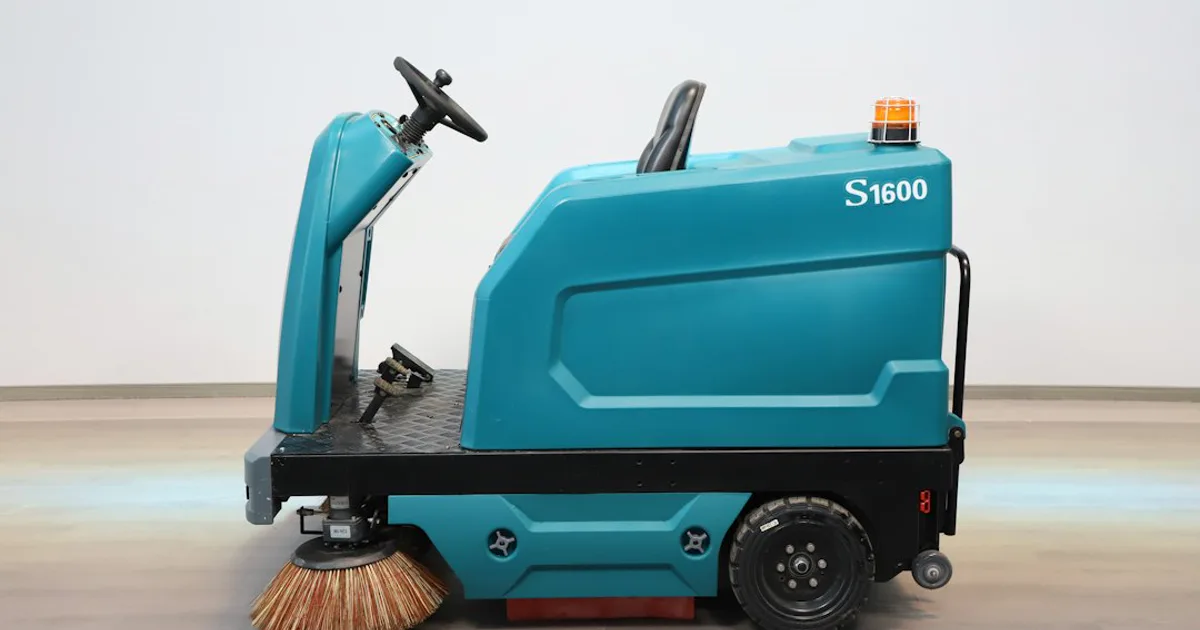
Equipment tells you how seriously the bid was written. HEPA-filtration vacuums, microfiber systems rather than cotton string mops, an auto-scrubber instead of mop-and-bucket on large hard-floor areas, dilution-control dispensing instead of free-pour chemistry. A proposal that names equipment is usually one someone wrote after walking the building.
Break the Tie With Questions, Not Another Round of Bidding
When two proposals score close, going back out to bid throws away the normalization work you just finished. Questions compound your information instead of resetting it. Send both finalists the same short written list and compare the answers side by side:
- Walk me through the labor hours — crew size, hours per visit, and who supervises.
- What happens on a no-show night, and what's your response-time commitment?
- How do you inspect, what report do I get, how often, and in what format?
- What's your turnover rate at accounts like mine, and how long has this crew been together?
- What would trigger a change order, and how is the pricing for one set?
- What's the price-escalation clause at renewal, and how much notice do I get?
If you want a longer list to pull from, the follow-up questions worth asking cover the ground more thoroughly. And ask for the walkthrough if it hasn't happened yet. A contractor who hasn't seen your building hasn't really bid on it.
Frequently Asked Questions
How many commercial cleaning bids should I collect?
Three is the working minimum, and it's the number procurement guidance has long recommended for any service contract. One bid gives you no sense of the market. Two leaves you unable to tell which is the outlier. Three shows a range, and when a proposal sits far outside it, that gap is itself information. Going past five rarely helps. The bigger lever isn't the count — it's whether every bidder priced the same documented scope.
Why is one cleaning bid so much lower than the others?
Usually one of three things. The bidder read your scope differently — maybe they assumed restroom restocking is your responsibility, or priced a four-night week when you asked for five. Or they're pricing labor below what the local market sustains, which shows up later as turnover and missed nights. Or the number is a loss leader meant to be repaired through change orders once you're under contract. None of these is automatically disqualifying, but all three are worth one direct conversation before you score the bid.
What insurance should a commercial cleaning contractor carry?
At minimum, general liability covering property damage and bodily injury, and workers' compensation for every person on your floor, subcontractors included. Ask for the certificate of insurance directly from the carrier or agent rather than a PDF the contractor emails you, confirm the limits meet what your lease or your own insurer requires, and check that the policy period covers your contract term. If the contractor handles keys, alarm codes, or after-hours access, janitorial bonding is worth asking about too. Coverage is a pass/fail gate, not a scoring column.
Should I pick the lowest bid if the scope is identical?
If you've genuinely normalized the scope, verified insurance and licensing, checked references, and confirmed the labor math is sustainable, then price becomes a reasonable deciding factor. The catch is that identical scope is harder to achieve than it sounds — frequency, square footage counted, periodic work, consumables supply, and supervision hours all shift the real cost without changing the headline number. Most bid comparisons that look like a price decision are actually a scope decision nobody surfaced.
Your Bid Review Game Plan
The comparison is won before the bids arrive. A scope document specific enough that three contractors price the same job does more for your decision than any amount of spreadsheet work afterward.
The sequence in one line: document the scope, set your own estimate, collect three written bids, normalize everything to one unit, gate on insurance and references, score the matrix, pressure-test the labor line against wage data, break ties with questions. Then keep the matrix. At renewal it becomes the performance baseline you measure your incumbent against.
Neat & Clean Co provides commercial cleaning across the Minneapolis North Metro, and we're happy to bid against a scope document you wrote rather than one we handed you. If you're ready to put a proposal into your matrix, request an estimate.
This article is for general informational purposes only. Cleaning scope, frequency, and pricing vary by facility size, type, and condition. Service availability depends on your location within Neat & Clean Co's service area. Contact us for a quote specific to your facility.
Related articles

Commercial Cleaning Contract Length: Month-to-Month vs Annual
Most facility managers treat cleaning contract length as a question of how long they're locked in. It's really a question of price and leverage. Here's what a month-to-month term actually buys you, what an annual agreement actually buys you, and why the renewal, notice, escalation, and termination clauses deserve more of your review time than the number of months on the signature page.
One-Time Commercial Cleaning Cost: Deep Clean Pricing Guide
A one-time deep clean rarely matches the per-square-foot numbers you find online, because project work is priced on condition rather than area. This guide breaks down what a one-time commercial cleaning scope actually covers, the three structures providers use to price it, the five factors that move your quote the most, which add-ons sit outside the base bid, and how to put competing proposals on equal footing before you sign anything.

How to Write a Commercial Cleaning RFP: Template and Tips
Four cleaning bids on the same building can land anywhere from $1,400 to $4,900 a month — usually because each bidder priced a different job. A written RFP is what makes those numbers comparable. Here is the document section by section: facility profile, a task-and-frequency scope of work, insurance and OSHA submission requirements, product specifications you can actually verify, and an evaluation structure that scores more than price.