Commercial Cleaning Service Level Agreements (SLAs) Explained
Most cleaning problems are not contract problems. They are gaps in the service level agreement — the exhibit that says what gets cleaned, how often, to what standard, and what happens when a standard is missed. This guide walks through what a commercial cleaning SLA actually is, how it differs from the contract and the scope of work, the sections it should contain, how performance gets verified, and what a realistic agreement costs to staff.
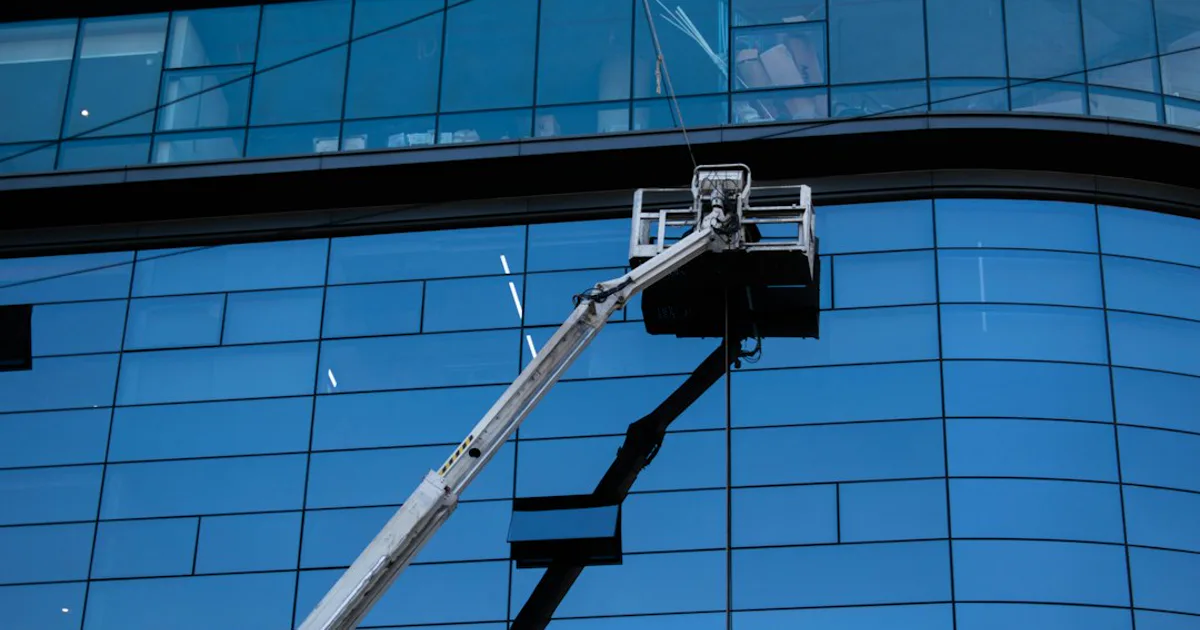
The contract gets signed in January. By April the restrooms are being wiped rather than cleaned, the lobby glass streaks by Tuesday afternoon, and the facility manager calls to complain — then discovers no sentence in the paperwork was actually broken. That gap is what a commercial cleaning service level agreement exists to close. An SLA turns expectations into standards somebody can check, with a defined consequence when one gets missed.
Office building, warehouse, a portfolio of apartment common areas — whatever you manage, the SLA is what decides whether quality is enforceable or just conversational. Below: what an SLA is, the sections it should contain, how performance gets verified, what remedies look like, and what the arrangement costs to staff.
What a Commercial Cleaning Service Level Agreement Actually Is
SLA vs. contract vs. scope of work
Three documents get conflated, and that confusion is the root of most disputes. The contract is the legal shell: parties, term, price, insurance, termination. The scope of work is the task list. The SLA is the performance layer tying each task to a standard, a verification method, and a remedy.
The difference shows up in a single line item. A scope of work says "empty trash daily." An SLA says trash is emptied daily before 7:00 a.m., liners replaced when soiled, verified by weekly inspection of sampled areas, and corrected within one business day of a reported miss. Same task. Only the second version can be audited.
CDC guidance on cleaning programs run by outside companies is blunt about it: all standard program elements must be described explicitly in the service level agreement with the external company to ensure accountability. Anything left to assumption isn't really part of the deal.
Where a good SLA starts
Before you have a vendor. Standards that first show up during contract redlines are being negotiated against a price built on different assumptions. Put them in the bid package instead — the commercial cleaning RFP is where response windows, inspection frequency, and supervision structure belong, so every bidder prices the same obligations.
The Sections Every Cleaning SLA Should Contain
Scope, frequency, and method — by area
One global task list isn't enough. A usable SLA breaks the building into areas — restrooms, entryways, open office, break room, stairwells, dock — and gives each its own task table with the frequency, the method, and the role responsible. "Dust horizontal surfaces" means something different in a server room than on a warehouse mezzanine, and the agreement should say which. If you're building the frequency column from scratch, cleaning frequency by facility type is a reasonable starting point.
Staffing plan and coverage
Headcount, shift windows, arrival times — plus the clause most agreements leave out: what happens when someone calls out. CDC guidance recommends the staffing plan for each area include contingency plans for additional staff. Skip it, and a two-person crew quietly becomes a one-person crew on a Friday night without anyone having breached a thing.
Supervision and reporting lines
You want to know who supervises the crew, how many cleaners that person covers, and who they answer to on your side. CDC guidance suggests specifying the supervisor-to-cleaner ratio — an upper limit around 20 cleaning staff per supervisor keeps routine observation feasible — and establishing a functional reporting line from the vendor's supervisor to your facility's cleaning program manager. That second piece is the one people skip, and it's what keeps quality oversight inside your building rather than the vendor's org chart.
Products, equipment, and access
Which products and equipment are used, who supplies and maintains what, and the logistics that cause friction later: keys, badges, alarm codes, after-hours access.
How Performance Gets Verified
Verification runs on two methods. Direct observation, where a supervisor watches the work being performed, and indirect assessment, where someone inspects the result afterward. An SLA should commit to both — they catch different failures.
CDC guidance for contracted programs sets a useful floor. Supervisors should observe performance at minimum weekly, with closer attention to new staff. The facility should sample its own areas rather than rely on contractor self-reporting; the outpatient benchmark cited is at least 10 to 15 percent of relevant areas inspected weekly. Findings go back to the cleaning staff promptly, and aggregate results to management, so trends surface early.
Two further mechanisms are worth writing in. A standing monthly meeting between your facility manager and the vendor to review performance and log deficiencies gives both sides a forum that isn't a complaint call. The other is a comprehensive program audit every one to two years, run by someone independent of the contractor, which catches what routine inspection has quietly normalized — CDC guidance notes those findings can inform changes to the agreement itself.
What this framework doesn't hand you is a scorecard. Which metrics to track, how to weight them, and what counts as a passing score are covered in how to measure a janitorial contract.
Response Windows, Remedies, and Exit Terms
Tiered response times
A single blanket response time fails in both directions: too slow for anything urgent, too aggressive for everything routine. Tiers work better. Same-day for anything creating a slip, trip, or safety hazard. Next business day for a missed routine task. A week or two for a corrective action plan when inspections show a pattern rather than a one-off.
Remedies that actually get used
Re-performance at no charge, a credit against the next invoice, a documented corrective action plan, and only then termination for cause. Sequence them so the first tier is cheap and administrative, because a remedy nobody will invoke isn't a remedy. Facility managers sign agreements whose only stated consequence is termination all the time, then absorb mediocre work for a year because replacing the vendor is the more disruptive option.
Term and exit
The cure period and the notice period have to line up with the term. A 30-day cure window inside a 30-day notice period leaves no room to act; a long cure period inside a long term can lock in a problem for most of a year. Month-to-month versus annual contract terms covers the tradeoff.
Safety and Compliance Clauses Worth Writing In
Hazard communication is a federal floor
Under OSHA's Hazard Communication standard, 29 CFR 1910.1200, an employer must keep a safety data sheet in the workplace for every hazardous chemical in use, keep those sheets readily accessible to employees, and train workers at initial assignment and again whenever a new chemical hazard is introduced. Training has to cover the products' health and physical hazards, handling and storage including dilution, spill response, and the personal protective equipment each product requires.
None of that is optional, which makes it easy to put in an SLA: require a current SDS set — binder or digital equivalent — accessible in your building, with training records available on request. Worth stating by reference too: certificates of insurance, workers' compensation coverage, and the background-check policy.
Product specifications you can borrow
You don't have to write chemical specifications from scratch. EPA's model custodial contract language requires products certified to named third-party standards — Green Seal 37 or Safer Choice for general-purpose cleaners, Green Seal 40 or Ecologo/UL 2777 for floor care, Ecologo/UL 2759 for hard surface cleaners — "to the maximum extent practicable," plus optional language for purchasers who want products that restrict or eliminate PFAS.
One limit, though. EPA's model language delegates verification to the certification bodies and sets no efficacy standard or performance benchmark of its own. A certification clause specifies what comes into the building; it says nothing about how well the work was done. Use it alongside a performance standard, not instead of one.
What a Realistic SLA Costs
Labor is what an SLA is really buying. Bureau of Labor Statistics data for May 2023 puts janitors and cleaners (SOC 37-2011) at roughly 2.17 million workers nationally, with a mean wage of $17.43 per hour — about $36,250 a year — and a median of $16.84. Add payroll taxes, insurance, supervision, supplies, and equipment, and you have the floor under any monthly price.
The arithmetic follows: every clause that adds staffed hours, tightens a response window, or lowers the supervisor ratio moves the price, because each one buys more on-site time. That isn't a reason to write a weak SLA. It's a reason to write the standards your building genuinely needs and let the price settle where it settles, rather than signing an aggressive agreement at a number that can't staff it. That second path leads straight back to the April phone call.
Frequently Asked Questions
Is a service level agreement the same thing as a cleaning contract?
No. The contract is the legal instrument — parties, term, price, insurance, termination. The SLA is the performance exhibit attached to it: what gets cleaned, how often, to what standard, how that is verified, and what happens when a standard is missed. Most disputes that look like contract disputes are really gaps in the SLA.
How often should a cleaning vendor's performance be inspected?
More often than most agreements specify. CDC guidance for contracted programs recommends supervisors observe performance at least weekly, particularly for new staff, and that the facility sample its own areas weekly rather than rely on contractor self-reporting. A monthly review meeting plus a deeper audit every one to two years by someone independent of the contractor covers the rest.
Can an SLA require specific cleaning products?
Yes, and there's a federal template for the language. EPA's model custodial contract language requires products certified to named third-party standards — Green Seal 37 or Safer Choice for general cleaners, Green Seal 40 or Ecologo/UL 2777 for floor care — "to the maximum extent practicable." A certification clause verifies what goes into the building, not how well the work was performed, so it supplements a performance standard rather than replacing one.
Putting Your Cleaning SLA to Work
An SLA has one job: turn expectations into something checkable. A one-page agreement you actually inspect against beats a twenty-page one nobody opens after signing. So pull your current cleaning agreement and see whether it covers scope by area, contingency staffing, supervision ratio, verification method, and remedy. If any of the five is missing, you've probably found where your quality problems come from.
Neat & Clean Co works with facility and property managers across the Minneapolis North Metro, and we're happy to walk through an SLA structure for your building. See where we work on our commercial cleaning service areas page, or request an estimate.
This article is for general informational purposes only. Cleaning scope, frequency, and pricing vary by facility size, type, and condition. Service availability depends on your location within Neat & Clean Co's service area. Contact us for a quote specific to your facility.
Related articles
Signs Your Office Needs More Cleaning Visits Per Week
A cleaning schedule built for last year's office can fall behind. Here are the signs your office needs more cleaning visits per week, and how to turn them into a new plan.
Commercial Cleaning Pricing Models: Per Square Foot, Hourly or Flat Rate
Per square foot, hourly or flat rate: how each commercial cleaning pricing model builds a quote, which jobs it fits, and how to line bids up before you sign.
Commercial Cleaning Cost by Facility Type: Office, Medical and Industrial Ranges
Office, medical and industrial buildings do not cost the same to clean. Here are the published per-square-foot ranges and the labor, scope and frequency factors behind them.