Commercial Window Cleaning Cost: What Buildings Pay in 2026
Two contractors can quote the same building and land three times apart — and the glass is almost never the reason. This guide breaks down what commercial window cleaning actually costs in 2026, the three pricing units contractors use and what each one signals, why access method matters more than pane count, the OSHA roof-anchor certification that falls on the building owner, and the seven line items that make competing bids genuinely comparable.
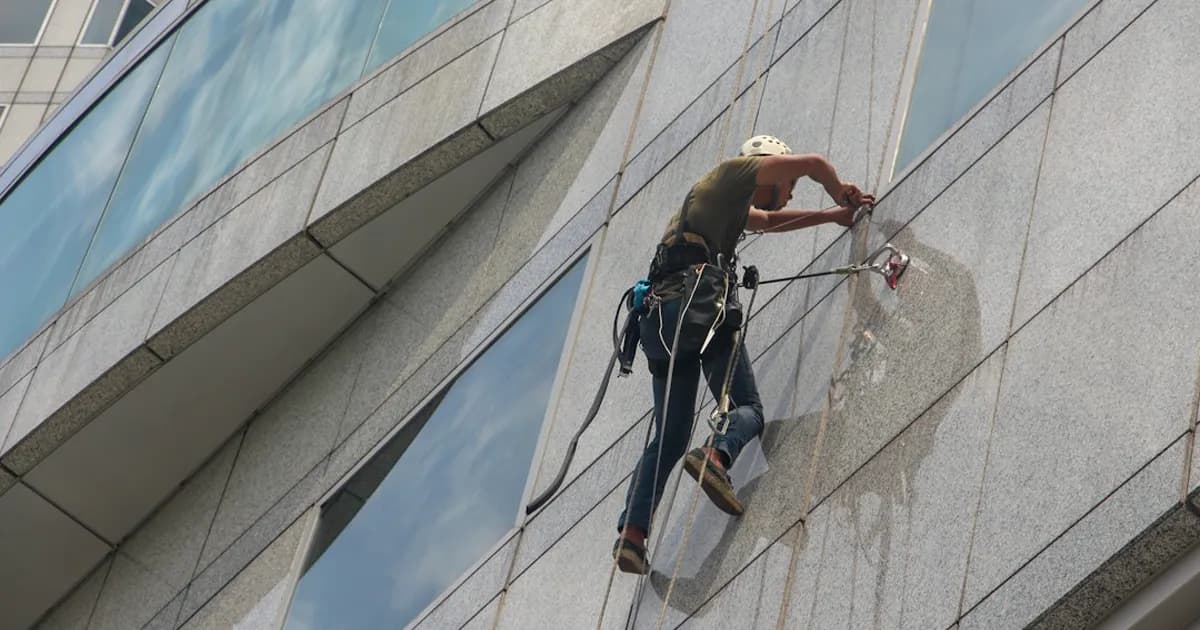
Why Two Bids on the Same Building Can Differ by Three Times
Window cleaning sits in an awkward spot on a facility budget. Too expensive to treat as incidental. Too irregular to benchmark the way you benchmark nightly janitorial. Most facility managers see a quote once or twice a year, have no reference point for whether the number is reasonable, and end up either accepting the first bid or picking the low one and hoping for the best.
What makes it frustrating is that quotes for an identical building routinely land far apart — and the spread almost never comes from the glass. It comes from how the contractor plans to reach that glass, who they intend to put on the job, and what they've quietly left out of the scope. Read those three things off a bid and the pricing stops being a mystery.
Here's what commercial window cleaning costs in 2026: how the three pricing units work, why height dominates every other factor, the OSHA requirement that lands on the building owner rather than the contractor, and the line items that make competing bids actually comparable.
What Commercial Window Cleaning Actually Costs in 2026
Contractors quote window work three ways, and the unit they pick tells you how they're reading your building.
Per pane is the default for storefronts, single-story offices, and anything a technician can reach from the ground or a short ladder. Accessible glass generally runs somewhere in the range of $4 to $15 per pane. That's a wide band for a reason: the number tracks access difficulty, not window size. A storefront pane a technician handles with a water-fed pole sits near the bottom; identical square footage two floors up with no safe ladder footing sits near the top. Confirm whether the quote counts each pane once or counts both sides separately, because exterior-plus-interior scopes are usually billed per side.
Per hour shows up when the condition of the glass is unknown — post-construction cleanup, a building that's gone several years without service, anything where nobody can count panes from the parking lot with confidence. Hourly protects the contractor against surprises, and on genuinely unpredictable work it protects you from a padded flat rate.
Per square foot of glass is standard for curtain wall and large storefront systems, where "panes" stops being a meaningful unit of measurement at all.
Whole-building visits break down roughly like this. A small single-story office suite or retail space typically lands in the low hundreds per visit. A mid-size low-rise with 100 to 200 panes, cleaned inside and out, usually falls between the high hundreds and low thousands. Anything requiring rope descent or a lift gets priced per elevation, frequently runs into the thousands per visit, and should be quoted after a site walk rather than over the phone.
One benchmarking caution. Don't measure a window quote against the cost per square foot for general commercial cleaning. Janitorial square footage counts floor area at a few cents per foot; window pricing counts glass area at a completely different rate. Comparing the two numbers produces sticker shock that has nothing to do with whether the bid is fair.
Why Height Drives the Price More Than Glass Count
Access method is the real cost multiplier, and it sorts into three tiers.
Tier one — ground reach. Water-fed poles and short ladders. One or two technicians, no specialized certification, the lowest cost per pane you'll see.
Tier two — rope descent. Trained technicians, fall-protection equipment, rigging and de-rigging time on every elevation, and a documented roof anchorage. Per-hour cost steps up noticeably here.
Tier three — powered platform, suspended scaffold, or boom lift. Equipment rental or use of the building's own system, substantially longer setup, often a larger crew, and higher insurance carried against the work.
Published wage data shows the labor gap plainly. Janitors and building cleaners earned a median $17.71 per hour in May 2025 — that's the ground-level baseline, and the Bureau of Labor Statistics lists window washing inside the standard duty set for the occupation. The specialized building-cleaning category that captures dedicated window work tells a different story: a mean of $21.03 per hour, with the pay distribution running from $14.14 at the 10th percentile to $29.25 at the 90th. A roughly two-to-one spread inside a single occupation is the clearest published explanation for why two bids on one building diverge. They aren't pricing different glass. They're pricing different crews.
That gap isn't closing soon, either. BLS projects just 2 percent employment growth for janitors and building cleaners between 2025 and 2035, against roughly 321,800 openings every year driven almost entirely by turnover. The scarce input isn't labor in general — it's trained, retained crews certified for above-ground work. Scarcity shows up in the quote.
Interior Glass, Exterior Glass, and What Bundling Changes
Interior glass is often the least expensive window cleaning a building buys, and the reason is structural. Because window washing already sits inside what standard commercial cleaning includes, interior panes, glass partitions, and entry doors can ride along in a janitorial scope at low marginal cost. Buy interior glass as a standalone visit and you're paying a mobilization charge for work a crew is already on site to perform. Ask how janitorial pricing models would absorb it before treating it as a separate purchase.
Exterior work is where you're genuinely buying specialization. That price carries the access method, the fall-protection program, the insurance, and the weather risk the contractor is accepting on your behalf. Most buildings settle into a sensible split: interior glass folded into the recurring janitorial contract, exterior bid separately on a semiannual or quarterly cycle.
The frequency math runs counter to intuition. Each visit on a shorter cycle has less mineral scale, pollen, and road film to remove, so per-visit labor drops. Four quarterly visits often cost less over a year than two heavily-built-up semiannual visits — particularly when the second of those two turns into restoration work rather than cleaning.
The Budget Item Most Buildings Forget: OSHA Anchor Certification
If any elevation of your building requires rope descent, there's a line item that belongs in your budget rather than the contractor's. Plenty of owners discover it late.
Under 29 CFR 1910.27, before any rope descent work begins the building owner must inform the employer in writing that the owner has identified, tested, certified, and maintained each anchorage so that it can support at least 5,000 pounds in any direction for every worker attached to it. The contractor's obligation is the mirror image: obtain that written assurance and keep it on file for the duration of the job. No document, no descent — regardless of what the service agreement says or how the schedule looks.
It also recurs. The certification has to rest on an annual inspection by a qualified person, with formal certification of each anchorage at least every 10 years. OSHA accepts proof-testing at 2,500 pounds against a 5,000-pound ultimate capacity with a four-to-one safety factor, or testing to the full 5,000-pound capacity. Either way, this is structural engineering work, billed separately on its own schedule, and not something a cleaning quote folds in.
There's a ceiling, too. OSHA caps rope descent systems at 300 feet, a limit adopted from the ANSI/IWCA I-14.1-2001 consensus standard on window cleaning. Above that height a building must be serviced by powered platforms or suspended scaffolds, which changes the cost structure of every single visit for the life of the property.
What a Complete Window Cleaning Bid Should Itemize
Seven lines turn a pile of incomparable numbers into a decision you can defend:
- The pane count or glass square footage the price is based on, and whether panes are counted per side
- Access method for each elevation — pole, ladder, rope descent, lift, or the building's own platform
- Scope detail: glass only, or frames, sills, tracks, and screens
- Hard-water and mineral-scale restoration as a separate line, because it's a separate process with separate labor
- Frequency and the per-visit price at that frequency, not just an annual total
- Certificate of insurance limits, plus confirmation of a written fall-protection program for any above-ground work
- Weather and reschedule policy, which in Minnesota decides whether your spring visit happens in April or June
Two things are worth specifying yourself rather than waiting to see them. First, a minimum temperature threshold for exterior work and a clear answer on who makes the call to postpone. Second, cleaning products where they matter to you: the EPA's Safer Choice program certifies products made with ingredients safer for human health and the environment, and the label gives you a requirement you can write into a contract and verify by checking what actually arrives on the cart — no chemical evaluation required on your end. The same discipline applies here as anywhere else in facility procurement; our guide to comparing cleaning bids side by side walks through the normalization step in more detail.
What Minnesota Winters Do to a Window Cleaning Schedule
North Metro buildings deal with a specific set of conditions that shape both cost and calendar.
Road salt and de-icer spray leave a film on lower elevations and entry glass that accumulates all winter, which makes a spring exterior visit effectively non-negotiable for any building where appearance matters to tenants or customers. Hard water across much of the metro compounds it. Mineral deposits that sit long enough will etch the glass, and at that point you're buying restoration rather than cleaning. Consistent frequency is the most cost-effective prevention available.
Freeze-thaw cycles set the practical exterior season at roughly April through November for full building work, while entry glass and interior panes stay on a year-round schedule handled by the janitorial crew. The scheduling consequence is simple and often ignored: book the spring slot during winter, because every building in the metro wants the same two weeks in April.
Frequently Asked Questions
How much does commercial window cleaning cost per window?
Most commercial window cleaning is quoted somewhere between $4 and $15 per pane for accessible ground-floor and low-rise glass, climbing well past that once the work requires rope descent or a powered platform. The per-pane number is really a proxy for access difficulty rather than glass size — a storefront window a technician reaches with a water-fed pole sits at the low end, while the same square footage forty feet up with no safe ladder footing sits at the high end. Buildings with large curtain-wall sections are often priced per square foot of glass instead, and multi-story work is frequently quoted as a flat per-visit price for the whole elevation.
How often should a commercial building have its windows cleaned?
Twice a year is the common baseline for a low-rise office or industrial building, and most facility managers in the Minneapolis North Metro land on a spring and fall rotation that brackets the winter salt season. Properties where glass is part of the customer experience — retail frontage, medical and dental offices, restaurants, senior living common areas, car dealerships — usually move street-facing elevations to quarterly or monthly while keeping the rest of the building semiannual. Higher frequency lowers the per-visit price because each visit has less buildup to remove, so four lighter visits often cost less annually than you'd guess from doubling a semiannual quote.
Why do window cleaning quotes for the same building vary so much?
The two biggest drivers are the access method the contractor plans to use and the labor they intend to put on the job. Published wage data shows specialized building cleaning work ranging from about $14 to $29 an hour across the pay distribution, and a crew trained and equipped for rope descent or suspended work costs materially more per hour than a ground-level crew. A low bid is sometimes a genuinely efficient operator and sometimes a plan to do the job with a ladder where a lift is called for — which is exactly why the access method belongs in writing on every quote you compare.
Does the building owner have to pay for roof anchor certification?
Yes. Under OSHA 29 CFR 1910.27, the building owner — not the cleaning contractor — must identify, test, certify, and maintain each roof anchorage so it can support at least 5,000 pounds in any direction for every worker attached, and must provide that assurance in writing before anyone goes over the parapet. The certification has to rest on an annual inspection by a qualified person, with formal certification of each anchorage at least every 10 years. It is a structural engineering engagement billed separately from the cleaning itself, and a building with undocumented anchors cannot be serviced by rope descent at all until the paperwork exists.
Your Window Cleaning Budget Plan
The single most useful shift in how you read a window cleaning quote: price the access method, not the glass. Once you know which of the three tiers your building falls into, the number in front of you becomes a budget line rather than a mystery.
Practically, that means three things. Get the pane count and the access method per elevation in writing on every bid you collect. If any elevation needs rope descent, budget anchor certification separately and on its own renewal schedule. And lock your spring slot before the snow melts. Neat & Clean Co handles commercial window and glass care alongside recurring janitorial work across the Minneapolis North Metro — you can see the commercial cleaning service areas we cover, or request an estimate for your building.
This article is for general informational purposes only. Cleaning scope, frequency, and pricing vary by facility size, type, and condition. Service availability depends on your location within Neat & Clean Co's service area. Contact us for a quote specific to your facility.
Related articles

Commercial Cleaning Contract Length: Month-to-Month vs Annual
Most facility managers treat cleaning contract length as a question of how long they're locked in. It's really a question of price and leverage. Here's what a month-to-month term actually buys you, what an annual agreement actually buys you, and why the renewal, notice, escalation, and termination clauses deserve more of your review time than the number of months on the signature page.
One-Time Commercial Cleaning Cost: Deep Clean Pricing Guide
A one-time deep clean rarely matches the per-square-foot numbers you find online, because project work is priced on condition rather than area. This guide breaks down what a one-time commercial cleaning scope actually covers, the three structures providers use to price it, the five factors that move your quote the most, which add-ons sit outside the base bid, and how to put competing proposals on equal footing before you sign anything.
How to Write a Commercial Cleaning RFP: Template and Tips
Four cleaning bids on the same building can land anywhere from $1,400 to $4,900 a month — usually because each bidder priced a different job. A written RFP is what makes those numbers comparable. Here is the document section by section: facility profile, a task-and-frequency scope of work, insurance and OSHA submission requirements, product specifications you can actually verify, and an evaluation structure that scores more than price.