Construction Dust Removal: HVAC, Ducts, and Surface Cleaning
The punch list is signed and the finishes are in, but the building still fails the white-glove test. Construction dust is finer than ordinary facility dust, it keeps resettling for days, and where masonry or concrete was cut it is a regulated exposure hazard rather than a cosmetic one. Here is how construction dust removal is sequenced — protecting the HVAC system during the build, deciding whether the ducts genuinely need cleaning, and running the surface passes that hold.
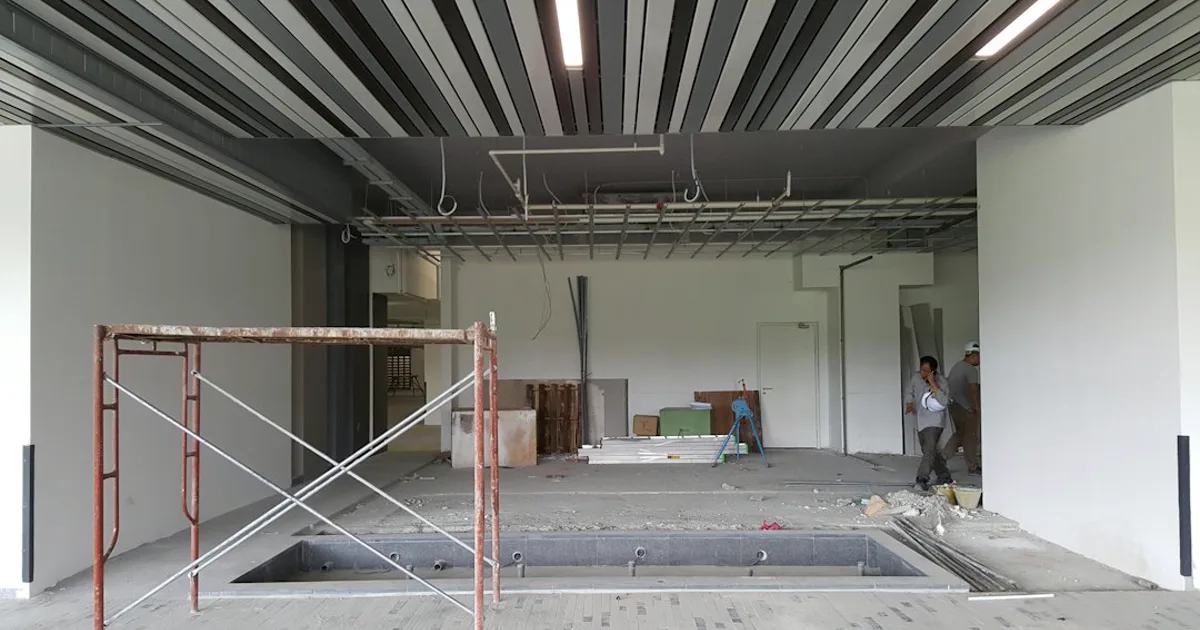
The punch list is signed, the finishes are in, and the space still fails the white-glove test. Someone runs a finger along a door header and comes back grey. That's where most facility teams learn that construction dust removal is a different job from a deep clean — dust from drywall sanding, concrete cutting, and tile work is finer than ordinary facility soil, it keeps settling for days, and in a building where masonry was cut it's a regulated exposure hazard rather than a cosmetic complaint.
Get it wrong and you pay for it in delayed occupancy, complaints in the first month of tenancy, and dust loaded into brand-new HVAC equipment. Here's what makes this dust behave the way it does, how to protect the HVAC system before cleaning starts, when ductwork genuinely needs attention, and the surface sequence that holds.
Why Construction Dust Isn't Ordinary Facility Dust
Particle size and the re-suspension problem
Office dust is mostly fiber, skin, and tracked-in soil. It's heavy, it lands, and a vacuum takes it away. Joint compound sanding, concrete grinding, mortar removal, and tile cutting produce something else: particles fine enough to stay suspended for hours and keep dropping onto horizontal surfaces long after the trades pack up. Crews clean a space on Friday, nobody touches it over the weekend, and Monday the sills and door frames are grey again.
Method matters more than effort here. Dust that fine moves easily, so the wrong tool spreads it instead of removing it. For how a build gets cleaned in stages, we covered the three phases of a post-construction clean separately.
When dust is a regulated hazard, not a finish problem
Cutting, grinding, milling, and drilling concrete, masonry, tile, and engineered stone release respirable crystalline silica. NIOSH documents the OSHA permissible exposure limit of 50 micrograms per cubic meter of air as an 8-hour time-weighted average, with an action level at half that figure. On a project where that work happened, how the dust gets removed becomes a compliance question and not only a quality question. A crew arriving with push brooms and a leaf blower isn't doing a weaker job — it's doing the specific thing the standards tell you not to do.
Protect the HVAC System Before You Ever Clean It
Seal the registers and keep the system off
The most valuable step happens before the cleaning crew arrives. EPA's guidance is direct: during construction or renovation work that produces dust, seal off supply and return registers and do not operate the heating and cooling system until after the dust has been cleaned up. Keeping dirt out of the system is the most effective protection available, because once fine dust is inside the ductwork you're no longer cleaning a surface — you're cleaning a closed network you can't see.
On a live jobsite that means register covers taped and verified rather than handed to a sub, temporary filtration on any air mover running in the space, and a written rule that nobody fires up the permanent system for comfort heat. Which is exactly what happens on a February build in Minnesota unless someone owns the decision.
What happens when the system did run
Plenty of projects fail that test. Dust loads onto the cooling coil, coats the blower wheel, and settles in the trunk lines, discharging back into the space every time the fan cycles — one of EPA's own triggers for cleaning. New equipment running with a loaded coil also loses capacity, and that's a cost the facility absorbs rather than the contractor.
Filters as the recovery tool
EPA recommends using the highest-efficiency filter the equipment manufacturer recommends and changing filters regularly. After a build, "regularly" is far shorter than the normal interval. Plan a change at the end of the detail clean and another before occupancy, because the filter is catching what's still coming out of the air.
When Ducts Actually Need Cleaning — and How It's Done Right
The three triggers
Duct cleaning gets sold hard after construction, so it helps to know where the line sits. EPA doesn't recommend it as routine maintenance and notes it has never been shown to prevent health problems. Three specific conditions get named instead: substantial visible mold growth on hard duct surfaces or system components, infestation by vermin, or ducts clogged with enough dust and debris that particles are actually released into the space from supply registers.
Applied to a finished build, the decision usually resolves itself. Registers sealed and system off: a filter change plus a coil and blower inspection is often the whole scope. System running during drywall sanding: assume the ducts loaded up, and inspect before deciding.
The correct method
When cleaning is warranted, EPA describes well-controlled brushing of duct surfaces combined with contact vacuuming, soft-bristled brushes on fiberglass duct board and internally lined sheet metal, and vacuum equipment that exhausts outside the building or carries HEPA filtration if it exhausts indoors. Get that last detail in writing. A non-HEPA vacuum discharging indoors takes dust out of the duct and puts it in the room.
What to decline
Two upsells deserve a flat no. Chemical biocides and ozone inside ductwork are poorly supported: no biocide is currently registered for use in fiberglass-lined ducts, and little research demonstrates effectiveness for most biocides and ozone used inside ducts. EPA likewise advises against sealants except where no other option is feasible. A provider leading with sweeping health claims is telling you something useful about how they sell.
Surface Cleaning: The Sequence That Actually Works
Top-down, HEPA first, damp second
Order of operations carries most of the result. High horizontal surfaces and exposed structure come first — door headers, duct tops, light fixtures, ledges, window frames — then walls and fixtures, then floors. HEPA vacuum before any wet work, because damp-wiping a dusty surface turns compound powder into a film you remove twice. Our post-construction cleaning checklist for general contractors has the room-by-room version if you're writing a scope document.
Why dry sweeping and compressed air are off the table
NIOSH is explicit that dry sweeping and compressed air should be avoided in housekeeping, because both re-suspend settled dust and create a second exposure event out of material that had already landed. OSHA's construction standard carries the same logic in regulatory form: dry sweeping and dry brushing are restricted where they could contribute to silica exposure unless wet sweeping or HEPA vacuuming isn't feasible, and compressed air can't be used on surfaces unless it's paired with ventilation that effectively captures the dust cloud.
Field data backs it up. A NIOSH evaluation of silica exposures during drywall sanding found dry sweeping redistributed settled silica into the air, recommended damp cleaning and HEPA vacuums for post-work cleanup, and identified sanding of dried compound — especially final finish passes — as the largest interior dust generator on a finish-out.
Equipment that earns its place
A shop vacuum without HEPA media isn't a dust tool; it's a dust distributor. NIOSH recommends a HEPA filter so collected dust isn't discharged back into the worksite, a pre-filter or cyclone stage to extend the HEPA element's life, and a filter-change indicator with filters replaceable without exposing the operator. Where cutting or sanding is still underway, source capture pays for itself: local exhaust ventilation has been shown to reduce respirable crystalline silica exposure by roughly 5 to 20 times versus no dust control.
Settle, repeat, and bag the waste
Build the second pass into the schedule rather than treating it as a failure. A workable cycle is a full detail clean, a 24 to 72 hour settling window with the HVAC running on a fresh filter, then a re-wipe of horizontals and another filter change before occupancy. Spaces with open ceilings or trades still working overhead need longer. Then finish at the dumpster: dust-laden filters, debris, and used PPE go in sealed bags or closed containers, because NIOSH notes exposed waste keeps generating airborne dust after the work stops.
Scope, Documentation, and Who Owns What
Draw the line in the contract
Most handover disputes are scope disputes. Define in writing whether rough, interim, and final cleaning sit with the general contractor or the facility, and name the ductwork and HVAC components explicitly — the most common gap in a turnover scope, because everyone assumes it belongs to someone else. The same discipline applies to high-structure dust in industrial space, which we cover in our guide to warehouse and industrial cleaning standards.
What compliance expects on silica work
If silica-generating work happened, there should be paperwork. The construction silica standard requires a written exposure control plan describing the tasks that create exposure, the engineering controls and work practices used, and the housekeeping measures in place, plus a competent person designated to implement it. Asking for that plan is a fair question from an owner, and the answer tells you how the dust was managed before anyone started cleaning it.
Documentation worth keeping
Three records settle almost every "it wasn't clean at handover" conversation: dated photos before and after each pass, a filter change log, and a signed walkthrough against a written punch list. All of it is easier to produce during the work than to reconstruct a month later.
Frequently Asked Questions
Do air ducts always need cleaning after construction?
No. EPA doesn't recommend duct cleaning as routine maintenance and notes it has never been shown to prevent health problems. Its triggers are specific: substantial visible mold growth on hard duct surfaces or components, vermin infestation, or ducts clogged badly enough that particles are visibly released from supply registers. Where registers were sealed and the system stayed off, a filter change and a coil and blower inspection are often all the ductwork needs. Where the system ran during drywall sanding, inspect before deciding.
How long does construction dust keep settling after the work is done?
Fine dust stays airborne for hours and keeps dropping onto surfaces for days, which is why one pass rarely holds. Plan a detail clean, a 24 to 72 hour settling period with the HVAC running on a fresh filter, then a second pass on horizontal surfaces and a filter change before handover. Open ceilings, exposed structure, or trades still working overhead all extend that cycle.
Can crews just blow the dust out with compressed air?
They shouldn't, and where silica-generating work occurred they generally can't. OSHA's construction silica standard bars compressed air for cleaning surfaces unless it's paired with ventilation that effectively captures the dust cloud or no alternative is feasible, and restricts dry sweeping and dry brushing on the same reasoning. NIOSH is equally direct: both re-suspend settled dust. Wet methods and HEPA vacuuming are the accepted alternatives.
What makes a vacuum acceptable for construction dust?
True HEPA filtration, plus a design that keeps dust contained during service. NIOSH recommends a HEPA filter so collected silica-containing dust isn't discharged back into the space, a pre-filter or cyclone stage to protect the HEPA element's service life, and a filter-change indicator with filters replaceable without exposing the operator. A shop vacuum without HEPA media moves fine dust from the floor into the air.
The Bottom Line on Construction Dust Removal
Construction dust removal is a sequence, not a single deep clean. Protect the HVAC system while the work is happening, check the ductwork against EPA's actual triggers instead of defaulting to a cleaning, work top-down with HEPA vacuuming ahead of damp wiping, and put the second pass on the calendar before anyone schedules occupancy. Method is what separates a space that passes the white-glove test from one that keeps shedding dust for a month.
Neat & Clean Co handles post-construction cleaning for contractors, property managers, and facility teams across the Minneapolis North Metro, including the duct and HVAC component questions that fall between trades. If you have a project approaching handover, request an estimate and we'll scope it against the building rather than a square-foot average.
This article is for general informational purposes only. Cleaning scope, frequency, and pricing vary by facility size, type, and condition. Service availability depends on your location within Neat & Clean Co's service area. Contact us for a quote specific to your facility.
Related articles
Post-Construction Cleaning Checklist for General Contractors
The final clean is the last thing standing between a general contractor and substantial completion, and it is usually the least precisely scoped item on the schedule. This phase-by-phase checklist covers what belongs in the rough clean, why construction dust control is a regulated activity rather than a labor line, the HVAC steps that have to happen before occupancy, and how to hand a cleaning vendor enough detail to return a comparable number.
Post-Construction Cleaning Phases Explained
A finished building isn't a usable one until the dust and debris are gone. Post-construction cleaning runs in three distinct phases—rough, final, and touch-up—each with its own purpose. Here's what happens in each, how crews handle silica dust safely, and what to ask before you hire a commercial cleaning partner.