Office Deep Cleaning Cost in the Twin Cities: Spring Pricing
Spring deep-clean quotes in the Twin Cities often land 40 percent apart on the same building, and the spread usually comes down to scope and crew hours rather than one bidder being wrong. This guide breaks down what a deep clean actually covers, why Minneapolis-area cleaning labor runs about ten percent above the national mean, the three pricing models facility managers encounter, the five factors that move the number most, and how to normalize competing bids before you sign anything.
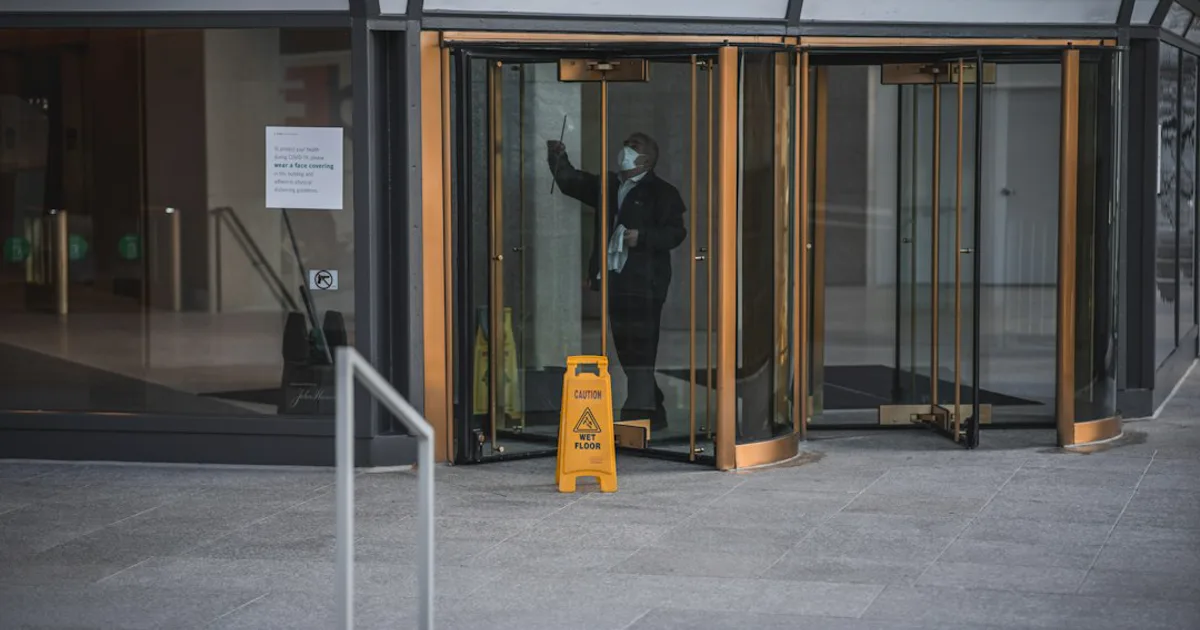
Three Quotes, Forty Percent Apart
You send the same walkthrough to three providers. Same building, same 12,000 square feet of office, same request for a spring deep clean. The numbers come back nowhere near each other. The low bid looks like a mistake, the high bid looks like a test, and the middle bid just sits there being unhelpfully reasonable.
It's almost never because one provider got it wrong. It happens because "deep clean" isn't a defined product — it's a block of labor hours pointed at whatever scope you wrote, and if you didn't write one, each bidder invented their own. Office deep cleaning cost in the Twin Cities comes down to two things: how many crew hours the work takes, and what an hour of cleaning labor costs in this metro. That second number isn't what national price guides assume.
Below: what a spring deep clean covers, what Minneapolis-area wages do to the quote, the three pricing models you'll see, the five factors that move the number most, and how to get competing bids onto the same footing. Neat & Clean Co handles this work across the Minneapolis North Metro, and the service-area page for your city covers scheduling specifics.
What a Spring Office Deep Clean Actually Includes
The surfaces recurring service never reaches
A recurring janitorial contract is built around cadence — the same surfaces on the same rhythm, which is what keeps a building presentable between resets. A deep clean exists to handle what that cadence structurally cannot reach:
- Vents, diffusers, and high dusting above reach height, plus light fixtures and ceiling corners
- Baseboards, door frames, partition tracks, interior glass on both sides, and window sills
- Hard-floor restoration — a scrub-and-recoat where the finish is tired, a strip-and-recoat where it's spent
- Carpet extraction, which is a different job from the nightly vacuum and uses different equipment
- Restroom descaling, grout work, and partition detail beyond the daily wipe-down
- Appliance interiors, break-room detail, and upholstered seating
The Minnesota-specific spring workload
There's a reason a Twin Cities spring clean runs bigger than the same clean in a milder market. Five months of salt, sand, and ice melt get tracked across entry carpet and floor finish, and the residue doesn't vacuum out. It bonds. By March, entry zones and traffic lanes carry a film that needs chemistry and extraction to lift. A winter of sealed, recirculated air also leaves noticeably more settled dust on vent faces and anything above eye level — scope a national template simply doesn't budget for.
What a deep clean is not
Scope inflation often rides in on disinfection language, so be precise here. CDC facility guidance is to clean high-touch surfaces regularly and other surfaces when they are visibly dirty, reserving disinfection for areas where people have obviously been ill or high-traffic spaces where you want the extra step. Blanket disinfection of every surface isn't the default posture. That same guidance has surfaces cleaned before they're disinfected, because residue makes disinfecting chemicals less effective. So a deep clean is reach-and-scope work that resets the building's baseline. Not a disinfection event, and not something that makes a building germ-free.
What Twin Cities Labor Costs Do to Your Deep-Cleaning Quote
Here's the number most facility managers have never seen. According to the Bureau of Labor Statistics, building and grounds cleaning and maintenance occupations in the Minneapolis-St. Paul-Bloomington metro averaged a mean hourly wage of $21.68 in May 2025, against $19.66 nationally. Roughly two dollars an hour, or about ten percent.
The sharper point is the comparison. Across all occupations, that same release puts the metro mean at $35.86 against $33.54 nationwide — a premium of about seven percent. Cleaning labor carries a larger local premium than the Twin Cities labor market does overall, which means a flat cost-of-living bump applied to a national cleaning price guide under-reads this trade every time.
Labor is the dominant input in a deep clean, so a ten percent labor delta shows up close to proportionally in your quote. Think of it as a method rather than a price: estimated crew hours times a loaded hourly rate, plus equipment and consumables, plus overhead and margin. If a provider can't show you the first two inputs, you have a total but no way to evaluate it. Our overview of Twin Cities commercial cleaning labor rates goes deeper on how loaded rates get built.
How Deep-Cleaning Work Gets Priced
Three pricing models and when each fits
Flat project bid against a written scope. Usually the cleanest arrangement for a one-time deep clean: you know the number before work starts, and the provider carries the risk of having underestimated hours. The catch is that the scope document has to be real. A flat bid against a vague scope is a dispute scheduled for later.
Per square foot. Useful for comparing proposals across similar layouts, and for budgeting a portfolio. One caution: deep cleans and recurring cleans produce very different per-foot figures, and the two should never be compared against each other. That's the most common way a cleaning budget gets set wrong.
Hourly with a not-to-exceed cap. Right when condition is genuinely unknown — a long vacancy, a space after an event. Hourly without a written cap shifts all the estimation risk onto you.
Why two honest bids can differ a lot
BLS reports the national median hourly wage for janitors and building cleaners at $17.71 in May 2025, with the bottom ten percent under $13.77 and the top ten percent over $24.17 — roughly a 1.75-fold spread inside a single occupation. Within contract cleaning specifically, the median sits at $17.21, below the medians in government, education, and healthcare work. Crew composition, supervision ratio, and what equipment actually shows up explain most of the gap between two numbers on the same building. An experienced crew with a working supervisor and a truck-mounted extractor is a different product from three people and rented equipment, even when the scope paragraph reads identically.
After-hours is the norm, not a surcharge
Because office buildings are usually cleaned when empty, BLS notes that many cleaners work evening hours as a matter of course. Evenings and weekends are standard for this trade, not a premium you should expect to pay. What does legitimately raise a price is a narrow window — a single Saturday night, say — which forces a larger crew into fewer hours.
The Five Factors That Actually Move the Number
1. Square footage and layout density. An open plan and a floor of private offices at the same square footage are not the same job. Partition count, door count, and furniture that has to be moved all convert directly into hours.
2. Floor type and finish condition. Usually the largest single swing. VCT needing a full strip-and-recoat can cost several times a scrub-and-recoat on the same footprint, and the difference is visible at a walkthrough if someone knows what to look for. On soft flooring, soil load and method drive the number — our comparison of commercial carpet cleaning methods covers where extraction earns its cost and where encapsulation is enough.
3. Restroom and break-room count. The highest labor-per-square-foot rooms in any building, by a wide margin. Two extra restrooms can move a quote more than a thousand extra square feet of open office.
4. Access window and building rules. Freight elevator hours, badge escorts, tenant notice, noise restrictions. None of it is cleaning work, and all of it is time somebody pays for.
5. Product and documentation specifications. The EPA's Safer Choice label is written explicitly for institutional purchasers at facilities including office buildings, and the EPA also certifies cleaning services that use those products. LEED v4 lists Safer Choice under its existing-building green cleaning section, so labeled products can contribute toward a building's LEED status. A green-cleaning spec is something you can write into scope deliberately. It may carry a modest product premium, and that premium belongs in the budget conversation up front rather than arriving as a surprise.
Deep Clean vs. Recurring Janitorial: Two Budgets, One Building
These are different financial objects, and they behave badly when combined. Recurring janitorial is an operating line, scoped around cadence. A deep clean is a scheduled project with a start and an end. Folding the second into the first hides both — you lose the ability to see whether your recurring scope is right, and the ability to defend the project cost on its own terms.
The relationship is straightforward: a deep clean resets the baseline, the recurring cadence holds it. Skip the reset for a few years and the recurring scope creeps upward anyway, because crews start spending nightly hours fighting buildup that belonged in one project pass. Practical sequencing for most Minnesota offices is to deep clean in spring once salt season is over, then review the recurring scope against what the deep clean exposed. A line-by-line cleaning budget worksheet keeps the two lines visible next to each other.
Comparing Quotes Without Comparing Apples to Oranges
Normalize scope before you look at a single price. Write one scope document, send the identical document to every bidder, and require them to price that rather than their own read of your building. Then ask for crew size and estimated hours, not just the total — those two inputs are the only things you can actually compare across proposals, and a provider who won't share them is telling you something.
Confirm the overhead a credible rate has to carry. OSHA's bloodborne pathogens standard requires covered employers to maintain a written cleaning and decontamination schedule tailored to location within the facility, surface type, soil present, and tasks performed — alongside personal protective equipment, hepatitis B vaccination offers, training, and recordkeeping. A written hazard communication program is separately required wherever staff may be exposed to hazardous chemicals. Those programs cost money to maintain, and a bid priced below that overhead is usually missing it rather than beating it.
Finally, get change-order terms in writing for the case where condition turns out worse than the walkthrough suggested. And weigh crew continuity seriously. BLS notes the occupation is entered with no formal educational credential and short-term on-the-job training, against roughly 321,800 projected annual openings nationally. Supervision and a stable crew are the real quality differentiators here, and they're line items with a cost attached.
Frequently Asked Questions
How much does an office deep clean cost in the Twin Cities?
There's no single number, because a deep clean is priced off labor hours rather than a flat menu item. The useful anchor is local wage data: BLS put the mean hourly wage for building and grounds cleaning and maintenance work in the Minneapolis-St. Paul-Bloomington metro at $21.68 in May 2025, about ten percent above the $19.66 national mean. Ask any provider to show the estimated crew size and hours behind their number, then compare those inputs rather than the total.
Is a spring deep clean different from regular janitorial service?
Yes, and the difference is scope rather than effort. Recurring janitorial keeps high-touch surfaces, restrooms, and trash on a cadence. A deep clean reaches what that cadence never gets to — vents and diffusers, high dusting, baseboards and corners, interior glass, hard-floor restoration, carpet extraction, and the salt and grit a Minnesota winter tracks in. Most facilities budget the two separately.
Why does office deep cleaning cost more in spring?
Two things stack up in March through May. Minnesota winter leaves a specific workload behind — salt residue, sand, ice-melt film on hard floors and entry carpet — so the scope is genuinely larger than an autumn clean. At the same time every facility manager in the metro is calling at once, which compresses available crew hours into a short window.
Should I pay per square foot or by the hour for a deep clean?
For a one-time deep clean, a flat project bid against a written scope is usually cleanest: you know the number, and the provider carries the risk of underestimating. Per-square-foot pricing works well for comparing proposals across similar layouts. Hourly makes sense when condition is genuinely unknown — after a long vacancy, say — but it should come with a not-to-exceed cap in writing.
How far ahead should I schedule a spring office deep clean?
Four to six weeks for most offices, and longer if you need a specific weekend or a hard-floor restoration that has to cure before Monday. Because office buildings are usually cleaned when empty, this work happens evenings and weekends, and those slots fill first during the spring rush.
Your Spring Deep-Clean Game Plan
The number on a deep-clean proposal is a function of hours, and hours in this metro cost about ten percent more than national price guides assume. Budget from that reality rather than a national average and most of the sticker shock disappears. Three moves get you there: write the scope yourself before anyone quotes it, book four to six weeks ahead of the spring rush, and compare crew-hours instead of totals. If you want a walkthrough on your building, find the service-area page for your city or request an estimate and we'll price the scope you wrote.
This article is for general informational purposes only. Cleaning scope, frequency, and pricing vary by facility size, type, and condition. Service availability depends on your location within Neat & Clean Co's service area. Contact us for a quote specific to your facility.
Related articles

Fall Commercial Cleaning Checklist for Minnesota Facilities
In Minnesota, pre-winter facility work has a deadline that has nothing to do with your calendar — it ends at the first hard freeze. Exterior rinsing, floor refinishing, gutter clearing, and anything that needs water or dry time all stop being possible once temperatures stay below freezing. This checklist walks through what to finish this fall, in what order, and which items genuinely cannot wait until spring.

Winter Indoor Air Quality in Minnesota Offices: Filters, Vents and Dust
Winter indoor air quality in a Minnesota commercial building comes down to filters, vents and dust. Here is what EPA guidance says and who should handle each task.
Twin Cities Commercial Cleaning Labor Rates: A 2026 Overview
Facility managers comparing janitorial bids keep asking for the going hourly rate in the Twin Cities, and the honest answer is that no single number exists. Federal wage data sets one benchmark, Minnesota and two city ordinances set three different legal floors depending on the job-site address, and a burden stack of taxes, insurance, supervision, and newly required paid break time sits between a cleaner's wage and the figure on your invoice.