Cleaning Chemicals in Your Building: What to Ask Your Janitorial Provider
Before a janitorial crew works in your building, ask about the chemicals. Here are the questions on safety data sheets, disinfectants, mixing, ventilation and green claims.
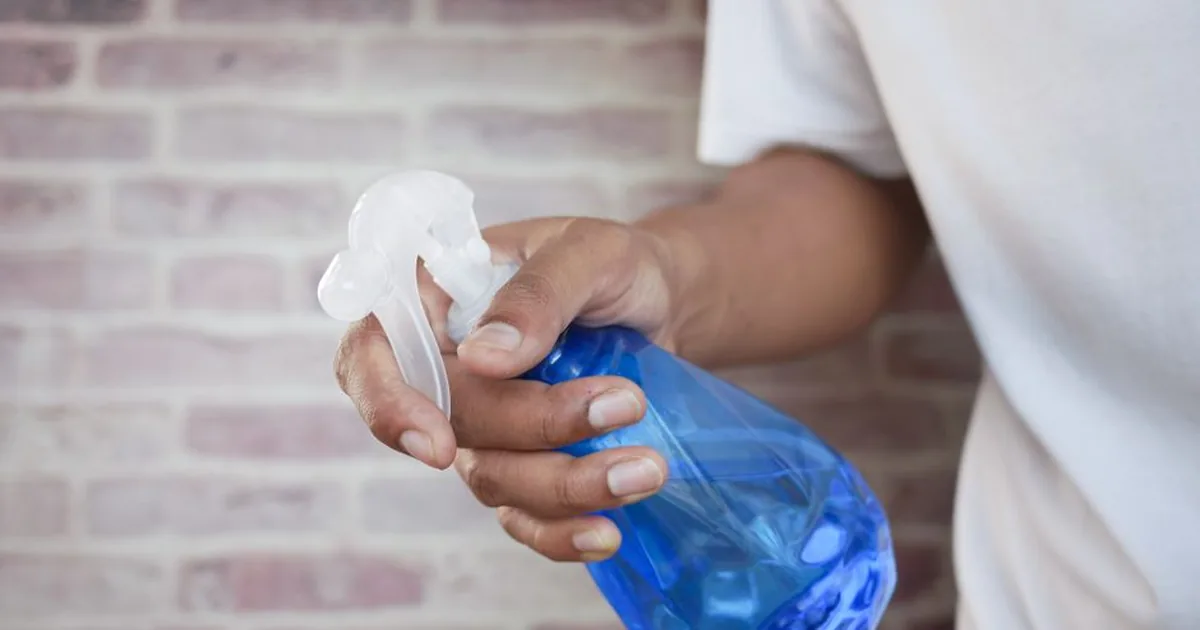
When you hire a janitorial provider, you hand over more than a schedule. The products a crew brings into your building share air, surfaces and restrooms with your staff, tenants and visitors. Most buyers ask about price, hours and scope. Few ask about the chemicals, and the answers say a lot about how a provider runs its work.
These commercial cleaning products questions are worth putting on your list before you sign anything. They cover safety data sheets, which product goes where, mixing and contact time, ventilation and protective gear, and how to read green claims. Each one comes with what a clear answer sounds like.
Ask for the safety data sheets
Start with paperwork. Under OSHA's Hazard Communication standard, employees have to be informed of the hazards they work with and trained in safe practices. CDC and NIOSH guidance puts it plainly: employers must ensure employees have access to cleaning products' safety data sheets, and training should follow what those sheets say.
A safety data sheet, or SDS, lists a product's hazards, handling, first aid and protective gear. For your building, that makes it the quickest way to see what is actually being used in your restrooms, kitchens and lobbies.
Questions to ask
- Can you show me the SDS for each product used in our building?
- Where are the sheets kept, and can crew members get to them during a shift?
- How do crew members learn what is in each product before they use it?
What a good answer sounds like
A provider with an organized chemical program can name its products and produce the sheets without a scramble. If the answer is "we use standard stuff," keep asking.
Cleaner or disinfectant: which product goes where
Not every surface needs a disinfectant. EPA's guidance on greener cleaning products says disinfectants should be limited to frequently touched surfaces such as bathroom fixtures and doorknobs, and that routine cleaning of walls and floors usually doesn't need them. A stronger product used everywhere adds exposure and not much else.
The three terms also mean different things on a label. If your scope mentions all of them, our explainer on cleaning, sanitizing and disinfecting walks through the differences.
Questions to ask
- Which areas of our building get a disinfectant, and which get a general cleaner?
- Why did you choose that split for our space?
- Can the plan change if we have a specific need, such as a shared kitchen or a high-traffic entrance?
What a good answer sounds like
The provider explains the reasoning by surface and traffic, not by habit. A crew that disinfects everything the same way every visit hasn't really looked at your building.
Mixing, concentration and contact time
Two of the most common chemical mistakes happen at the cart, not in the product itself. The first is mixing. CDC and NIOSH guidance says to never mix disinfectants with cleaners, other disinfectants, or other chemicals. Chlorine gas can be released when sodium hypochlorite, the active ingredient in bleach, meets an acidic cleaner. Mixing can also change a disinfectant so it may no longer be effective.
The second is how the product is used. The same guidance tells workers to follow the manufacturer's instructions for concentration, application method and contact time, which is how long the surface has to stay visibly wet. Wiping a disinfectant off right after spraying can defeat the point of using it. Mixing a stronger dilution isn't better either. It adds fumes and skin exposure with no benefit.
Questions to ask
- How do crew members measure dilution, by eye or with a dispensing system?
- What is the rule about mixing products, and how is it taught?
- How does the crew handle contact time on the surfaces that get a disinfectant?
What a good answer sounds like
You hear specifics about measured dilution and a firm no-mixing rule. Vague confidence isn't a process.
Ventilation and protective gear
Chemicals are only part of the picture. The same CDC and NIOSH page treats ventilation as the first line of protection: engineering controls such as adequate ventilation are the preferred control methods for reducing worker exposures. Respirators come later, only when engineering or administrative controls are not feasible or fully effective, and they require a written program under 29 CFR 1910.134.
For skin and eyes, the guidance says to use proper barrier protection when working with disinfectants, and to review the product label before every use. Glove choice matters too, since the right material depends on the chemical.
For you as the building owner or manager, this shows up in practical ways. Can doors or air handling be managed while a product with strong fumes is in use? Are restrooms and small rooms left open to air out? Does the crew wear gloves and eye protection when the label calls for them?
Questions to ask
- What protective gear does the crew wear with the products used in our building?
- What do you need from us on ventilation in small or enclosed rooms?
- Who owns the training on labels and gear, and how often is it refreshed?
Green claims and ecolabels
Many providers say they use green products. The word alone doesn't tell you much. EPA warns that vague terms like "environmentally friendly," "eco safe" and "green" can be greenwashing, and points buyers toward third-party ecolabels instead.
One of those is EPA's Safer Choice label. According to EPA, it is a voluntary program, and EPA reviews all chemical ingredients, regardless of their percentage in the product. The review also looks at performance, packaging, pH and volatile organic compounds, and EPA runs annual audits so a product has to keep meeting the standard. A related Design for the Environment label covers antimicrobial products such as disinfectants and sanitizers.
A label is not a promise that a product suits every surface or person, and EPA itself notes that real risks at typical exposure levels are often uncertain and in many cases probably low. Still, a third-party label gives you something to verify, which a front-label adjective does not.
Questions to ask
- Which of the products used in our building carry a third-party label such as Safer Choice?
- For products without one, what do the SDS say about hazards?
- Do you keep fragrance-free options for people who are sensitive to scents?
The Bottom Line
You don't need a chemistry degree to ask good questions. Ask to see the SDS, ask where disinfectant is used and why, ask how crews dilute and avoid mixing products, ask about ventilation and gear, and ask which labels are third-party. A provider that works from a real process will answer plainly. One that can't is telling you something too.
These sit alongside the broader questions to ask a commercial cleaning company about scope, staffing and references. If you manage a building in the Twin Cities north metro, you can see where we work on our page for commercial cleaning for Twin Cities North Metro buildings, or request an estimate and bring your chemical questions with you.
Frequently Asked Questions
Should a janitorial provider hand me the safety data sheets?
Employers must make sure their own workers can reach the SDS for every cleaning product they use. As a facility manager you can still ask to see the SDS for the products used in your building. A provider with an organized chemical program can produce them without a scramble.
Does a green label mean a product is safe for every surface and person?
No. EPA says terms like green or eco safe can be greenwashing. A third-party ecolabel such as Safer Choice means EPA reviewed the ingredients, which is a stronger signal than a front-label word, but you should still check the SDS and the product label for the surface in question.
Do all surfaces in the building need disinfectant?
EPA advises limiting disinfectants to frequently touched surfaces such as bathroom fixtures and doorknobs. Routine floor and wall cleaning usually doesn't need them.
What is contact time?
Contact time is how long a disinfectant has to stay visibly wet on a surface to work. Wiping it off sooner can defeat the product, so the manufacturer's label sets the time to follow.
This article is for general informational purposes only. Cleaning scope, frequency, and pricing vary by facility size, type, and condition. Service availability depends on your location within Neat & Clean Co's service area. Contact us for a quote specific to your facility.
Related articles
Commercial Floor Care Programs: Daily, Interim, and Restorative Work Explained
Most buildings do not have a floor care problem — they have a floor care schedule problem. Floors look acceptable for eight months and then suddenly look like they need replacing. A commercial floor care program is simply three tiers of work — daily, interim, and restorative — assigned to each floor surface at a defined frequency. This guide explains what each tier covers, how traffic and floor type set the intervals, where slip resistance and documentation fit, what the program costs, and how to scope it into a janitorial contract.
Day Porter Duties Checklist for Commercial Properties
Day porter service shows up on almost every commercial cleaning proposal, usually as a line item with no definition behind it. Two bids for the same building can differ by twenty hours a week and nobody notices until service starts. This checklist walks through a porter's shift the way it actually runs — opening round, restroom loop, touchpoint round, trash and reset work, and the unscheduled response that fills the rest of the day — then covers how to size the hours and turn the list into contract language.
Janitorial Employee Background Checks: What to Ask a Cleaning Company
Cleaning crews often work in your building with keys and codes and few staff around. Here is what to ask a cleaning company about employee screening, what the law asks of them, and how to read the answers.