OSHA Housekeeping Standard 1910.22 Explained for Warehouses
Most warehouse managers file 1910.22 under general tidiness. It is a performance standard with a named hazard list and an inspection-and-repair clause attached, and it applies to every aisle, dock, and mezzanine in the building. Here is what each paragraph requires, how those requirements read on a working warehouse floor, where snow and spills complicate things in Minnesota, and how to set a cleaning cadence you can defend.
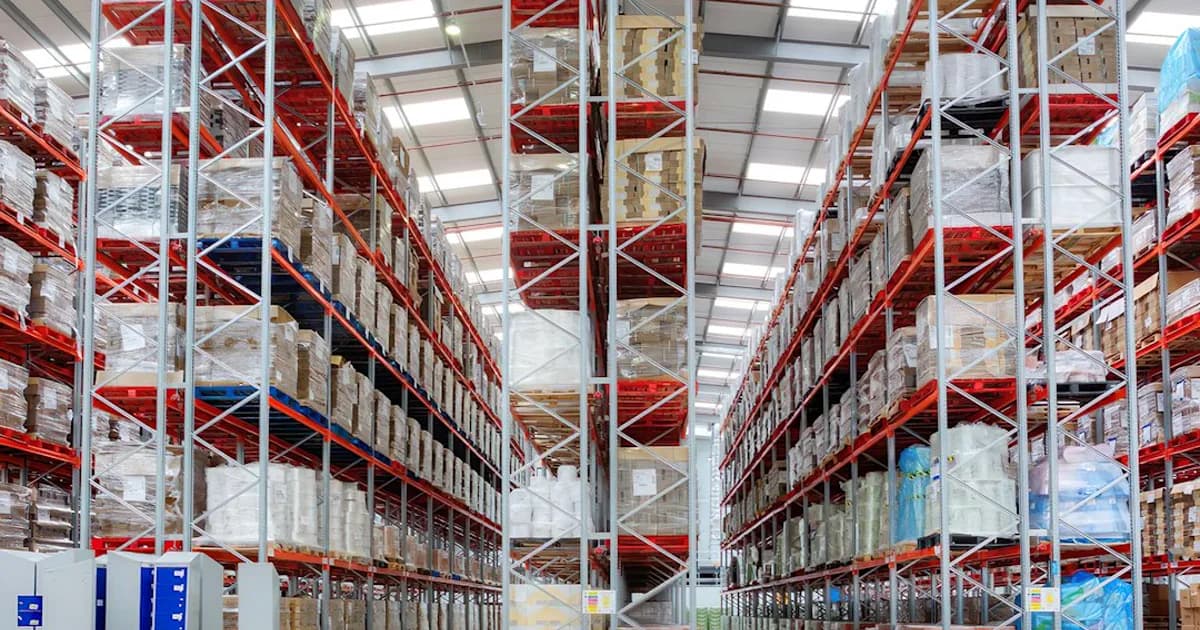
A compliance officer walking your dock doesn't need a tape measure to write a finding. A stretch-wrap tail across a cross-aisle. A cracked pallet board in a pick lane. A hydraulic drip spreading under a reach truck parked beside the charger. Each one is a housekeeping problem with a regulation number attached.
That number is 29 CFR 1910.22, and warehouse operators tend to underrate it. It reads like general tidiness language, so it gets filed next to the break-room cleaning schedule instead of next to the forklift training records. The injury data argues for the second filing cabinet. Warehousing and storage recorded 4.8 total recordable injury and illness cases per 100 full-time workers in 2024, against 2.3 for private industry overall, and falls, slips, and trips accounted for 479,480 days-away-from-work cases nationally that same year.
Here's what 1910.22 says, how each paragraph reads on a working warehouse floor, where the wet-and-icy language gets complicated in Minnesota, and how to build a cleaning cadence that holds up when somebody asks to see it.
What OSHA 1910.22 Actually Requires
1910.22 is the general-requirements section of Subpart D, Walking-Working Surfaces. It covers general industry, warehousing included. There's no separate warehouse housekeeping rule to go looking for — this is the one, and it runs four paragraphs deep.
Paragraph (a): surface conditions
This is the part people mean when they say "the housekeeping standard," and it carries three distinct obligations. The rule requires that all places of employment, passageways, storerooms, service rooms, and walking-working surfaces are kept in a clean, orderly, and sanitary condition. Watch the scope. Passageways and storerooms are named outright, which pulls aisles, racking bays, and supply rooms squarely inside the requirement.
Paragraph (a)(2) adds that the floor of each workroom must be kept clean and, to the extent feasible, dry — and where wet processes run, drainage must be maintained and dry standing places such as false floors, platforms, and mats provided to the extent feasible. Paragraph (a)(3) then names the hazards surfaces must be kept free of: sharp or protruding objects, loose boards, corrosion, leaks, spills, snow, and ice.
That list matters more than its placement suggests. OSHA wrote down the specific conditions it cares about, which puts the standard closer to a checklist than to a judgment call about whether a floor looks tidy.
Paragraphs (b) and (c): loads, access, and egress
Paragraph (b) requires that each walking-working surface support the maximum intended load for that surface — mezzanines, dock plates, and any platform that ends up holding staged product because it was convenient. Paragraph (c) requires the employer to provide, and ensure each employee uses, a safe means of access and egress to and from walking-working surfaces. That's why a blocked aisle isn't only a tidiness issue. It reaches the access-and-egress obligation directly.
Paragraph (d): the clause most facilities forget
Paragraph (d) is where housekeeping stops being housekeeping and becomes a program. Walking-working surfaces must be inspected regularly and as necessary and maintained in a safe condition. Hazardous conditions must be corrected or repaired before an employee uses the surface again — and if the correction can't be made immediately, the hazard must be guarded to prevent employees from using that surface until it's fixed. When a repair involves the structural integrity of the surface, a qualified person has to perform or supervise it.
What 1910.22 Looks Like on a Warehouse Floor
Read beside the injury research, the standard stops sounding abstract. NIOSH attributes same-level slips, trips, and falls to floor contaminants such as water and grease, clutter and tripping hazards in walkways, and irregularities in the floor — paragraph (a), rewritten as a list of causes instead of a list of duties.
Translated into warehouse objects, the recurring findings cluster in five places:
- Aisles and cross-aisles. Banding, strapping, shrink-film tails, broken pallet slats. The standard's own words for these are "sharp or protruding objects" and "loose boards."
- Dock and staging areas. Pallet debris, dunnage, corrugate dust, and oil or hydraulic drips from material-handling equipment.
- Racking bays and under-rack voids. The square footage a ride-on scrubber can't reach and a walk-through inspection rarely looks at.
- Mezzanines and stair treads. Where load limits under paragraph (b) and surface condition under paragraph (a) overlap.
- Battery-charging rooms. Corrosion and electrolyte residue — both named conditions.
If you're setting scope rather than auditing it, our overview of warehouse and industrial cleaning standards covers what gets cleaned in each of those zones and at what level of effort. Neat & Clean Co works these buildings across the North Metro, and in practice the compliance language should drive the scope of work — not the other way around.
Spills, Leaks, Snow, and "Clean and Dry to the Extent Feasible"
The feasibility qualifier in (a)(2) isn't a loophole, and it's worth being precise about. The obligation is two-part: the floor has to be clean, and it has to be dry to the extent that's feasible. Where wet processes run, drainage has to be maintained and dry standing places provided. Mats, platforms, and false floors are named in the rule itself, so deploying them is contemplated — not optional-by-default.
Leaks and spills appear by name in (a)(3). What an inspection actually tests isn't whether a spill ever happened, but whether there's a response trigger with a named owner and a time attached. A spill reported at 2:15 a.m. on third shift and mopped at 7:00 a.m. by the day crew is a documentation problem waiting to become a citation. Setting the baseline underneath that — the routine scrubbing interval your soil load and traffic actually call for — is a separate exercise, and we walk through it in how often warehouse floors should be scrubbed.
Snow and ice are listed hazards too, which gives the standard real teeth in Minnesota. From November through March, tracked-in slush and ice-melt residue migrate from the dock apron onto interior concrete every shift, and the transition zone just inside an overhead door is where that moisture pools. Walk-off matting, apron treatment, and a wet-weather cadence are the practical controls; our guide to entrance matting through a Minnesota winter covers the matting side in detail. Be honest about what those controls do. They cut the volume of water reaching the floor, and results vary considerably with building layout, door count, and traffic.
Where Housekeeping Sits in OSHA's Warehouse Enforcement Picture
Context helps here, because housekeeping is rarely the headline citation. OSHA runs a National Emphasis Program for warehousing and distribution center operations — directive CPL-03-00-026, effective July 31, 2026 — justified on DART rates that run significantly above the all-industry average. Practically, that means programmed inspections, not only complaint-driven ones.
When those inspections produce citations in general warehousing and storage, powered industrial trucks lead the list by a wide margin: 169 citations across 125 inspections and $697,104 in penalties, followed by hazard communication, exit-route maintenance and safeguards, the general duty clause, and portable fire extinguishers.
So no, 1910.22 isn't the standard generating the biggest penalty totals. But floor condition is what the compliance officer is standing on while writing everything else, access-and-egress findings travel alongside blocked-aisle and exit-route problems, and NIOSH's own observation is that the controls are already written down. What keeps the rates steady is execution.
Building a Cleaning Cadence That Survives an Inspection
The standard sets no cleaning frequency, which is exactly why the cadence has to be yours and has to be written down. A defensible program does four things.
- Zone the building by risk, not by square footage. Dock and apron, main aisles, cross-aisles, under-rack, battery room, mezzanine, restrooms and break areas. Each carries a different soil load and a different consequence when it goes unaddressed.
- Set a frequency per zone and tie it to something. Traffic counts, product type, spill history, season. Because the rule is a performance requirement, the position you want is "here's our cadence, and here's why it keeps the surface in the required condition."
- Build the paragraph (d) inspection into the cadence instead of bolting it on. A dated walk with named zones, a correct-or-guard decision recorded against each finding, and a close-out. Guarding means keeping people off the surface — not setting a cone beside the problem and moving on.
- Define the escalation path. Anything touching structural integrity needs a qualified person under (d)(3), and your floor crew should know who that is before they find a failing dock plate at 4:00 a.m.
Whether the work sits in-house or with a contractor is mostly a question of whether the cadence gets executed on third shift in February. If you're sizing that decision, janitorial staffing ratios give you the labor math, and we handle warehouse and industrial cleaning across the Minneapolis North Metro on scheduled programs built around exactly this kind of zone-and-frequency map.
Frequently Asked Questions
Is there a separate OSHA housekeeping standard for warehouses?
No. Warehouses fall under the general industry housekeeping language in 29 CFR 1910.22(a), part of Subpart D, Walking-Working Surfaces. There's no warehouse-specific section to find. The same requirement to keep places of employment, passageways, storerooms, service rooms, and walking-working surfaces clean, orderly, and sanitary applies to a 400,000-square-foot distribution center and a single warehouse bay alike. Material storage and powered industrial trucks are covered elsewhere, but the housekeeping obligation itself is 1910.22.
How often does OSHA require warehouse floors to be cleaned?
The standard sets no frequency. 1910.22 is written as a performance requirement: surfaces have to be clean, orderly, sanitary, and free of the listed hazards, and they have to be inspected regularly and as necessary. The defensible frequency is whatever your facility's soil load, traffic, and spill history demand — and the burden sits with the employer to show the cadence keeps the floor in the required condition, not to point at a number in the rulebook.
Does 1910.22 require written housekeeping inspection records?
It requires inspection, not a particular recordkeeping format. Paragraph (d)(1) says walking-working surfaces must be inspected regularly and as necessary and maintained in a safe condition, without prescribing a log. In practice, a dated inspection record is how an employer shows the inspections happened and that hazards were corrected or guarded — which is what a compliance officer asks about after an incident.
What happens if a hazard can't be fixed right away?
Paragraph (d)(2) addresses that case directly. Hazardous conditions must be corrected or repaired before an employee uses the surface again, and if the correction can't be made immediately, the hazard has to be guarded to prevent employees from using that surface until the repair is done. A cone set next to an unaddressed floor failure isn't guarding; the paragraph contemplates keeping people off the surface entirely. If the repair touches structural integrity, (d)(3) requires a qualified person to perform or supervise it.
Do blocked aisles violate the housekeeping standard or the exit-route standard?
Potentially both. Clutter in an aisle is a surface-condition and housekeeping issue under 1910.22(a), and 1910.22(c) separately requires the employer to provide and ensure the use of a safe means of access and egress to and from walking-working surfaces. Where the blocked aisle sits on an exit path, the exit-route requirements apply on top of that — and exit-route maintenance is among the most frequently cited standards in general warehousing and storage.
Your 1910.22 Readiness Plan
1910.22 reads as housekeeping and functions as a performance standard with an inspection-and-repair clause attached. Two places catch facilities out: the named hazard list in (a)(3) — sharp objects, loose boards, corrosion, leaks, spills, snow, ice — and the correct-or-guard rule in (d)(2), because a known hazard left in service is a far worse finding than a dirty floor.
The useful next step is small. Walk the building this week against the paragraph list, zone it, set a frequency per zone, and write down who inspects and when. If you'd rather hand the execution to a crew already working to that map, request an estimate and we'll scope it around the cadence instead of around a square-foot number.
This article is for general informational purposes only. Cleaning scope, frequency, and pricing vary by facility size, type, and condition. Service availability depends on your location within Neat & Clean Co's service area. Contact us for a quote specific to your facility.
Related articles
Food-Grade Warehouse Cleaning Standards and Audit Preparation
A food-grade warehouse can look immaculate and still fail an audit, because auditors grade the system behind the cleaning rather than the shine on the floor. This guide walks through the two regulatory rulebooks that apply to food storage facilities, how to zone a building by contamination risk, why water is a hazard in dry storage, what EPA label directions actually require of your sanitizer, and which records an auditor opens first. Written for facility and operations managers preparing for a third-party or customer audit.
Warehouse Floor Scrubbing Frequency: How Often Is Enough?
Ask three people how often a warehouse floor should be scrubbed and you'll get three answers, from every shift to whenever it looks bad. Federal standards don't settle it either — they describe a condition, not an interval. Here's what actually sets your frequency: traffic volume, vehicle type, soil load, floor finish, and dock exposure. Plus a four-tier zone model that gives different parts of one building different schedules, baseline ranges by warehouse type, and how to write it into a scope of work.
OSHA Warehouse Housekeeping Requirements: What 1910.22 Covers
OSHA's housekeeping rule for walking-working surfaces is short. Here is what 1910.22 requires of a warehouse, where 1910.176 takes over for aisles and storage, and where routine cleaning fits.