OSHA Warehouse Housekeeping Requirements: What 1910.22 Covers
OSHA's housekeeping rule for walking-working surfaces is short. Here is what 1910.22 requires of a warehouse, where 1910.176 takes over for aisles and storage, and where routine cleaning fits.
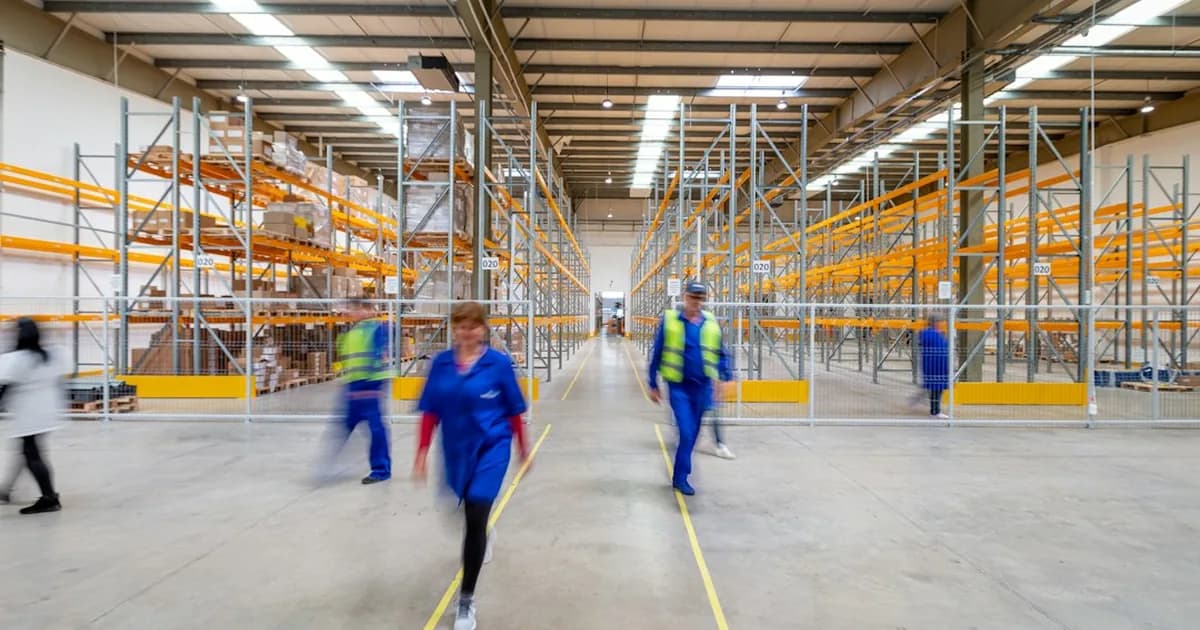
Why warehouse housekeeping rules are easy to misread
OSHA warehouse housekeeping requirements come down to a few short sentences, but they are split across two standards. 1910.22 covers the condition of floors and other walking-working surfaces. 1910.176 covers aisles, storage areas and stacking. Facility and operations managers often treat them as one rule, and that is where audits and internal checklists drift off course.
Floors, aisles and storage areas are where slips, trips and stalled work tend to start. Here is what 1910.22 says, how 1910.176 picks up where it stops, and which parts routine cleaning can support. Treat it as a plain-language summary, not legal advice, and read the current text on OSHA's site before you build a policy around it.
What 1910.22 says about surface conditions
Paragraph (a) of 1910.22 is the housekeeping paragraph. It has three parts that matter to a warehouse.
Clean, orderly and sanitary
All places of employment, passageways, storerooms, service rooms and walking-working surfaces are to be kept in a clean, orderly and sanitary condition. The wording is broad on purpose. It covers the dock, the break room corridor, the supply room and the main floor, not only the racking aisles.
Dry floors and wet processes
The floor of each workroom is to be kept clean and, to the extent feasible, dry. Where wet processes are used, drainage must be maintained, and to the extent feasible, dry standing places such as false floors, platforms and mats must be provided. In a warehouse, that language matters most at wash areas, dock doors and anywhere a floor machine or hose is part of the job.
Hazard-free surfaces
Walking-working surfaces are to be kept free of hazards such as sharp or protruding objects, loose boards, corrosion, leaks, spills, snow and ice. Snow and ice are named in the text itself, which is a useful reminder for Minnesota buildings. Entry points and dock aprons carry moisture inside from November through March, and that moisture ends up on the floor.
Inspection and repair under 1910.22
Paragraph (d) turns housekeeping from a one-time cleanup into a routine. Walking-working surfaces are to be inspected regularly and as necessary, and maintained in a safe condition. Hazardous conditions must be corrected or repaired before an employee uses the surface again. If the fix cannot be made right away, the hazard must be guarded so employees cannot use that surface until it is corrected.
In the text we reviewed, the standard does not set a fixed inspection interval. "Regularly and as necessary" leaves the schedule to the employer, which means a written walk-through routine is the easiest way to show the rule is being followed. If you are deciding how often the floor itself should be cleaned, our guide to cleaning frequency by facility type covers how that varies by building use.
Two shorter paragraphs sit alongside housekeeping, and they are easy to skip. Paragraph (b) requires that each walking-working surface can support the maximum intended load. Paragraph (c) requires a safe means of access to and from those surfaces. Neither is a cleaning duty, but both belong in the same walk-through.
Aisles and storage: where 1910.176 picks up
Many people searching for OSHA warehouse housekeeping requirements are really looking for the aisle rules. Those sit in 1910.176, handling materials, which OSHA's warehousing page lists as the key general industry warehouse standard. Older OSHA materials sometimes cite earlier numbering, so check the current text rather than a copied checklist.
- Where mechanical handling equipment is used, sufficient safe clearances must be allowed for aisles, at loading docks, through doorways and wherever turns or passage must be made.
- Aisles and passageways are to be kept clear and in good repair, with no obstruction across or in aisles that could create a hazard.
- Permanent aisles and passageways are to be appropriately marked.
- Storage areas are to be kept free from accumulation of materials that constitute hazards from tripping, fire, explosion or pest harborage.
- Stacked materials must be stacked, blocked, interlocked and limited in height so they are stable and secure against sliding or collapse.
On marking, painted yellow lines are common but not the only acceptable method. In a 1977 interpretation, OSHA said that other methods, including marking pillars, flags, traffic cones and barrels, are appropriate as long as recognition of them is part of vehicle operator and employee training.
Where cleaning fits next to the rule
Housekeeping duties belong to the employer. A cleaning crew can't make a building compliant, and no service agreement changes who answers for the standard. What routine cleaning can do is support the parts of the rule that are about surfaces staying clean and free of debris.
What routine cleaning can support
- Removing dust, packaging debris and loose material from floors and passageways.
- Keeping mat areas and dock entries clear of tracked-in water, slush and salt in winter.
- Cleaning up residue in areas where wet processes are used.
- Keeping service rooms, storerooms and break areas orderly and sanitary.
What stays with the employer
- Inspecting surfaces and deciding the inspection schedule.
- Repairing or guarding loose boards, corrosion, leaks and other physical hazards.
- Stacking, storage layout and keeping aisles clear of stock.
- Aisle marking and the training that goes with it.
The practical step is to write that split into the cleaning scope. A short list of what the crew handles and what the warehouse team handles prevents gaps on the day a spill or a blocked aisle is found. For more on how the broader cleaning side is usually scoped, see our overview of warehouse and industrial cleaning standards.
The bottom line for warehouse managers
1910.22 asks for clean, orderly, sanitary surfaces, dry floors where feasible, no hazards on the floor, and regular inspection with prompt correction. 1910.176 adds the aisle, marking and storage rules that most warehouse checklists lean on. Read both on OSHA's site, confirm whether your state runs its own occupational safety program with additional requirements, and write down who owns each task.
If you manage a warehouse in the Twin Cities North Metro and want the cleaning side scoped clearly, see our commercial cleaning service areas or request an estimate.
Frequently Asked Questions
Does OSHA set a cleaning schedule for warehouses?
The 1910.22 text we reviewed asks for surfaces to be inspected regularly and as necessary. It does not set a fixed interval, so the employer decides a schedule that fits the building and the work.
Is 1910.22 the rule about aisle clearance?
Aisle clearance, obstruction and marking sit in 1910.176, handling materials. 1910.22 covers the condition of floors and walking-working surfaces.
Do mats count as a way to keep floors dry?
Where wet processes are used, 1910.22 names dry standing places such as false floors, platforms and mats, to the extent feasible, alongside maintained drainage.
Can a cleaning contractor make a warehouse OSHA compliant?
No. The duties in the standard belong to the employer. Routine cleaning supports the housekeeping part, but inspection, repair and guarding of hazards stay with the employer.
This article is for general informational purposes only. Cleaning scope, frequency, and pricing vary by facility size, type, and condition. Service availability depends on your location within Neat & Clean Co's service area. Contact us for a quote specific to your facility.
Related articles
Food-Grade Warehouse Cleaning Standards and Audit Preparation
A food-grade warehouse can look immaculate and still fail an audit, because auditors grade the system behind the cleaning rather than the shine on the floor. This guide walks through the two regulatory rulebooks that apply to food storage facilities, how to zone a building by contamination risk, why water is a hazard in dry storage, what EPA label directions actually require of your sanitizer, and which records an auditor opens first. Written for facility and operations managers preparing for a third-party or customer audit.
OSHA Housekeeping Standard 1910.22 Explained for Warehouses
Most warehouse managers file 1910.22 under general tidiness. It is a performance standard with a named hazard list and an inspection-and-repair clause attached, and it applies to every aisle, dock, and mezzanine in the building. Here is what each paragraph requires, how those requirements read on a working warehouse floor, where snow and spills complicate things in Minnesota, and how to set a cleaning cadence you can defend.
Warehouse Floor Scrubbing Frequency: How Often Is Enough?
Ask three people how often a warehouse floor should be scrubbed and you'll get three answers, from every shift to whenever it looks bad. Federal standards don't settle it either — they describe a condition, not an interval. Here's what actually sets your frequency: traffic volume, vehicle type, soil load, floor finish, and dock exposure. Plus a four-tier zone model that gives different parts of one building different schedules, baseline ranges by warehouse type, and how to write it into a scope of work.