Church Cleaning Checklist and Schedule for Worship Facilities
A worship facility sits nearly empty most of the week, then absorbs several hundred people through two doors in ninety minutes. That usage pattern breaks a standard office cleaning schedule. This guide organizes a church cleaning checklist the way these buildings actually run — by frequency tier and by zone, from the after-service reset through annual floor work.
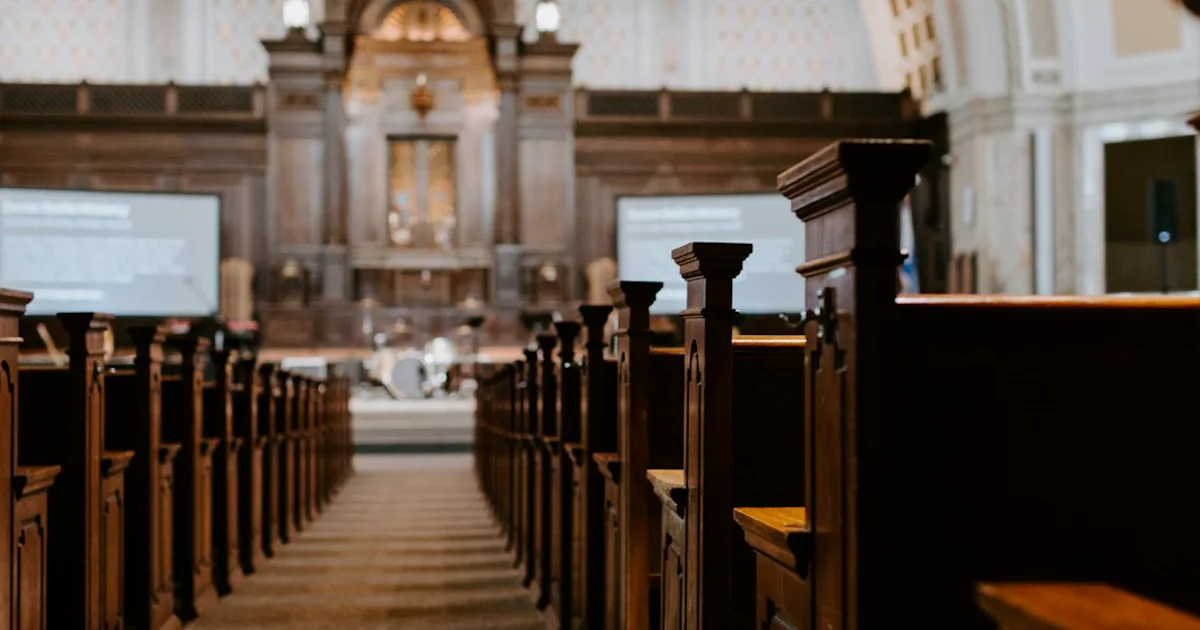
A worship facility has one of the strangest usage patterns in commercial real estate. Most of the week, the building sits close to empty. Then, inside a ninety-minute window, several hundred people come through two or three doors, use the restrooms more or less simultaneously, drink coffee in a hall that was a preschool gym on Thursday, and leave.
Which is why a church cleaning checklist that works is almost never one long list. It's organized two ways at once — by frequency tier, and by zone, because the sanctuary, the nursery, and the fellowship hall are held to genuinely different standards. Here's what belongs on each tier, and how to make sure the work actually happens in a building where volunteers, a part-time custodian, and an outside crew may all share one closet.
Why a Worship Facility Doesn't Fit a Standard Office Schedule
Surge occupancy, not steady occupancy
An office with 60 employees generates predictable soil, spread evenly across five days. A worship facility compresses an equal or greater load into a few hours, then goes quiet. The restrooms that saw 40 uses on Tuesday may see 300 on Sunday morning, so scheduling against the average misses both ends at once. It's a frequency problem before it's a scope problem — the same reason cleaning frequency varies by facility type rather than following one template.
Multi-use rooms that change requirements midweek
The fellowship hall is a coffee service on Sunday, a preschool activity room on Tuesday, a funeral luncheon on Wednesday, a food-shelf distribution point on Saturday. Weekday tenants deserve real attention when you build the schedule, because they're the easiest thing to leave off it. A licensed preschool or a nightly recovery group can put more cumulative traffic through the building than the main service does. That traffic rarely shows up on a checklist written around Sunday.
A mixed labor model with no single scope
Most worship facilities run on some mix of volunteer teams, a part-time custodian, and a contracted crew. The structure itself is fine. What makes it fragile is the absence of one document saying who owns which line. Tasks don't get dropped because nobody is willing — they get dropped because three groups each assumed one of the others had it.
Cleaning, Sanitizing, and Disinfecting Are Three Different Jobs
These words get used interchangeably in volunteer instructions, and the distinction matters. The CDC treats them as separate steps: cleaning with soap or detergent removes most germs and soil, sanitizing reduces what remains, and disinfecting addresses germs still on the surface after cleaning. The rule most often skipped is the order. Surfaces have to be cleaned before they're sanitized or disinfected, because dirt gets in the chemical's way. A disinfectant sprayed onto a visibly soiled counter is mostly wasted product.
In a worship building, that sorts cleanly enough. Routine cleaning covers the sanctuary, corridors, and offices. Sanitizing belongs in the nursery and kitchen. Disinfecting is reserved for restrooms, diaper-changing areas, surfaces soiled with body fluids, and stretches when the local health authority recommends it. Describe it that way to the congregation, too — the honest version is the process and the schedule, not a percentage of germs removed.
The After-Service Reset
The CDC's own examples of high-touch surfaces — door handles, stair rails, counters, touchpads, restroom fixtures, pens — map almost one-to-one onto a worship facility. Keep the list short enough that a volunteer team finishes it in 30 to 40 minutes:
- Wipe entry door handles, push plates, and all stair and ramp rails
- Wipe pew backs, seat backs, and chair arms in the sections actually used
- Clear and restock pew pockets — hymnals, bulletins, pens, envelopes
- Empty lobby, hall, and restroom trash
- Spot-clean restroom fixtures, sinks, counters, mirrors; restock paper and soap
- Spot-mop spills in the narthex, aisles, and fellowship hall
- Reset chairs and tables to the next event's layout
- Run the nursery's own sanitizing pass
Shared restrooms carry the heaviest load of any zone. CDC guidance for shared toilet facilities points to cleaning high-touch fixtures and floors at least twice daily, versus at least daily for private facilities. A two-service Sunday is effectively two shifts. If the gap between services doesn't leave room to finish the pass, the checklist is a wish list.
Three habits separate a pass that accomplishes something from one that just moves dirt around. Work top to bottom and cleaner-to-dirtier in a consistent clockwise pattern, so dust off the ledges doesn't land on carpet you already vacuumed. Respect contact time — a disinfectant has to stay visibly wet for the interval printed on its label, which the CDC notes can run as long as 10 minutes. And keep cloth discipline: fresh microfiber each session, folded to hand size for roughly eight usable faces, changed once it stops holding solution, never dipped back into the container.
Weekly, Monthly, and Quarterly Tasks, Zone by Zone
Weekly, ahead of the main service
The sanctuary gets vacuumed down the aisles and pew lines, ledges and sills dusted, pew backs wiped throughout rather than only in the used sections, and hard floors in the narthex and corridors damp-mopped. Restrooms get a full detail clean, not the between-services spot pass. The fellowship hall and kitchen get a complete surface and appliance wipe-down, a floor mop, trash out, and a refrigerator check — standard break room and kitchen cleaning standards applied to a room with heavier intermittent use. Offices and classrooms get trash, vacuum, surface wipe, and glass. The tiering model mirrors the daily, weekly, and seasonal task tiers used in retail.
Monthly
High dusting is the headline item: light fixtures, speaker arrays, ceiling fans, balcony fronts. Add baseboards, vent and return grilles, interior glass, entry-door tracks, and the kitchen hood exterior. Build in a pest-activity walkthrough while you're already looking up at things, and handle what you find with integrated pest management, using non-chemical methods before sprays and foggers — an ordering that matters in a building with a kitchen and a hall where people eat.
Quarterly and annual
Carpet extraction, hard-floor refinishing or burnishing appropriate to the finish, upholstery cleaning on pew cushions and stacking chairs, window washing, and HVAC filter changes all sit on this cycle. So do several building-health items the EPA flags: holding relative humidity between 30 and 50 percent, repairing leaks before moisture becomes mold, and choosing Safer Choice-labeled products to limit harsh odors in an enclosed space where people sit for an hour.
The Nursery and Children's Ministry Hold a Stricter Standard
These rooms should be scheduled against childcare guidance, not general facility guidance. The CDC's direction for early care and education settings is specific: toys and play surfaces infants and children use get sanitized after each use, bibs and placemats after each meal, diaper-changing tables disinfected regularly, and visibly dirty craft or snack tables cleaned immediately rather than at session's end.
The practical way to execute "after each use" with rotating volunteers is a two-bin system. Toys in play live in one bin; anything a child has mouthed or set down goes into a second bin that gets sanitized before it returns to the floor. It removes the judgment call. Chemical handling follows the same source — read the label, wear gloves and eye protection, ventilate, never mix cleaners unless both labels permit it, and store products out of reach of children, which means a locked closet rather than the cabinet under the nursery sink. If a licensed weekday preschool uses the space, state licensing rules may go further and should drive the schedule for those rooms.
Who Actually Does the Work
Volunteers are a good fit for the after-service reset. The tasks are visible, finish in under an hour, need no diluted chemicals, and benefit from people who know which sections were used. Volunteer-only models tend to break down on the recurring and the technical: dependable weekly restroom detail, chemical dilution and contact time, hard-floor maintenance, high work that needs a ladder, and the insurance exposure that comes with both. A part-time custodian covers weekday needs and event setup well, but rarely has the hours for quarterly project work. Contracted church janitorial services fit the weekly scope plus quarterly and annual projects, with a written scope and a current certificate of insurance on file. Most facilities end up blending the two — volunteers on the service-day reset, a contractor on the weekly and project tiers. If you're weighing that step, confirm coverage across your commercial cleaning service areas first.
What a Minnesota Winter Adds to the Schedule
Several hundred pairs of boots through two doors in twenty minutes is the largest soil event in the building's week, and from November through March it happens weekly. Matting is the first line item: scraper mats outside, absorbent matting inside, and enough total length that footwear is dry before it reaches carpet — serviced between services, not once a week. The sizing and placement logic for entrance matting through a Minnesota winter is worth getting right once.
Behind the mats, add a recurring pass for ice-melt residue tracked onto carpet and hard floor, more frequent spot-mopping in the narthex and coat areas, and wet-floor signage as a standing item rather than a reaction. Heating season also pulls indoor humidity down. That shows up as airborne dust, and over several winters, in the finished wood throughout the sanctuary.
Put the Schedule on Paper — and Verify It
The CDC's program framework is the practical model here. For every area, a written cleaning schedule should state the frequency, the method, and the staff member responsible, alongside an approved product list and a contingency plan for an illness event.
The format that survives in these buildings is one page per zone: frequency tiers across the top, tasks down the left, an initials-and-date column at the right. Post it in the janitor closet and the nursery — not in a binder in the office. For verification, the same guidance points to routine monitoring at least weekly, with cleaning logs capturing location, date, and signature. In a volunteer-heavy building that paperwork does double duty. It's the handoff when a team rotates in January, and the record when a trustee or an insurer asks what the standard is.
Frequently Asked Questions
How often should a church be cleaned?
Most worship facilities land on a two-track schedule rather than a single frequency. Restrooms, entry doors, the nursery, and the fellowship hall get attention after every gathering or at least daily, because the CDC ties frequency to how heavily a surface is touched rather than to a calendar. The sanctuary usually needs a full reset weekly, ahead of the main service. Windows, carpet extraction, floor refinishing, and high dusting move to a monthly, quarterly, or annual rotation. A building with a weekday preschool or a nightly recovery group is effectively a daily-use facility and should be scheduled like one.
What goes on a church cleaning checklist for after each service?
Wipe entry door handles, push plates, and stair and ramp rails; wipe pew backs, seat backs, and chair arms in the sections used; clear and restock pew pockets; empty lobby and restroom trash; spot-clean restroom fixtures, sinks, counters, and mirrors and restock paper and soap; spot-mop spills in the narthex, aisles, and hall; reset chairs and tables for the next event; and run the nursery's sanitizing pass. For back-to-back services, leaving enough gap to actually finish the pass is the difference between a checklist and a wish list.
How do you clean a sanctuary without damaging pews, carpet, or instruments?
Match the product to the surface and keep moisture under control. Wood pews, millwork, and organ or piano cabinetry want a damp microfiber cloth and a product the manufacturer or finish supplier approves — not a general-purpose disinfectant sprayed onto finished wood, which can dull or streak it over time. Upholstered seating and kneelers get vacuumed rather than wet-wiped. Work top to bottom so dust from ledges and light fixtures falls onto carpet you haven't vacuumed yet. Keep liquids away from audio, video, and instrument equipment entirely.
Your Worship Facility Cleaning Game Plan
The building's usage pattern sets the schedule — not a generic office template. Write it by frequency tier and by zone, put a name next to every line, and verify it weekly with a walk-through and a signed log.
If you're starting from nothing, walk the building once with the zone list in hand and mark every line that currently has no owner. Those are the tasks quietly not happening, and they're usually fixable without adding a dollar to the budget. When the scope outgrows what volunteers and a part-time custodian can carry, request an estimate for the weekly and project tiers.
This article is for general informational purposes only. Cleaning scope, frequency, and pricing vary by facility size, type, and condition. Service availability depends on your location within Neat & Clean Co's service area. Contact us for a quote specific to your facility.
Related articles

Conference Room Cleaning Schedule: Follow Bookings, Not the Calendar
A fixed weekday slot cleans empty rooms and misses busy ones. Here is how to tie a conference room cleaning schedule to your booking system instead.
Medical Office Cleaning Documentation: Logs and Sign-Off Explained
A cleaning log turns a schedule into a record. See what CDC guidance says a log should capture, who signs off, and how audits keep a medical office on track.
Office Break Room Cleaning Checklist for Facility Managers
The break room is the only room in a commercial building where people prepare food, eat it, and leave it behind — and it is usually the room your cleaning scope describes in a single vague line. This checklist breaks the work down zone by zone, separates the tasks OSHA actually requires from the ones that are quality decisions, and shows facility managers how to assign every line between the janitorial contract and building staff.