HEPA Vacuums in Post-Construction Cleaning: Why Fine Dust Needs Them
Fine dust is what remains once the debris is gone. Here is what OSHA, NIOSH and EPA say about HEPA vacuums, dry sweeping and cleaning order, plus questions to ask before move-in.
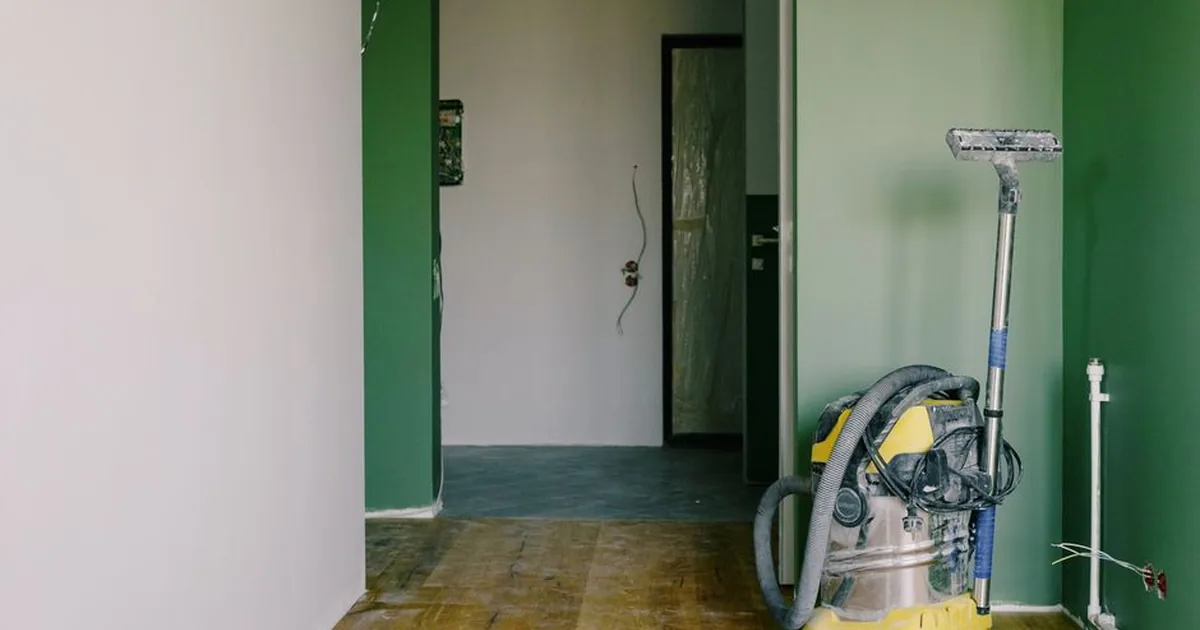
Why fine dust is the hard part of a post-construction clean
Once the drywall scraps, packaging and pallets are hauled out, a building looks finished. The dust is still there. It settles on ledges, door frames, shelving, window tracks and carpet, and it lifts back into the air the moment someone walks through or runs a dry broom over it.
For general contractors, property managers and facility managers, handover day is where this shows up. A space that looks clean at the walkthrough can leave a film on the first desk, the first stocked shelf or the first tenant's equipment. How the dust gets removed decides whether it leaves the building or just moves to another surface.
Below is what OSHA, NIOSH and EPA say about HEPA-filtered vacuuming, what to look for in the equipment, the order a thorough clean follows, and the questions worth asking before you sign a scope. It is general guidance from government sources, not a statement about any one crew's equipment.
Why sweeping and compressed air make fine dust worse
The clearest regulatory language comes from OSHA's respirable crystalline silica standard for construction. Under the housekeeping provision in 29 CFR 1926.1153, employers may not allow dry sweeping or dry brushing where that activity could contribute to employee exposure to respirable crystalline silica. The exception applies only when wet sweeping, HEPA-filtered vacuuming or other methods that minimize the likelihood of exposure are not feasible.
The same provision limits compressed air. It cannot be used to clean clothing or surfaces where it could contribute to silica exposure, unless it is paired with a ventilation system that effectively captures the dust cloud, or no alternative method is feasible.
The logic is simple. A dry broom or an air hose doesn't remove fine particles. It throws them up. Whatever does not settle again quickly stays airborne, and whoever is in the room breathes it.
A few points to keep this in proportion:
- The standard is written for construction work and for employers, with an action level of 25 micrograms per cubic meter and a permissible exposure limit of 50 micrograms per cubic meter, both averaged over an 8-hour shift.
- Not every job produces silica dust. Concrete, masonry, tile and some other materials do.
- Even so, the rule shows how regulators treat dry methods around fine dust, and it is a sensible benchmark when you review a cleaning scope.
What to look for in a HEPA vacuum
"HEPA" isn't just a marketing word, and a filter swapped into an ordinary vacuum doesn't turn it into one. Three government sources give a practical checklist.
The efficiency definition
EPA describes HEPA efficiency as capturing 99.97% of 0.3 micron particles, and suggests asking the manufacturer whether the unit has been tested to meet that level. OSHA's housekeeping provision adds that an employer may rely on a manufacturer's statement that a filter meets the standard's HEPA definition, but still has to select, use, maintain and replace filters so they perform as specified.
A sealed design
In its guidance on buying a HEPA vacuum for renovation work, EPA advises looking for a vacuum designed to be operated with a HEPA filter, not a shop vacuum that can be fitted with one in place of the original basic filter. A retrofitted vacuum is not necessarily sealed so that all of the intake air goes through the HEPA filter. Air that slips past the filter carries dust straight back into the room.
Features that keep the filter working
NIOSH, in its engineering controls guidance for silica dust, lists several features:
- A HEPA filter, to reduce the chance of dust being released from the vacuum into the worksite.
- A pre-filter or cyclone, which extends the service life of the HEPA filter.
- A filter replacement indicator.
- Enough power and airflow to capture dust and carry it to the vacuum. NIOSH gives at least 10 amps as a guide for the tool setups it describes.
It also says filters should be cleaned and replaced, and full collection bowls or bags emptied, without exposing the operator to dust. A good vacuum handled carelessly at the bag change defeats its own purpose.
Cleaning order: high to low, vacuum, wipe, mop
A HEPA vacuum is one step in a sequence. EPA's renovation cleaning sequence is a useful model for any space with settled fine dust:
- Work from higher surfaces to lower ones, so dust falls onto areas that have not been cleaned yet.
- Vacuum walls with the HEPA vacuum or wipe them with a damp cloth, then thoroughly vacuum the remaining surfaces in the work area.
- Use a HEPA vacuum with a beater bar on carpets and rugs.
- Wipe non-carpeted surfaces with a damp cloth and mop uncarpeted floors thoroughly.
- Finish with a visual inspection, and re-clean anything that still shows dust or residue.
Vacuuming alone won't finish hard surfaces, and wiping before vacuuming smears loose dust. The order matters as much as the machine.
Dust also lives outside the room you can see. Our guide to construction dust removal from HVAC, ducts and surfaces covers the air handling side, and the post-construction walkthrough and punch list shows how to confirm the result before sign-off.
Questions to ask about fine dust before you sign
You don't need to be an equipment expert to ask for specifics. These questions turn a vague scope into a written one:
- What vacuums will be used on this job, and does the manufacturer state that they are tested to HEPA efficiency?
- Are they built around the HEPA filter, or are they standard vacuums with a filter added?
- How are filters and collection bags changed and disposed of, and where?
- Will dry sweeping or compressed air be part of the plan anywhere in the building?
- What order does the crew follow, and which surfaces get a damp wipe after vacuuming?
- What does the final walkthrough cover, and what happens if dust turns up after it?
Ask for the answers in writing. If the work is split across stages, it also helps to know which stage handles fine dust, and our breakdown of rough, final and touch-up cleans explains how those stages differ.
The Bottom Line
Fine dust needs a method that captures it rather than stirs it. The government guidance points the same way: avoid dry sweeping and compressed air where dust could be breathed, use a vacuum that is designed and tested to HEPA efficiency, change filters carefully, and follow the vacuum with damp wiping and mopping.
If you are planning a handover in the Twin Cities North Metro, read about post-construction cleaning in the Twin Cities North Metro to see where Neat & Clean Co works, then request an estimate for your site.
Frequently Asked Questions
What does HEPA mean on a vacuum?
EPA describes HEPA efficiency as capturing 99.97% of 0.3 micron particles, and suggests asking the manufacturer whether the unit has been tested to that level.
Can a shop vacuum with a HEPA filter swapped in do the same job?
EPA warns that a retrofitted vacuum is not necessarily sealed so that all intake air passes through the filter. It recommends a unit designed to run with a HEPA filter.
Is dry sweeping allowed after construction work?
OSHA's silica rule for construction does not allow dry sweeping or dry brushing where it could contribute to silica exposure, unless wet sweeping, HEPA-filtered vacuuming or other methods are not feasible.
Does a HEPA vacuum replace wiping and mopping?
No. EPA's renovation cleaning sequence pairs HEPA vacuuming with damp wiping of hard surfaces and mopping of floors, followed by an inspection.
This article is for general informational purposes only. Cleaning scope, frequency, and pricing vary by facility size, type, and condition. Service availability depends on your location within Neat & Clean Co's service area. Contact us for a quote specific to your facility.
Related articles
Post-Construction Cleaning Order of Work: Top-Down, Inside-Out
Clean ceilings before floors and the far end of the building before the exit. Here is the order of work for a post-construction clean, and where the trades fit.

Post-Renovation Office Cleaning: Reopening a Workspace Safely
A renovation can pass its punch list and still leave an office that is not ready for people. Fine drywall dust settles everywhere a broom cannot reach, new materials keep off-gassing for days, and an HVAC system that ran during demolition will redistribute dust for weeks. This guide walks facility managers through what post-renovation office cleaning actually covers, where construction dust hides, how to handle filters and ventilation, which cleaning methods are allowed, and a phased sequence for getting employees back in.
How Long Does Post-Construction Cleaning Take? Realistic Timelines
The post-construction clean sits directly between substantial completion and move-in, which means an underestimated clean becomes a delayed occupancy date. A small tenant buildout can be finished in a day; a large, heavily finished project needs a week or more. This guide gives working ranges by project type, breaks down the rough, final, and touch-up phases, explains why compliant dust removal takes longer than sweeping, and shows how to schedule the whole sequence backward from your occupancy date.