Post-Construction Cleaning Order of Work: Top-Down, Inside-Out
Clean ceilings before floors and the far end of the building before the exit. Here is the order of work for a post-construction clean, and where the trades fit.
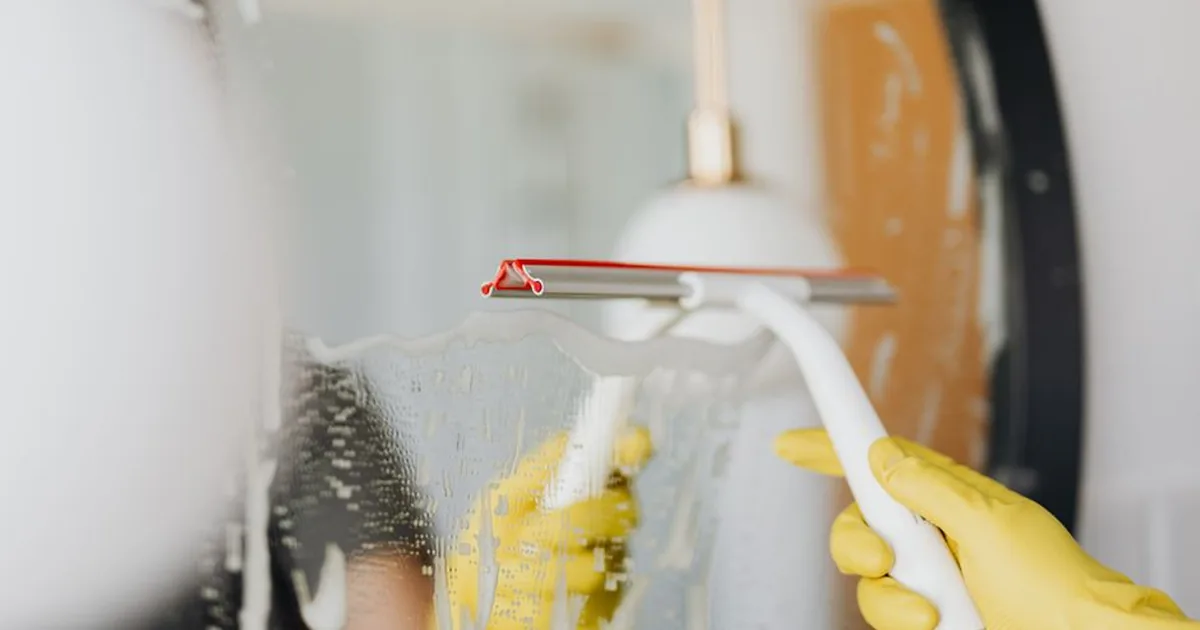
Why the order of work decides how many times you clean
A floor mopped before the ceiling grid has been wiped will need mopping again. The same goes for a counter polished before the vents above it have been cleaned. Post-construction cleaning order of work is simply the sequence that keeps finished surfaces from being dirtied a second time, and it shapes how long a handover takes.
For general contractors and facility managers in the Twin Cities area, the question is rarely how to clean. It's when each area gets touched and which way the crew moves. This guide covers the two rules that settle most of it, top-down and inside-out, then the three-pass cycle on each surface, dust control, and how the cleaning sequence fits around the last trades.
Top-down: high to low, floors last
The first rule is gravity. Dust and debris fall as you work, so you start with the highest surfaces and finish at the floor. The CDC's environmental cleaning procedures put it plainly: proceed from high to low (top to bottom) so that dirt does not drip or fall onto surfaces you have already cleaned. The same page explains why floors come last: cleaning them at the end collects whatever fell from above. That guidance was written for healthcare settings. The physics is the same in a newly built tenant space.
What that looks like in a new build
Within each room, a workable top-down order is:
- Overhead items first: light fixtures, ceiling grids and tiles, vents and diffusers, sprinkler heads, and the tops of door frames.
- Upper walls, then lower walls and trim, including window frames, sills and glass.
- Built-ins and fixtures: cabinets, shelving, counters, partitions, restroom fixtures and appliances.
- Horizontal ledges and low surfaces, such as baseboards, radiators and the tops of cabinets that are easy to forget.
- Floors last, after everything above has stopped shedding dust.
Ductwork and air handling sit above this list in importance. If the system will run during occupancy, the dust inside it ends up on your clean surfaces, so see our guide to HVAC, ducts and surfaces before the final pass is scheduled.
Inside-out: far end of the building to the exit
The second rule is about direction across the floor plan. Start in the area farthest from the entrance or loading door and work toward the way out. That way nobody walks back through a room that was already finished, and the last footprints belong to the crew leaving.
The CDC page adds a companion idea: move from cleaner to dirtier areas, so dirt is not carried into spaces that were already done. On a construction site, "dirtier" usually means mechanical rooms, back-of-house corridors and loading areas, which should be cleaned after the finished office or retail space, not before. In practice many projects combine both rules. Finish the lobby and finished suites top-down, then work out through the service corridors, and leave the dock or entry vestibule for the end because that is where everyone else will keep walking.
Keep traffic out of finished zones once they are signed off. A single pass of a boot with drywall residue on it undoes part of the work, and that is a scheduling issue as much as a cleaning one.
Where the order of work sits in the cleaning phases
Sequence also runs across time, not only across a room. Most projects split cleaning into a rough clean while trades are still working, a final clean once the last trade has left, and a touch-up before the owner takes the keys. Our breakdown of the rough, final and touch-up phases covers what each one includes.
The order-of-work point is about the final clean. It belongs after painting, flooring installation, and the repairs from the punch list, because every one of those activities creates new dust or marks. If the final clean is booked before the last trade finishes, expect part of it to be repeated. If the schedule is tight, it is usually better to move the cleaning start date than to clean twice.
A few handoffs are worth building into the schedule:
- Painters finish before the final wipe-down of walls, trim and fixtures.
- Flooring installers finish, and protective coverings come up, before the floor-level pass.
- Ceiling, lighting and mechanical work wraps up before the overhead pass. If anyone is still working above the ceiling line, the overhead pass is not final.
- Window and glazing work ends before glass is cleaned, with labels, tape and film removed as part of that pass.
Vacuum, wet-clean, vacuum again
Inside each surface pass there is a short sequence of its own. The EPA's guidance for the end of a renovation job is a good model. It tells workers to vacuum exposed surfaces, including walls and ceilings, with a HEPA vacuum cleaner, then vacuum all surfaces again once any plastic sheeting is down, and then scrub the work area with a general-purpose cleaner on a wet rag or mop until dust and debris are removed.
The reasoning holds for any build. A dry pass lifts loose dust before water turns it to paste. A wet pass removes what is left on the surface. A final dry pass picks up whatever the wet pass dislodged and the air has let settle. Combined with top-down order, you move through the room once for each stage, ceiling to floor, rather than finishing one wall completely and starting over on the next.
Cloths, solution and equipment
- Change cloths and cleaning solution as often as needed. The CDC advises changing them when visibly soiled and never shaking them out, because shaking sends dust back into the air.
- Do not use a wet vacuum on dry material. The EPA's mold guidance notes that wet vacuums should be used only when materials are still wet, or they can spread spores.
- Handle vacuum filters carefully. The same EPA chapter says the filter and contents must be disposed of in well-sealed bags, and that a new filter must be seated properly so there are no leaks.
Fine dust is a particular problem in new buildings, and our article on why fine dust needs a HEPA vacuum explains how it behaves after drywall, concrete and tile work.
Dust control: skip the broom and compressed air
People reach for a dry broom or a compressed air nozzle to save time. Both are the wrong tool for fine dust. Under OSHA's construction silica standard, 29 CFR 1926.1153, an employer may not allow dry sweeping or dry brushing where it could contribute to respirable crystalline silica exposure, unless wet sweeping, HEPA-filtered vacuuming or similar methods are not feasible. Compressed air for cleaning surfaces is restricted in the same way, unless it is paired with a ventilation system that captures the dust cloud or no other method is feasible. Scheduling matters here too: dust that gets blown around rises, then lands on the surfaces you cleaned first.
The EPA also notes that wastewater from mopping and wet cleaning on a renovation job may be regulated for disposal by state or federal authorities. Ask the general contractor where cleaning water should go before the crew starts.
Final check and re-clean
Finish each zone with an inspection. The EPA's end-of-job step is simple: confirm that no dust or debris is present and re-clean the area if you find any. Inspect in the same top-down direction, with a light held low across the surface so that film and dust show. Overhead fixtures, tops of frames and window tracks are the places that most often fail the first look.
Bring the owner or project manager through with a written list. Our guide to the walkthrough and punch list shows how to record items so that each one is closed out and signed off.
The order of work in one paragraph
Wait until the last trade is gone. Start at the far end of the building. In each room, clean overhead items first, then walls and fixtures, then low surfaces, and floors last. On every surface, go dry, then wet, then dry again, and change cloths and water as they load up. Keep dry sweeping and compressed air out of the plan. Inspect, re-clean what failed, and keep foot traffic off finished areas.
If you are planning a handover in Minnesota's Twin Cities area, review the post-construction cleaning service areas that Neat & Clean Co covers, or request an estimate for your project.
Frequently Asked Questions
What is the correct order for post-construction cleaning?
Work top to bottom and from the far end of the building toward the exit. Clean ceilings and overhead fixtures first, then walls and fixtures, then low surfaces, and floors last. On each surface, vacuum, wet-clean and vacuum again.
Why are floors cleaned last?
Dust and debris fall while you work on higher surfaces. Cleaning floors last collects what fell, so nothing lands on finished work.
Should cleaning start before the other trades finish?
A rough clean can run while late trades are working, but the final clean should wait until painting, flooring and punch-list repairs are done. Otherwise the dust returns and part of the work is repeated.
Can I use compressed air or a broom to speed things up?
Avoid both for fine dust. OSHA's silica standard restricts dry sweeping and compressed air cleaning where they could add exposure, and points to wet sweeping or HEPA-filtered vacuuming as alternatives.
This article is for general informational purposes only. Cleaning scope, frequency, and pricing vary by facility size, type, and condition. Service availability depends on your location within Neat & Clean Co's service area. Contact us for a quote specific to your facility.
Related articles
Post-Renovation Office Cleaning: Reopening a Workspace Safely
A renovation can pass its punch list and still leave an office that is not ready for people. Fine drywall dust settles everywhere a broom cannot reach, new materials keep off-gassing for days, and an HVAC system that ran during demolition will redistribute dust for weeks. This guide walks facility managers through what post-renovation office cleaning actually covers, where construction dust hides, how to handle filters and ventilation, which cleaning methods are allowed, and a phased sequence for getting employees back in.
HEPA Vacuums in Post-Construction Cleaning: Why Fine Dust Needs Them
Fine dust is what remains once the debris is gone. Here is what OSHA, NIOSH and EPA say about HEPA vacuums, dry sweeping and cleaning order, plus questions to ask before move-in.
How Long Does Post-Construction Cleaning Take? Realistic Timelines
The post-construction clean sits directly between substantial completion and move-in, which means an underestimated clean becomes a delayed occupancy date. A small tenant buildout can be finished in a day; a large, heavily finished project needs a week or more. This guide gives working ranges by project type, breaks down the rough, final, and touch-up phases, explains why compliant dust removal takes longer than sweeping, and shows how to schedule the whole sequence backward from your occupancy date.