Post-Renovation Office Cleaning: Reopening a Workspace Safely
A renovation can pass its punch list and still leave an office that is not ready for people. Fine drywall dust settles everywhere a broom cannot reach, new materials keep off-gassing for days, and an HVAC system that ran during demolition will redistribute dust for weeks. This guide walks facility managers through what post-renovation office cleaning actually covers, where construction dust hides, how to handle filters and ventilation, which cleaning methods are allowed, and a phased sequence for getting employees back in.
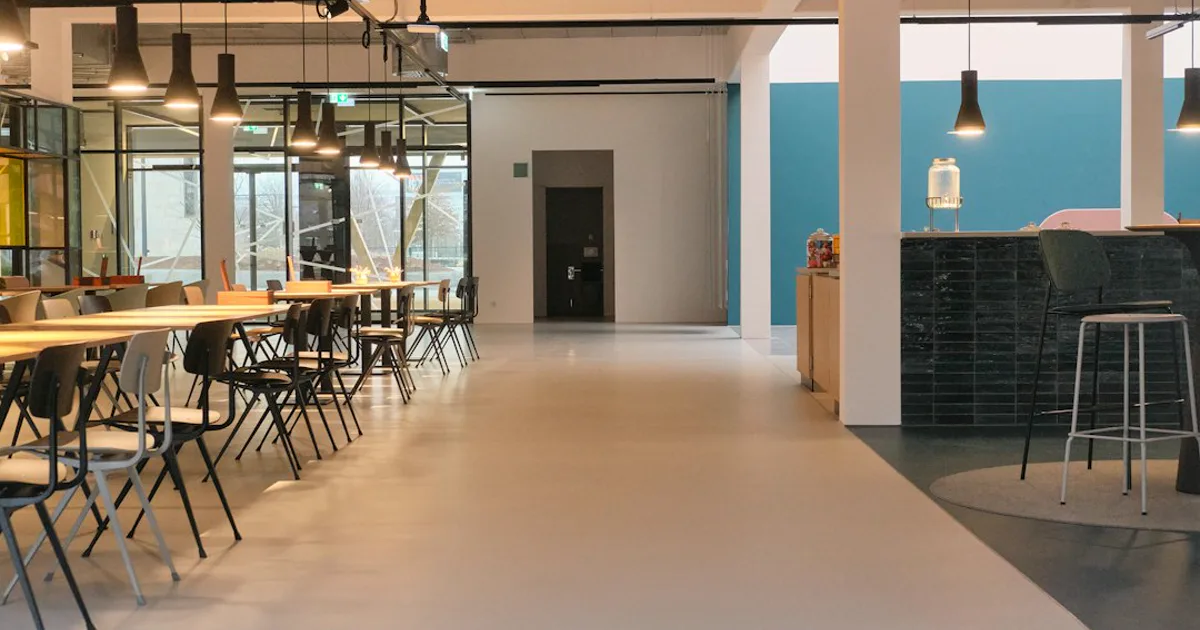
The renovation is finished. Punch list closed, keys handed back. Then Monday arrives, and what everyone notices first is the gray film on their monitor, the grit under their chair casters, and a smell nobody can quite place. That gap is what post-renovation office cleaning exists to close — and most facility managers find it only after people have already moved back in.
Reopening a renovated workspace is an operational call, not a cosmetic one. Dust that was never actually captured keeps reappearing for weeks. New-material odor generates complaints. And in an older building, the wrong cleanup method stops being a housekeeping question and becomes a compliance one. The distinction worth holding onto: substantial completion is not the same thing as occupiable. The EPA's reoccupancy gate is cleanup being complete before occupants return, not construction being finished.
What Post-Renovation Office Cleaning Covers — and What a Contractor's Final Clean Doesn't
A general contractor's final clean is scoped to make a space presentable for handover: debris hauled out, floors swept, film and labels off the glass. A post-renovation clean is scoped to make it occupiable — a considerably larger job. We break down where it sits among the rough, final, and touch-up cleaning phases separately.
The items that fall into the gap are the ones nobody looks at during a walkthrough: ceiling grid and tile faces, light fixtures and their lenses, duct and diffuser faces, sprinkler escutcheons, the tops of partitions and casework, cable trays, window tracks, carpet pile that needs extraction, and hard-floor residue from adhesive or joint compound.
What goes wrong when nobody owns the scope
This isn't a niche failure. When NIOSH looked at indoor environmental quality on renovation projects in occupied buildings, it identified a lack of dust control, the use of high-emission building materials, and limited communication with occupants as the recurring problems — which is a near-exact list of the three complaints a facility manager fields in week one.
The practical fix is contractual. Put the post-renovation scope in writing as its own line item, name the overhead and soft-surface work explicitly, and settle two questions before anyone mobilizes: who supplies the HEPA equipment, and who changes the HVAC filters.
Where Construction Dust Hides After an Office Renovation
Drywall and joint-compound dust stays airborne for hours, so it doesn't settle where the work happened. It settles on every horizontal plane in range, including ones outside anyone's sight line. Above the ceiling grid. On top of light fixtures and tall furniture. Inside the lip of a window track.
That's why the "it keeps coming back" complaint is so common after a reopening. Foot traffic, HVAC startup, and dry dusting all put settled dust back into the air, where it lands again somewhere else. It was never removed, only relocated — a method problem rather than a diligence problem.
The air path is the real multiplier
The EPA's guidance for renovations in occupied institutional buildings is blunt about the mechanism: cover all supply and return air grilles if the HVAC system in the renovation area also serves occupied areas, and exhaust air from the construction area so pollutants cannot flow into occupied space. Returns are where this breaks down. One open return inside a work zone turns the air handler into a distribution system for the whole floor, and the dust lands in offices that were never part of the project.
The same guidance sets a cadence worth writing into the renovation schedule: construction debris, dust, and scraps cleaned up at least daily during the work. Dust captured on day three is dust nobody chases at handover.
Soft surfaces hold what hard surfaces release
Carpet pile and fabric workstation panels trap fine dust that vacuuming alone won't lift. Plan on extraction for the carpet and a deliberate pass on the panels — among the most commonly skipped items in a post-renovation scope, and they sit right at desk height.
HVAC, Ventilation, and the Off-Gassing Window
Change filters after the detail clean, not before it. A fresh filter installed while dust is still being liberated just loads up and has to be changed again. The EPA also advises against operating heating and cooling equipment while visible dust is present.
If the system did run during cut-and-sand work, or returns sat open to the work area, surface cleaning won't stop dust from reappearing on desks; it's already in the distribution path. That's the case where interior duct work is worth pricing rather than assuming, which we cover in our guide to construction dust removal from HVAC, ducts, and surfaces.
Flushing the space before people return
For newly installed materials, the EPA recommends maximum ventilation both during installation and for at least 72 hours after installation is completed, using exhaust that discharges outdoors. In a commercial building that means driving the economizer to maximum outside air with the zone unoccupied — a good reason to put the flush on a weekend.
New-material odor is a time problem, not a cleaning problem
Paint, adhesives, sealants, new carpet, new casework: all of it off-gasses volatile organic compounds. The EPA notes that most paint emissions occur during drying, in the first few days after painting, and recommends ventilating 24 hours a day, seven days a week, from the start of work until two or three days after painting is complete. Ventilation and time reduce that odor. Cleaning doesn't. Tell occupants what to expect, and give them one named contact for complaints.
Cleaning Methods That Don't Re-Suspend the Dust
Method selection is partly a regulatory matter. Under OSHA's construction silica standard, an employer may not allow dry sweeping or dry brushing where that activity could contribute to employee exposure to respirable crystalline silica, unless wet sweeping or HEPA-filtered vacuuming is not feasible. Compressed-air cleaning of surfaces is restricted on the same logic, and the infeasibility exception is narrow.
Translated for a facility manager: a crew that shows up with push brooms and a blower is not performing compliant construction-dust cleanup. Expect HEPA vacuums, microfiber, and damp wiping, worked top-down — overhead, verticals, horizontals, floors — so no pass recontaminates the last. Our explainer on why fine construction dust needs a HEPA vacuum covers the filtration side.
Older buildings add hazards to the scope
In any structure built before 1978, the EPA's position is to assume paint contains lead unless an inspection shows otherwise. Where a renovation disturbs that paint in a covered facility, the Renovation, Repair and Painting Rule requires lead-safe certified firms and imposes both cleaning requirements and a separate cleaning-verification step by a certified renovator. The rule's "child-occupied facility" definition reaches institutional space — schools, childcare facilities, and hospitals built before 1978. On asbestos, the EPA treats suspect material as hazardous when it can be crushed by hand pressure or is left unsealed, a condition common in older ceiling tile and pipe insulation disturbed during demolition.
The boundary matters. Abatement and lead-safe renovation are regulated specialties that happen before a cleaning crew walks in, and their clearance paperwork belongs in your reopening file.
A Phased Reopening Sequence for Facility Managers
- Confirm construction is finished in the zone and containment is still standing. Don't clean into active work.
- Strike sheeting, floor protection, and masking last-in-first-out, bagging it rather than dragging it through occupied space.
- Detail clean top-down with HEPA and damp methods: overhead, grid and fixtures, verticals, horizontals, floors.
- Extract carpet and remove hard-floor residue.
- Change HVAC filters, clean diffuser, grille, and return faces, and uncover grilles only once dust generation has stopped.
- Flush the zone with maximum outside air — the at-least-72-hours window for new materials.
- Schedule a touch-up clean after trades return for punch-list items, because they will.
- Walk the space and sign off in writing; our post-construction cleaning walkthrough and sign-off process covers what to look for.
- Reopen in phases where the floor plan allows, with a feedback channel for occupants.
Documentation worth keeping
Keep the scope and sign-off sheet, the filter-change record, the ventilation log, and any lead or asbestos clearance paperwork. That file answers the question from HR, an insurer, or a tenant six months later.
Frequently Asked Questions
How long after an office renovation can employees come back?
There's no single number — it depends on what was installed and how well the work was contained. Two things should drive the date rather than the construction schedule: cleanup being genuinely finished, and the off-gassing window having passed. The EPA recommends maximum ventilation during installation and for at least 72 hours afterward. Treat substantial completion as the start of reopening, not the end.
Is post-renovation cleaning different from the contractor's final clean?
Yes, and the gap is where most reopening complaints come from. A final clean makes the space presentable for handover. Post-renovation cleaning makes it occupiable, which means capturing the fine settled dust a broom relocates rather than removes — ceiling grid, light fixtures, duct faces, cable trays, carpet pile. The two are often sold as one line item, so ask which you're buying.
Can we keep part of the office open while renovation work continues?
Often yes, but only with containment that works. The EPA's guidance for occupied institutional buildings is to separate work zones with temporary barriers, cover supply and return grilles when the HVAC system serving the work area also serves occupied space, and exhaust air out of the work zone so air flows into it rather than out. Clean up debris at least daily, and move what you can to evenings or weekends.
Should we have the ductwork cleaned after a renovation?
It depends on whether the system ran while dust was being generated and whether returns were sealed. If grilles were covered, the air handler was off during demolition, and containment held, replacing filters and cleaning diffuser and grille faces is usually enough. If the system ran during cut-and-sand work, dust is already in the distribution path, and surface cleaning won't stop it reappearing.
Your Reopening Game Plan
Reopening is gated on cleanup and ventilation, not on the punch list. Scope the post-renovation clean as its own line item, insist on HEPA and wet methods rather than brooms, deal with the HVAC path before anyone sits down, and give new materials their ventilation window. In that order, a renovated floor comes back online once instead of three times.
Neat & Clean Co handles post-construction and post-renovation cleaning for commercial properties across the Minneapolis North Metro. See where we work on our post-construction cleaning service areas page, or request an estimate for your facility.
This article is for general informational purposes only. Cleaning scope, frequency, and pricing vary by facility size, type, and condition. Service availability depends on your location within Neat & Clean Co's service area. Contact us for a quote specific to your facility.
Related articles
Post-Construction Cleaning Order of Work: Top-Down, Inside-Out
Clean ceilings before floors and the far end of the building before the exit. Here is the order of work for a post-construction clean, and where the trades fit.
HEPA Vacuums in Post-Construction Cleaning: Why Fine Dust Needs Them
Fine dust is what remains once the debris is gone. Here is what OSHA, NIOSH and EPA say about HEPA vacuums, dry sweeping and cleaning order, plus questions to ask before move-in.
How Long Does Post-Construction Cleaning Take? Realistic Timelines
The post-construction clean sits directly between substantial completion and move-in, which means an underestimated clean becomes a delayed occupancy date. A small tenant buildout can be finished in a day; a large, heavily finished project needs a week or more. This guide gives working ranges by project type, breaks down the rough, final, and touch-up phases, explains why compliant dust removal takes longer than sweeping, and shows how to schedule the whole sequence backward from your occupancy date.