Office Carpet Cleaning Frequency: How Often Should You Schedule It?
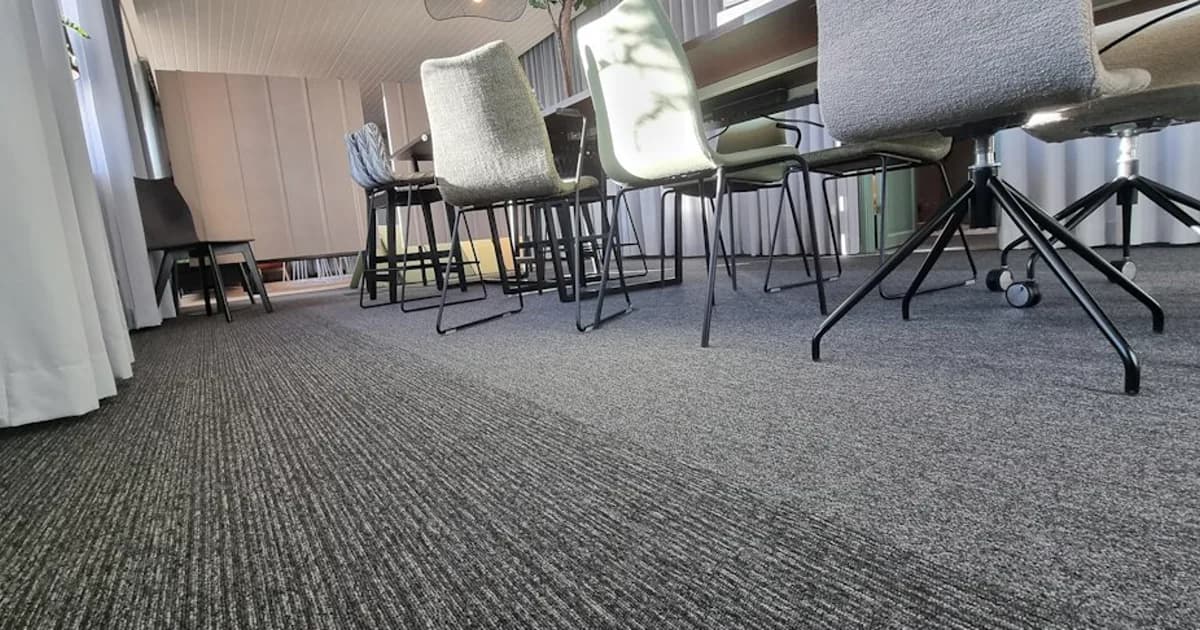
There is no federally mandated office carpet cleaning frequency, which leaves facility managers taking a vendor's word for it. This guide replaces the guesswork with a zone-based schedule you can defend: how to map traffic zones, set separate vacuuming and extraction intervals, read the five signs your current schedule is falling behind, and extend the time between deep cleans without letting the carpet degrade.
Why Nobody Can Tell You a Single Right Answer
Ask three vendors about office carpet cleaning frequency and you'll get three different schedules, each delivered with total confidence. One says quarterly. One says twice a year. One hands you a printed chart. Almost nobody explains where the number came from — which leaves facility managers guessing about the largest soft surface in the building, and about a budget line that gets questioned every renewal.
Here's the honest answer: no federal agency mandates an interval. That sounds unhelpful at first, but it works in your favor. The schedule is yours to set, and one built from your own floor plan is far easier to defend than one you inherited.
What the EPA Actually Says (and the Chart That Isn't Real)
Start with the authority question. The EPA has not issued specific recommendations on how frequently carpet should be cleaned. Its position: owners and occupants should follow manufacturer recommendations and industry standards to protect indoor air quality.
That hands the real authority to your carpet manufacturer. Pull the maintenance documentation for the product actually installed in your building. Most specify a method and a maximum interval, and many tie warranty coverage to cleaning you can document. If the carpet is still under warranty, that document sets your floor — and your invoices are the proof.
Then there's the chart. A table of recommended frequencies by environment type has circulated for decades under the EPA's name, and it isn't agency policy. The EPA has explained that the table came at the end of a 1989 letter from an agency official, that cleaning companies misrepresented it as official guidance, and that it "was not intended to and does not convey an official EPA position." If a proposal leans on that chart, ask what the recommendation is really based on.
None of which makes frequency arbitrary. Carpet works as a reservoir for dust, dirt, and pollen, so how often you clean it is an air quality decision as much as an appearance one.
Build the Schedule Around Traffic Zones, Not the Calendar
The mistake in most carpet programs is treating the building as one surface. A reception area and a seldom-used training room accumulate soil at wildly different rates, so a single building-wide interval over-services one and under-services the other. Walk the floor plan and mark three zones: heavy traffic (entries and vestibules, elevator lobbies, main corridors, front desk, the break-room approach), moderate (open-plan workstations, conference rooms, shared copy areas), and light (private offices, storage, training rooms used a few times a month).
From there, a defensible starting baseline looks like this:
- Entries and main corridors — vacuum daily; interim encapsulation or bonnet cleaning every one to three months; hot-water extraction quarterly.
- Open-plan workstations — vacuum daily to three times weekly; extraction every six months.
- Private offices and low-use rooms — vacuum one to two times weekly; extraction every nine to twelve months.
- Carpet near food — daily spot treatment; extraction quarterly.
Treat that as a starting point, not a rule. Plenty of variables move it: headcount per square foot, whether staff eat at their desks, carpet color and pile construction (a light cut pile shows soil far sooner than a dark loop), how much entry matting you have, and in Minnesota, the five months when every pair of boots brings in salt and slush. Frequency also varies by facility type — a medical office and a warehouse mezzanine aren't on the same plan.
Vacuuming and Extraction Are Two Separate Schedules
Treating "carpet cleaning" as one line item is how schedules go wrong. There are three distinct activities here, running on three different clocks.
Vacuuming does most of the real work. Most of what lands on office carpet is dry particulate, and pulling it out before foot traffic grinds it into the pile is what preserves the fiber. Equipment matters as much as frequency — EPA flooring guidance calls for a well-functioning vacuum cleaner equipped with strong suction and a high-performance filtration bag. A worn machine with a loose bag undoes the value of cleaning daily.
Interim maintenance — encapsulation or bonnet cleaning — sits in between. Dry times are short, so it runs on traffic lanes overnight, keeps high-visibility areas presentable, and buys you time on the extraction cycle.
Restorative extraction is the cycle most schedules under-specify. Hot-water extraction pulls the embedded soil the other two methods leave behind, and it's the only step that genuinely resets the carpet. The risk to manage is over-wetting: wet carpet needs to dry completely within 24 hours, because moisture trapped below carpet can support mold growth. That's why extraction belongs outside occupied hours with airflow set up afterward — EPA and NIOSH facility guidance recommends scheduling cleaning when spaces are unoccupied. It also helps to know how deep cleaning differs from regular office cleaning before you negotiate scope.
Five Signs Your Current Schedule Is Falling Behind
You don't need a lab to know your interval is too long. Walk the building and look for these.
- Traffic lanes read darker than the carpet beside them under normal lighting. That's accumulated grit, not staining, and it means vacuuming or extraction is behind.
- The carpet feels stiff or crunchy underfoot in main corridors. Embedded particulate is abrasive. At that point it's cutting fiber.
- Spots come back within days of treatment. Residue is wicking up from the backing — usually a sign spot cleaning is standing in for an overdue extraction.
- Dust and stuffiness complaints are rising. EPA's office building guidance notes that excessive concentrations of dust mite allergen, mold, and pollen may result from inadequate maintenance and housekeeping, water spills, or poor humidity control.
- A musty odor near entries or under windows. That points at moisture, not soil, and more extraction is the wrong response. Find the water first.
One habit makes all of this actionable: keep a written record of reported complaints. EPA recommends a complaint log to help solve indoor air related problems, and it's the simplest evidence you'll have when you need to justify a schedule change.
Four Ways to Stretch the Time Between Deep Cleans
Raising frequency is one lever. Cutting how much soil reaches the carpet in the first place is the better one.
- Serious matting at every entry. EPA describes a three-stage walk-off system: at least six feet of scraper mat, six feet of absorption mat, and eight feet of finishing mat — roughly 20 feet minimum. Most offices run a four-foot mat and wonder why the lobby never looks right.
- Same-day spill response. Spills extracted immediately don't become set stains or wicking problems. That's a training issue more than a vendor issue — someone on site needs a spotting kit.
- A winter protocol. Salt and ice melt tracked in on boots is abrasive and alkaline, and it's hard on carpet backing. Step up entry vacuuming through the season and neutralize residue instead of waiting for spring.
- Right-size the chemistry. Cleaning products are themselves a source of indoor pollutants and odors, so match product and method to the actual soil load instead of over-treating on a fixed cycle.
What Frequency Does to Your Janitorial Budget
Frequency is the main cost lever in any cleaning contract, because commercial cleaning is labor-dominated. The Bureau of Labor Statistics puts 2025 median pay for janitors and building cleaners at $36,840 per year, or $17.71 per hour, against a $50,980 median for all workers. Materials are a rounding error next to hours. That's why vendors quote visits, and why an added extraction cycle shows up immediately in the monthly number. We break down what offices pay per month separately.
Zoning is the cost-control move. Rather than raising the interval building-wide, concentrate added frequency on the square footage carrying most of the traffic. A quarterly extraction on 20 percent of the floor plan costs a fraction of one everywhere, and it covers the areas people actually judge the building by.
Weigh replacement cost on the other side of the ledger. Commercial carpet replacement runs several dollars per square foot installed, plus the disruption of moving furniture and taking space offline. Across a carpet's service life, under-cleaning rarely saves money — it just moves the expense into a capital year.
Frequently Asked Questions
How often should office carpet be professionally deep cleaned?
Most offices land on hot-water extraction every six to twelve months, with entries, elevator lobbies, and main corridors pulled forward to quarterly. No federal rule sets the interval — the EPA defers to the manufacturer's maintenance instructions and industry standards. Your traffic counts, soil load, carpet color, and warranty terms decide the rest.
Is there an official EPA carpet cleaning frequency chart?
No. The table of frequencies by environment type that circulates under the EPA's name came from a 1989 staff letter and was never agency policy; the EPA has said it was not intended to convey, and does not convey, an official position. A vendor quoting it is a reason to ask where their schedule logic comes from.
How often should office carpet be vacuumed?
Far more often than extraction. Entries and main traffic lanes generally need daily vacuuming; open-plan and private offices run daily to three times weekly depending on headcount and whether people eat at their desks. EPA guidance calls for strong suction plus a high-performance filtration bag so fine dust is retained rather than redistributed.
Does cleaning carpet more often make it wear out faster?
Appropriate cleaning extends carpet life, because the abrasive grit left in the pile is what cuts fibers underfoot. The real risks are over-wetting and leftover residue, not frequency. Wet carpet should dry fully within 24 hours, since trapped moisture can support mold growth — which is why extraction runs evenings or weekends with airflow afterward.
What does more frequent carpet cleaning do to the cleaning budget?
Frequency is the main cost lever, since commercial cleaning is labor-dominated. Each added extraction cycle is largely added labor hours at prevailing janitorial wages — a 2025 median of $17.71 per hour per the Bureau of Labor Statistics. Zoning is the fix: buy frequency for the 20 percent of square footage carrying most traffic, not the whole building.
The Bottom Line
Office carpet cleaning frequency is a zoning decision backed by evidence you collect, not a number copied off a chart that turned out not to be real. Walk the floor plan, mark your three traffic zones, set separate vacuuming and extraction intervals for each, pull the manufacturer's maintenance requirement, then log complaints and appearance for two cycles and adjust. It takes an afternoon, and it leaves you with a schedule you can explain to anyone who asks.
Neat & Clean Co handles commercial carpet care and janitorial programs for offices across the Minneapolis North Metro. See our commercial cleaning service areas or request an estimate, and we'll walk your building and build the zone plan with you.
This article is for general informational purposes only. Cleaning scope, frequency, and pricing vary by facility size, type, and condition. Service availability depends on your location within Neat & Clean Co's service area. Contact us for a quote specific to your facility.
Related articles

Office Cleaning for Hybrid Workplaces: How to Adjust Frequency
Most office cleaning contracts were written for a building that filled up every weekday. In a hybrid workplace, that schedule overpays for empty space while under-serving the zones that still take a beating. Here is how facility managers sort tasks that scale with headcount from tasks that do not, build a zone-by-zone frequency matrix using occupancy data they already have, rewrite the scope of work, and verify that standards actually held.
Retail Store Cleaning Checklist: Daily, Weekly, and Seasonal
Retail cleaning fails differently than office cleaning: the work is visible to customers in real time, the floor is both a sales surface and a liability surface, and most of the daily list has to happen during trading hours. Here is a retail store cleaning checklist organized the way the work actually behaves — daily, weekly, and periodic — plus where federal standards set a floor and how to turn the list into a scope a vendor can be held to.

Gym Cleaning Standards: What Fitness Operators Are Actually Held To
There is no single federal rule titled "gym cleaning standard." What exists instead is a stack of CDC guidance, EPA product rules, OSHA employer obligations, and equipment-manufacturer instructions that together define what a defensible program looks like. This guide pulls that stack into one place for fitness operators: what to clean and how often, how to read a disinfectant label, what documentation a facility is expected to keep, and how to decide between in-house staff and a contracted janitorial crew.