Commercial Restroom Cleaning Standards: Frequency and Checklist
Restrooms generate more tenant complaints than any other space in a commercial building, and most of those complaints trace back to a service frequency set by habit instead of by traffic. This guide covers what federal sanitation rules actually require, how to set restroom cleaning frequency from fixture use, where disinfecting belongs versus routine cleaning, the daily checklist in the sequence that prevents cross-contamination, and the periodic tasks that quietly fall off most contracts.
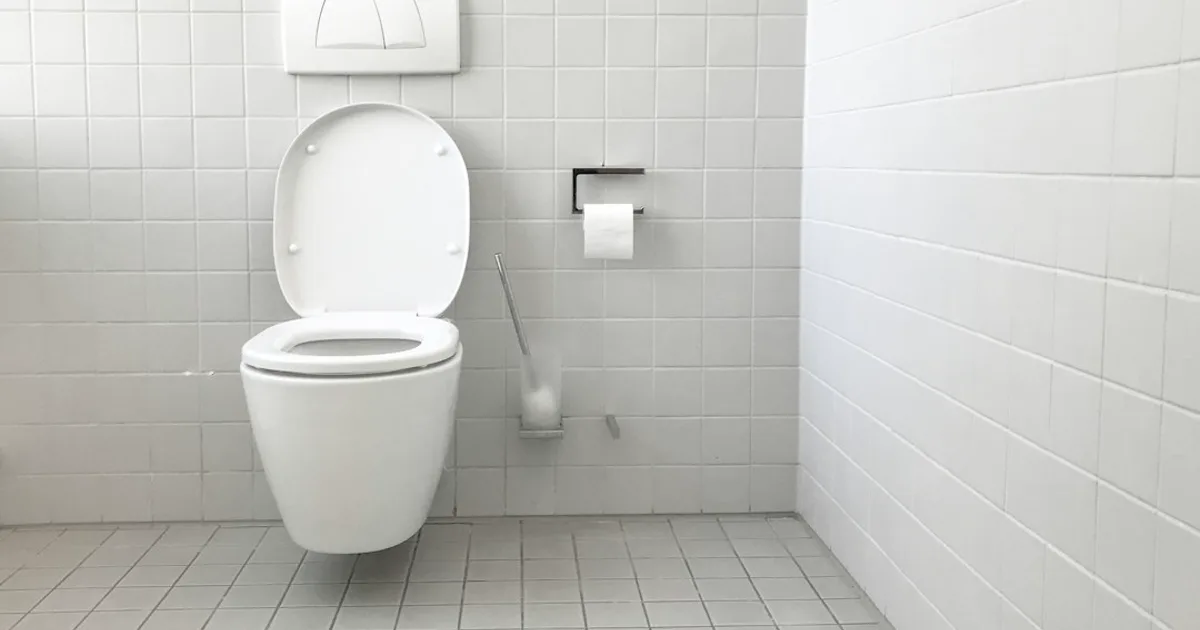
Every employee, tenant, and visitor evaluates your restroom. It's also the room that generates the most complaints the moment service slips. And commercial restroom cleaning standards are the part of a janitorial scope most likely to be written from habit rather than evidence — which is how a building ends up with a schedule that looks fine on paper and a restroom that doesn't.
Worth clearing up first: there is no single federal number for how often a commercial restroom must be cleaned. The obligation is a documented, use-based schedule plus a restroom that is actually in sanitary condition. Two separate tests — and a building can pass the first while failing the second.
What the Federal Rules Actually Require
Provide and maintain are two different obligations
OSHA's general industry sanitation rule governs most office, warehouse, retail, and multi-tenant commercial restrooms. Installing the fixtures is only half of it — restrooms must be maintained in a sanitary condition on an ongoing basis.
Supply requirements are specific: hot and cold running water or tepid running water, hand soap or a similar cleansing agent, and a hand-drying method. Handwashing facilities must sit at or adjacent to each toilet facility, and single-use towels must be stored in a sanitary container with a sanitary means of disposal. Read that clause operationally and the implication is clear — dispenser condition and bin service are baseline requirements, not a service upgrade.
Fixture minimums
29 CFR 1910.141 Table J-1 sets the floor for fixture counts by headcount:
- 1 to 15 employees — 1 water closet
- 16 to 35 employees — 2
- 36 to 55 employees — 3
- 56 to 80 employees — 4
- 81 to 110 employees — 5
- 111 to 150 employees — 6
- Over 150 — one additional fixture per additional 40 employees
Where facilities will not be used by women, urinals may substitute, though the water closet count cannot drop below two-thirds of the minimum. Local plumbing and building codes frequently require more, so treat Table J-1 as a floor rather than a target.
Housekeeping and waste
The same standard shapes a restroom scope directly. Floors have to be kept dry so far as practicable. Waste receptacles need to be leak-proof, cleanable, and covered unless they can be kept sanitary without a lid — and waste has to come out as often as necessary to keep the space sanitary.
Construction sites and shipyards fall under their own sanitation rules, and facility-specific requirements layer on top of the federal baseline — much as they do with commercial kitchen cleaning standards.
How Often Commercial Restrooms Should Be Cleaned
Why there is no single federal number
OSHA's answer is procedural rather than numeric. Employers must establish and implement a schedule for servicing, cleaning, and supplying each facility, and for setting that schedule OSHA points to the ANSI Z4.3-1995 industry consensus standard — under which a toilet used by up to 10 people should be serviced a minimum of once per week.
Read that figure honestly. Once weekly is the floor for a nearly private fixture and the wrong benchmark for any public-facing building. A restroom that is visibly unsanitary is a problem no matter what the written schedule says.
The baseline most buildings should start from
Public-health guidance is more useful for setting an actual cadence. CDC environmental cleaning guidance puts shared toilet facilities at a minimum of twice daily and private facilities at least once daily, concentrating on high-touch and frequently contaminated surfaces — sinks, faucets, handles, toilet seats, door handles — plus floors. More broadly, surfaces touched by multiple people should be cleaned and disinfected at least daily, with frequency rising with level of use.
Matching frequency to your building
- Private or small-suite restroom (under ~10 users) — daily service is typical; weekly is the consensus-standard floor.
- Standard office floor (~30 to 75 users) — once-daily full service plus one midday supply and condition check.
- Multi-tenant lobby or public-facing retail — twice-daily full service with condition checks every one to two hours at peak.
- Schools, clinics, senior living, high-traffic public buildings — three or more services daily with logged checks; see school and daycare facility standards for how those settings differ.
- Warehouse and industrial — service aligned to shift boundaries rather than clock time.
The real driver is uses per fixture per day, not square footage. Two fixtures absorbing 300 uses need far more attention than ten splitting the same traffic. Build in escalation triggers too: events, flu season, construction foot traffic, tenant complaint patterns.
Cleaning vs. Disinfecting: Where Each One Belongs
CDC treats routine cleaning as the primary control — in most situations, cleaning regularly is enough to prevent the spread of germs. Disinfection is the targeted layer: high-touch points, visible illness events, and outbreak guidance from your local health authority. Restroom fixtures are named explicitly as high-touch surfaces. That's why touch points earn the daily disinfect step while partitions, walls, and ceilings run on a longer cycle. We covered the difference between cleaning, sanitizing, and disinfecting in more depth.
Contact time is the step crews skip
A disinfectant does nothing if the surface dries before the product has finished working. EPA guidance is explicit that the surface must stay visibly wet for the full contact time printed on the label — a 10-minute contact time means 10 minutes visibly wet, and if it dries sooner, reapply.
Two label rules belong in any task list. First, the EPA registration number identifies the actual product, since the same formula is often sold under several brand names, and the Directions for Use section is the controlling document. Second, products are only validated for the pathogens named on the label — EPA maintains pathogen-specific lists, including List N for SARS-CoV-2 and List G for norovirus. The honest way to describe a program is that products are used according to their registered labels, not in terms of germ-kill percentages.
The Daily Commercial Restroom Cleaning Checklist
Work in the right order
Sequence separates a protocol from wiping surfaces at random. CDC's rules: work from cleaner areas to dirtier ones, from high surfaces down to floors, in a consistent pattern so nothing is missed. Cross-contamination controls matter as much — fresh cloths each session, changed when no longer saturated, color-coded by zone, and never double-dipped into the solution container.
The checklist
- Set up — wet-floor signage out, PPE per the product Safety Data Sheet, ventilation increased.
- Inspect — note anything broken, leaking, or running before you start.
- Empty waste receptacles, replace liners, wipe bin lids and rims.
- Dust and wipe high surfaces — vents, tops of partitions, light fixtures, dispenser tops.
- Clean mirrors, counters, and backsplashes.
- Clean and disinfect sinks, faucets, and soap dispensers.
- Clean and disinfect toilets and urinals — exterior, seat, hinges, base, flush handle or sensor — observing full label contact time.
- Disinfect the high-touch set — door handles and push plates, partition latches, grab bars, light switches, dispenser levers, baby-change stations.
- Restock tissue, seat covers, soap, towels, liners.
- Sweep, then damp-mop floors — corners, behind fixtures, and the base of urinals, where odor actually originates.
- Final pass — mirrors, odor check, service logged, signage removed once dry.
The midday check
A three-minute version — supplies, bins, visible soil, floor wetness, odor, logged — is the highest-leverage addition to most underperforming restroom programs. It catches the failure a tenant would otherwise report.
Weekly, Monthly, and Quarterly Deep-Clean Tasks
Weekly: machine-scrub grout and floor drains, descale fixtures and flush valves, clean partition panels top to bottom, wash waste receptacles rather than just relining them, wipe baseboards.
Monthly: high-dust vents and ceiling corners, clean dispenser interiors, wipe doors and frames, treat metal fixtures, and inspect floor-drain traps — a dry trap is a common source of persistent odor that no amount of surface cleaning will fix.
Quarterly or semiannual: grout sealing where applicable, wall washing, exhaust-vent cleaning, dispenser servicing, tile and caulk repair review, and a written condition audit.
Periodic tasks rarely get skipped on purpose. They get skipped because they were never in the contract's task list.
Documenting the Schedule: What Actually Proves Compliance
Three artifacts carry the weight: a written service schedule by fixture group, a per-service log that is initialed and timestamped, and a periodic condition inspection with photos. The reason sits in the wording of the requirement — employers must establish and implement a schedule, and the log is the only evidence implementation happened.
Keep Safety Data Sheets accessible, and write the dilution and contact-time expectation into the task list so the crew isn't guessing. Frequency, task lists, restock responsibility, and periodic tasks should all appear explicitly in the agreement; here is what your cleaning contract's scope of work should spell out. One more indicator worth watching: complaint volume. A rising trend almost always means frequency is set below actual traffic.
Frequently Asked Questions
How often does OSHA require commercial restrooms to be cleaned?
There is no single federal frequency. 29 CFR 1910.141 requires restrooms to be kept in a sanitary condition, and OSHA's guidance requires employers to establish and implement a servicing, cleaning, and restocking schedule for each facility. OSHA points to the ANSI Z4.3-1995 consensus standard for setting it: a toilet used by up to 10 people should be serviced at least once per week — a floor for very light use, not a target.
How many times a day should a public restroom in an office building be cleaned?
CDC guidance recommends cleaning and disinfecting shared or public restrooms at least twice daily, and private single-occupant facilities at least once daily. For a typical office building, once-daily evening service plus a midday supply-and-condition check covers it. High-traffic lobbies, schools, clinics, and public-facing retail usually need three or more touches per day.
What belongs on a commercial restroom cleaning checklist?
High-touch points (door handles and push plates, light switches, faucets, flush handles, dispensers, partition latches), fixtures, mirrors and counters, waste removal and liner changes, restocking, and floors. Order matters: CDC's rules put the general room before the toilet and work from high surfaces down to the floor.
Do commercial restrooms need to be disinfected or just cleaned?
Both, in different places. CDC notes that routine cleaning is usually enough to prevent the spread of germs, but restroom fixtures are named as high-touch surfaces, so those points warrant cleaning and disinfecting at least daily. Broader disinfection is reserved for visible illness events and local outbreak guidance — and only works if the surface stays visibly wet for the label's full contact time.
Building a Restroom Schedule That Holds Up
The standard is not a number you copy from another building. It is a schedule set from actual fixture traffic, executed in a defensible order, and documented well enough that the log answers the question before anyone asks it.
A practical starting point: count uses per fixture per day, set the baseline from the public-health floor of twice daily for shared and once daily for private, add a midday check, and write the weekly and monthly tasks into the contract rather than leaving them to goodwill. Neat & Clean Co provides commercial janitorial service in the Minneapolis North Metro with restroom scopes built around fixture traffic instead of a generic task list — request an estimate for a schedule specific to your building.
This article is for general informational purposes only. Cleaning scope, frequency, and pricing vary by facility size, type, and condition. Service availability depends on your location within Neat & Clean Co's service area. Contact us for a quote specific to your facility.
Related articles

Office Cleaning for Hybrid Workplaces: How to Adjust Frequency
Most office cleaning contracts were written for a building that filled up every weekday. In a hybrid workplace, that schedule overpays for empty space while under-serving the zones that still take a beating. Here is how facility managers sort tasks that scale with headcount from tasks that do not, build a zone-by-zone frequency matrix using occupancy data they already have, rewrite the scope of work, and verify that standards actually held.
Office Carpet Cleaning Frequency: How Often Should You Schedule It?
There is no federally mandated office carpet cleaning frequency, which leaves facility managers taking a vendor's word for it. This guide replaces the guesswork with a zone-based schedule you can defend: how to map traffic zones, set separate vacuuming and extraction intervals, read the five signs your current schedule is falling behind, and extend the time between deep cleans without letting the carpet degrade.
Retail Store Cleaning Checklist: Daily, Weekly, and Seasonal
Retail cleaning fails differently than office cleaning: the work is visible to customers in real time, the floor is both a sales surface and a liability surface, and most of the daily list has to happen during trading hours. Here is a retail store cleaning checklist organized the way the work actually behaves — daily, weekly, and periodic — plus where federal standards set a floor and how to turn the list into a scope a vendor can be held to.